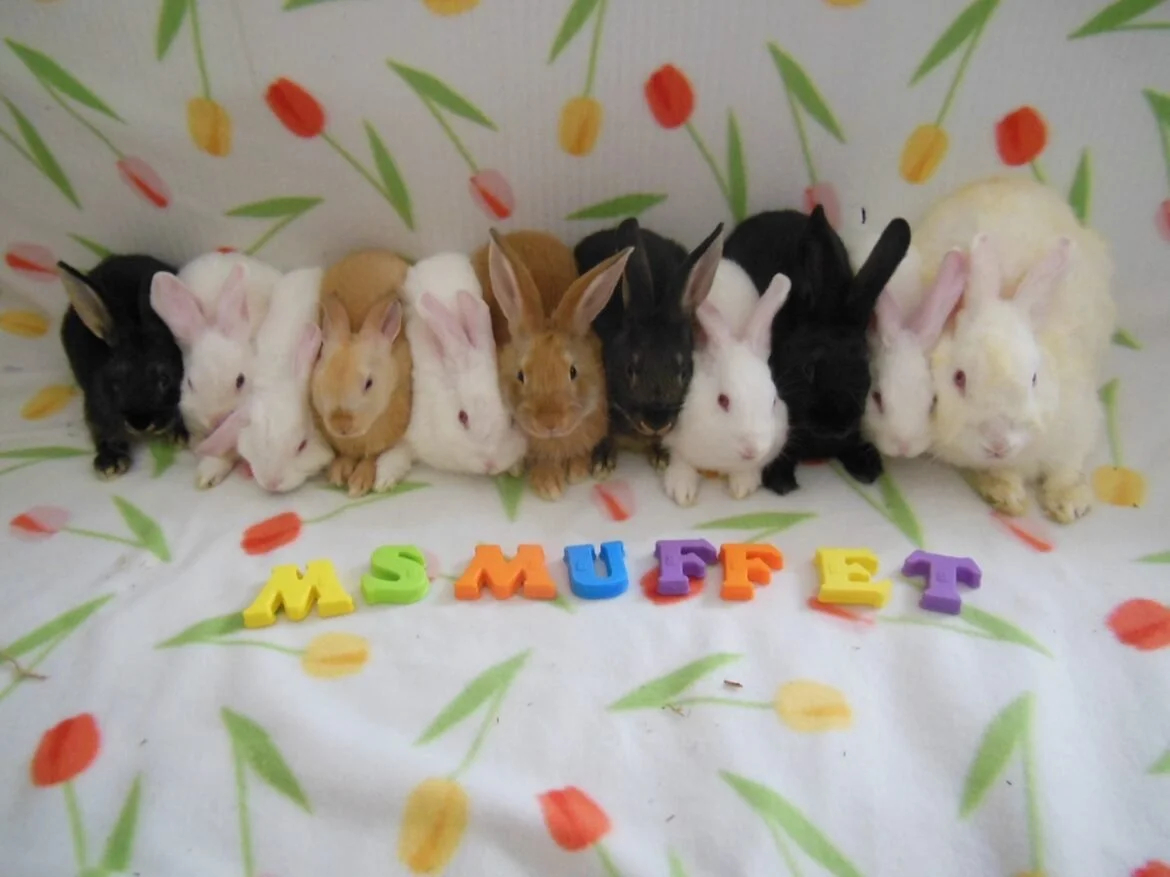
Surrogate Mom Care Guide
Introduction
Caring for orphaned or high-risk kits can be challenging. Introducing them to a surrogate nursing mother can provide the essential warmth, nutrition, and nurturing they need to survive and thrive. This guide outlines the process and key considerations for successfully using a surrogate nursing mom to support the healthy development of vulnerable kits.
Definition of a Surrogate Nursing Mom
A surrogate nursing mom is a lactating female who accepts and raises an orphaned or at-risk kit as her own. She provides the same care she gives her biological offspring, allowing the kit to integrate into her litter as a sibling.
Reasons for Introducing a Surrogate Nursing Mom
A surrogate nursing mom may be necessary in the following situations:
Eyes Closed: When kits’ eyes are still closed, they are entirely dependent on maternal care for warmth, feeding, and stimulation.
Critical Condition: Kits in poor health—especially those underweight for their age (commonly under 3 weeks old)—require immediate and consistent care.
Refusal of Hand Feeding: Some kits do not tolerate or refuse bottle or syringe feeding, making maternal nursing the safest option.
Critical Age for Surrogate Nursing
The most effective window for introducing a surrogate nursing mom is from birth to 3 weeks of age. After approximately 4 weeks, mothers begin the weaning process, which makes acceptance of an orphaned kit more difficult.
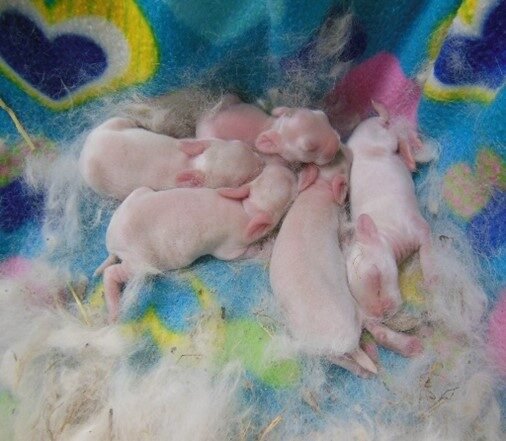
Ms. Muffet’s 5-day old kits.
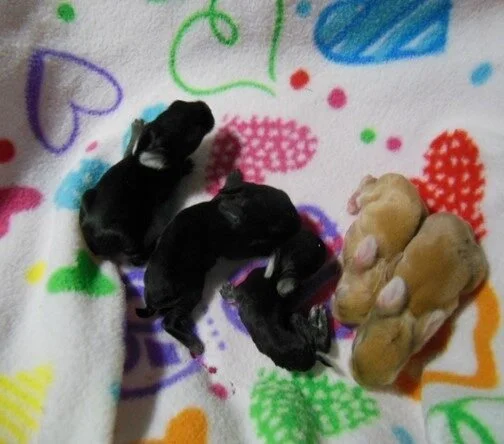
5 of the most critical kits from Mom + 13 5- day old kits.
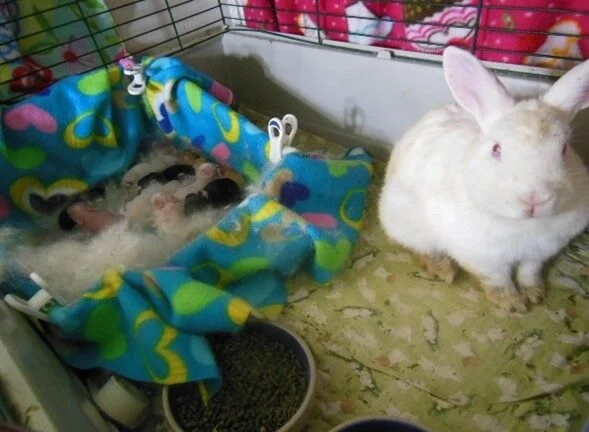
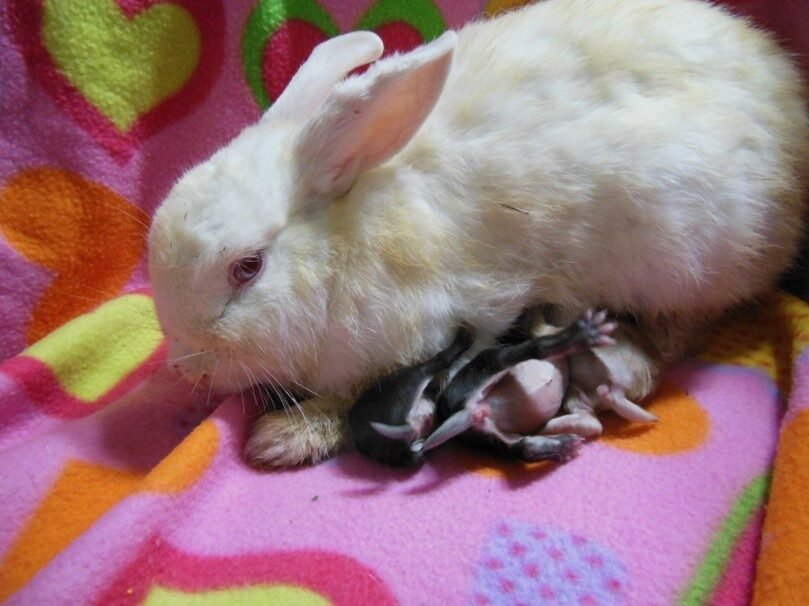
Ms. Muffet adopted the kits as her own the first night.
We were called upon by a 501(c)(3) rabbit rescue to visit a community member who found Ms. Muffet and her 5-day-old kits. We rescued them on behalf of the rabbit rescue group. We also took the 5 most critical kits from another 501(c)(3) rabbit rescue group that had taken in Ms. Muffet and her 13 5-day-old kits. That night, Ms. Muffet adopted the 5 kits as her own.
Day 1 for Ms. Muffet + 10
Ms Muffet one-on-one nursing with Itsy Bitsy and the other most critical kits.
Ms. Muffet with her kits.
Dinner Time for Ms. Muffet's kits.
Baby Hops for Ms. Muffet's kits.
A Successful Surrogate Nursing Experience: Ms. Muffet’s Story
We did not know whether Ms. Muffet would accept the kits as her own. We received the kits at 11:00 PM and assessed all 13 before selecting the five most critical. As we took them home, it felt as if the kits were saying, “We love you, Mom.”
All five critical kits were ultimately saved by Ms. Muffet, who successfully cared for her original 5 kits along with the five new arrivals.
Ms. Muffet had been separated from her kits since the rescue earlier that day at 2:00 PM, causing them to miss their usual evening nursing. Once we arrived home, we began one-on-one nursing sessions because the five most critical kits urgently needed a nursing mother. The smallest kit, Itsy Bitsy, weighed approximately 25 grams and was in critical condition.
One-on-One Nursing Process
During the initial one-on-one nursing attempts, we gently placed a hand on Ms. Muffet’s head to help stabilize and protect the kits. At first, she appeared agitated and did not readily accept them. We paused and tried again, this time using slow, gentle strokes on her head and ears while speaking softly to her.
With patience and reassurance, Ms. Muffet eventually allowed the kits to nurse without needing to be restrained. This calm, gradual approach was key to gaining her acceptance.
Scent Mixing and Full Integration
To help Ms. Muffet recognize the kits as her own, we focused on scent integration. Rabbits rely far more on smell than sight, so we held all of the kits together to intermix their scents. We also placed fur from Ms. Muffet’s nesting box onto the five critical kits.
Afterward, Ms. Muffet was returned to her nesting area. She hopped over, sniffed all of the kits, and showed no signs of distress or rejection. We closely monitored the group until 3:00 AM to ensure everything remained stable.
Key Points for Introducing Kits
Kits should be within three days of age or of similar size for the best chance of acceptance.
Mix the scents of all kits thoroughly.
Monitor closely for several hours for any signs of rejection or distress.
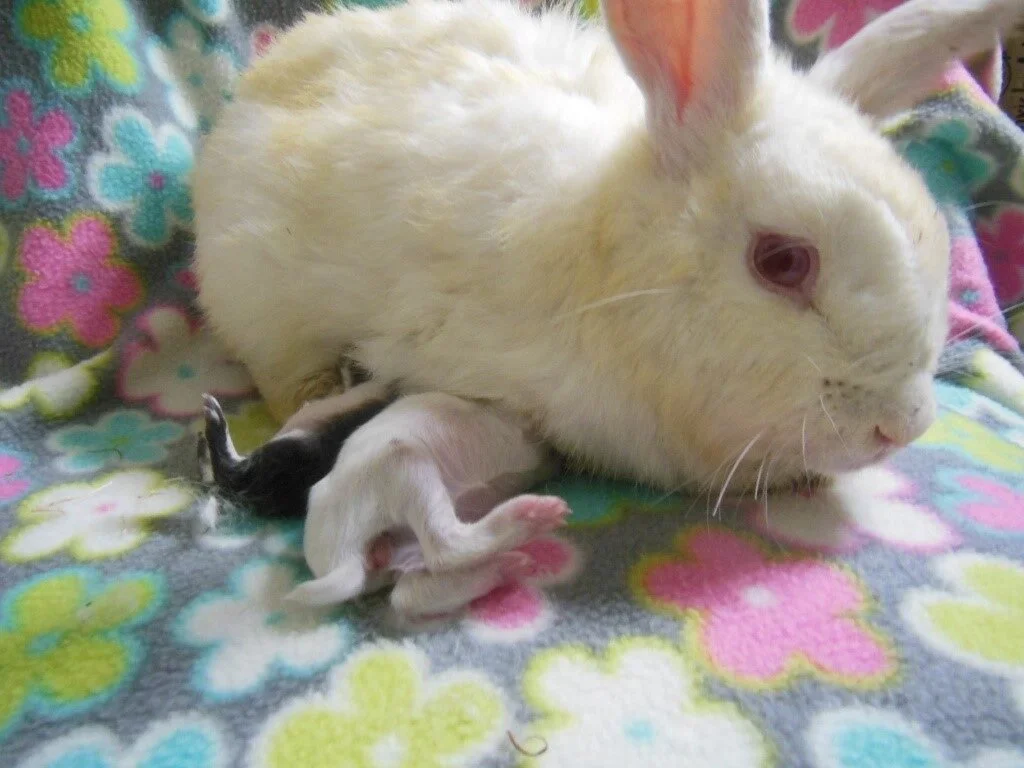
One on one nursing with Itsy Bitsy and Ms. Muffet’s kit.
t is important to continue to weigh and monitor all of the kits. Ms. Muffet went from 5 to 10 kits, and we observed that some of her original kits started to lose weight. We have been doing one-on-one nursing with Itsy Bitsy and the most critical of the 5 kits. We then added some of Ms. Muffet’s original kits for one-on-one nursing as well.