Baby Rabbit (kit) Guide
We are the Baby Site for several 501 (c)(3) Rabbit Rescue Groups based in the San Francisco Bay Area. All of the rabbits shown are from our fosters or working with the community. The following is guide on care of Mom and her kits through the first 8 weeks. We review the care of the Mom and her kits up to 1 year young.
The following is guide on care of Mom and her kits through the first 8 weeks.
Mom’s Prior to Giving Birth
Determining whether a female rabbit is pregnant can be difficult without an ultrasound. Palpation should only be performed by experienced individuals, as improper handling can harm the developing kits. If she has been near an unneutered male, she may also experience a false pregnancy, which can mimic many signs of real pregnancy.
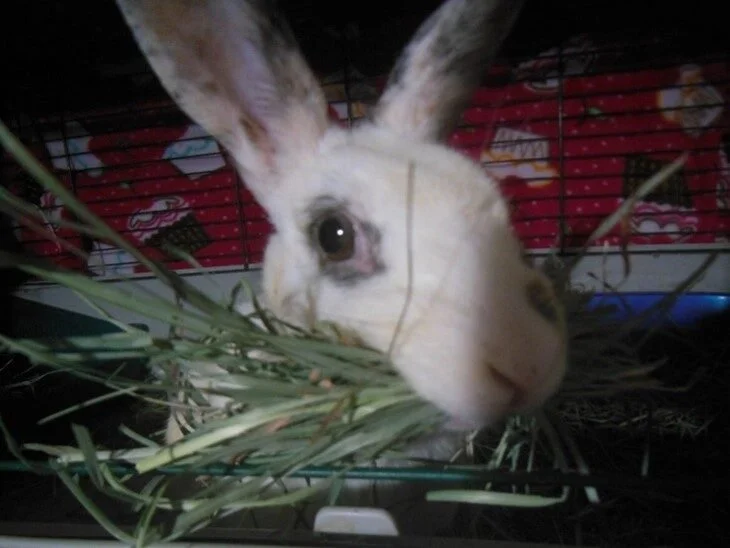
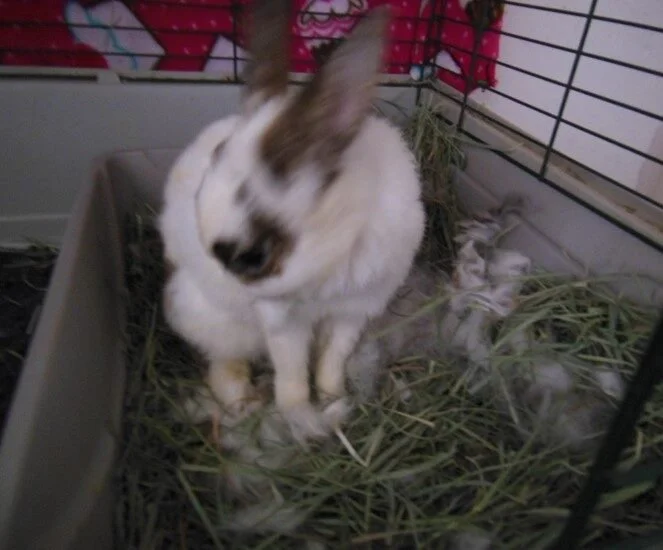
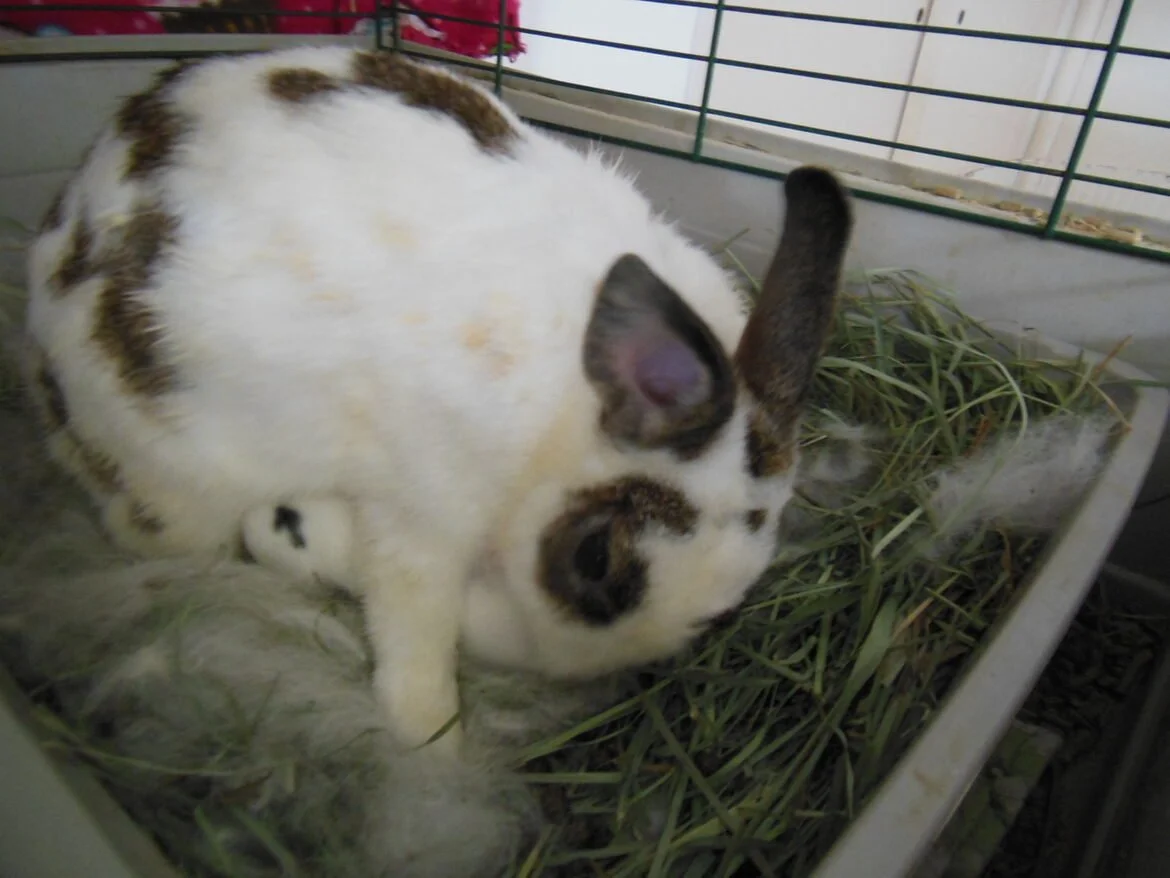
Signs that labor is approaching include increased agitation and nest-building behavior. Unlike cats, rabbits cannot move their babies after birth, so they prepare a nest in advance by gathering hay and pulling fur from their bodies.
If you observe nest-building, delivery typically occurs within 0 to 2 days. For example, our foster rabbit, Melody, built her nest using hay and her own fur shortly before giving birth.
Melody Building her nesting in her litter box for her son Solo.
Melody giving birth to her son Solo.
Delivery
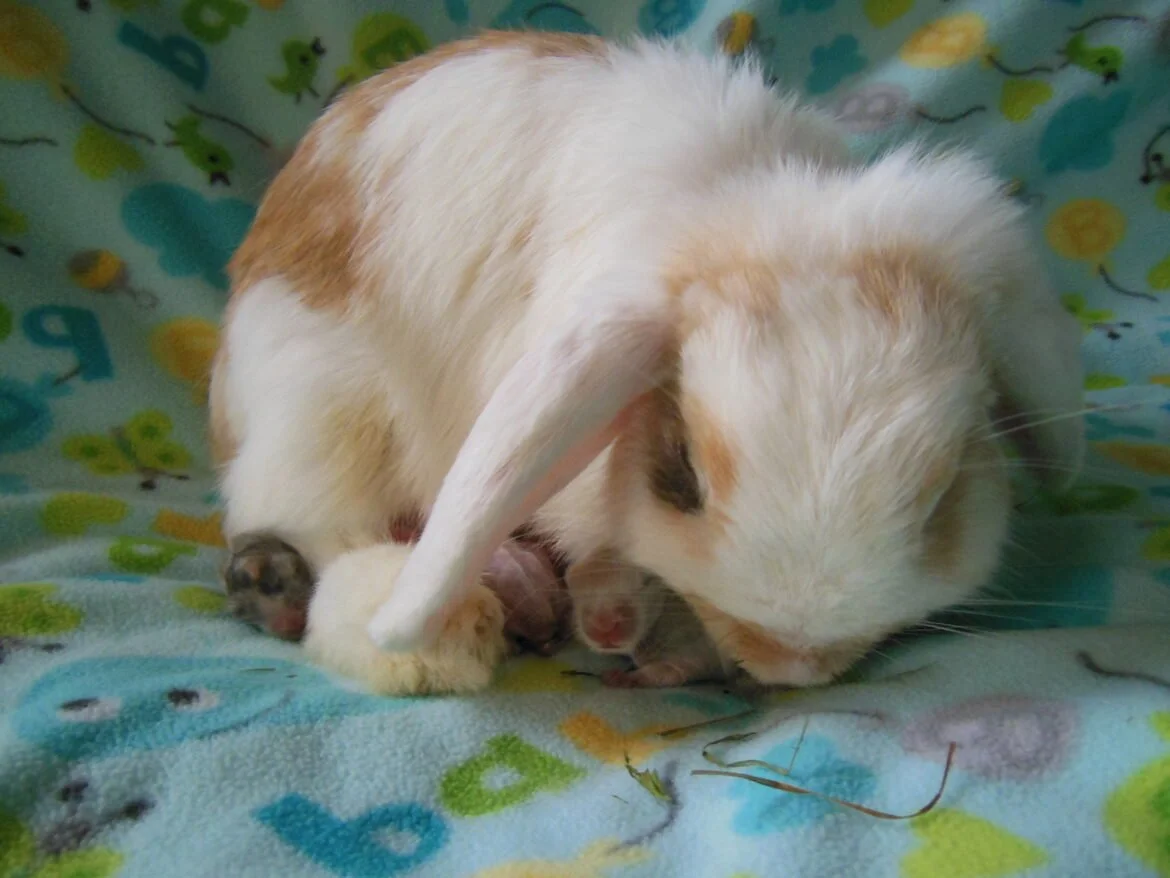
Mother rabbits typically give birth late at night or in the early morning. Litter sizes can range from a single kit to more than ten. While the overall delivery process may span several days, the birth of each individual kit usually takes only a few minutes. Some blood may be visible, and the mother will consume the afterbirth and clean her kits afterward.
Unlike cats, rabbits cannot move their kits after birth. The mother chooses a safe location ahead of time and builds a nest there for delivery. Once the kits are born, she is unable to relocate them. In some cases, kits may be born in areas that are not warm or well-protected. For example, at shelters, deliveries may occur overnight, and kits can be born on cold metal cage surfaces. Similarly, kits born at home during the night may be on a cold floor or other cold surface.
The most critical aspect of newborn kit care is keeping them warm. If kits become too cold, they are unable to properly digest milk. Handle them only when necessary—for health checks or to move them to a safer location—because each time they are removed from the nest, they lose valuable body heat.
When Mom’s will nurse her baby rabbits (kits)
Nursing Mom
Mother rabbits usually nurse their babies only twice a day, about 12 hours apart. This gives her body time to make more milk. Nursing almost always happens late at night or early in the morning when it is quiet, and it only lasts a few minutes.
It is very common not to see the mother nursing, especially during the first week. Instead, look for signs that nursing happened:
The babies have round, full bellies
The fur in the nest looks moved or rearranged
You may see extra fur the mom pulled while nursing
We will explain what to do if the babies are not nursing.
The Dad
Once you discover babies, remove the dad immediately. A mother rabbit can become pregnant again after giving birth. The male can also accidentally harm the newborn kits. Check each rabbit carefully to identify and separate the father.
Housing
The mother and babies should be kept indoors. If the birth happened outside, move them inside right away so you can control the temperature and keep them safe. We will explain proper housing and how to make a nesting box in later sections.
Other Pets
Keep the mother and babies in a quiet room away from other animals. Mother rabbits are very protective, and stress can reduce her milk supply. A calm, quiet environment is very important.
Quick Checklist for Mom, Dad, and Babies
Move the mother and babies to a safe indoor area
Separate the dad from the mother immediately
Make sure the babies are in a safe nesting box with their mom
Complete these steps as soon as possible—every minute matters for the babies’ survival.
Nesting Box for Kits (baby rabbits)
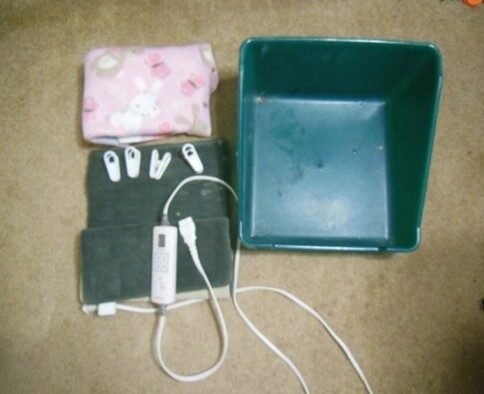
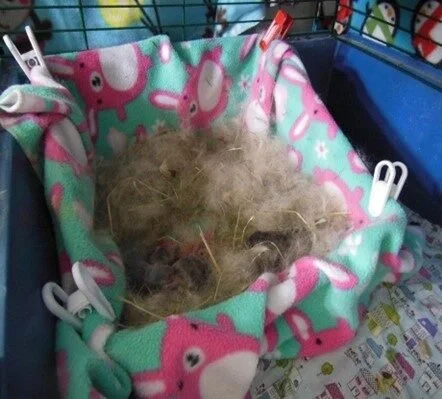
Nesting Box for Kits (Baby Rabbits)
We use a square, high-back litter box as a nesting box, along with fleece and clips.
Setup Steps:
Place the fleece securely inside the litter box.
Use clips to hold the fleece in place so it cannot shift.
Add the nesting material the mother rabbit originally used.
Place the kits gently in the center of the nest.
Cover the kits with any fur the mother pulled to help insulate them.
Place the completed nesting box inside the mother’s housing.
Why This Works:
The fleece prevents the kits from being in direct contact with the cold litter box.
Clips prevent the kits from crawling underneath the fleece.
The mother’s fur helps keep the kits warm and comfortable.
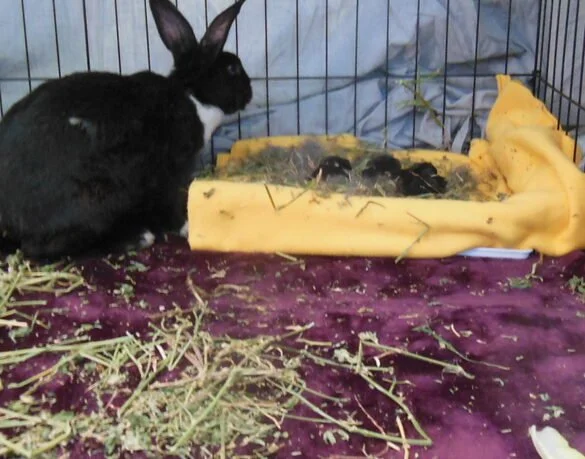
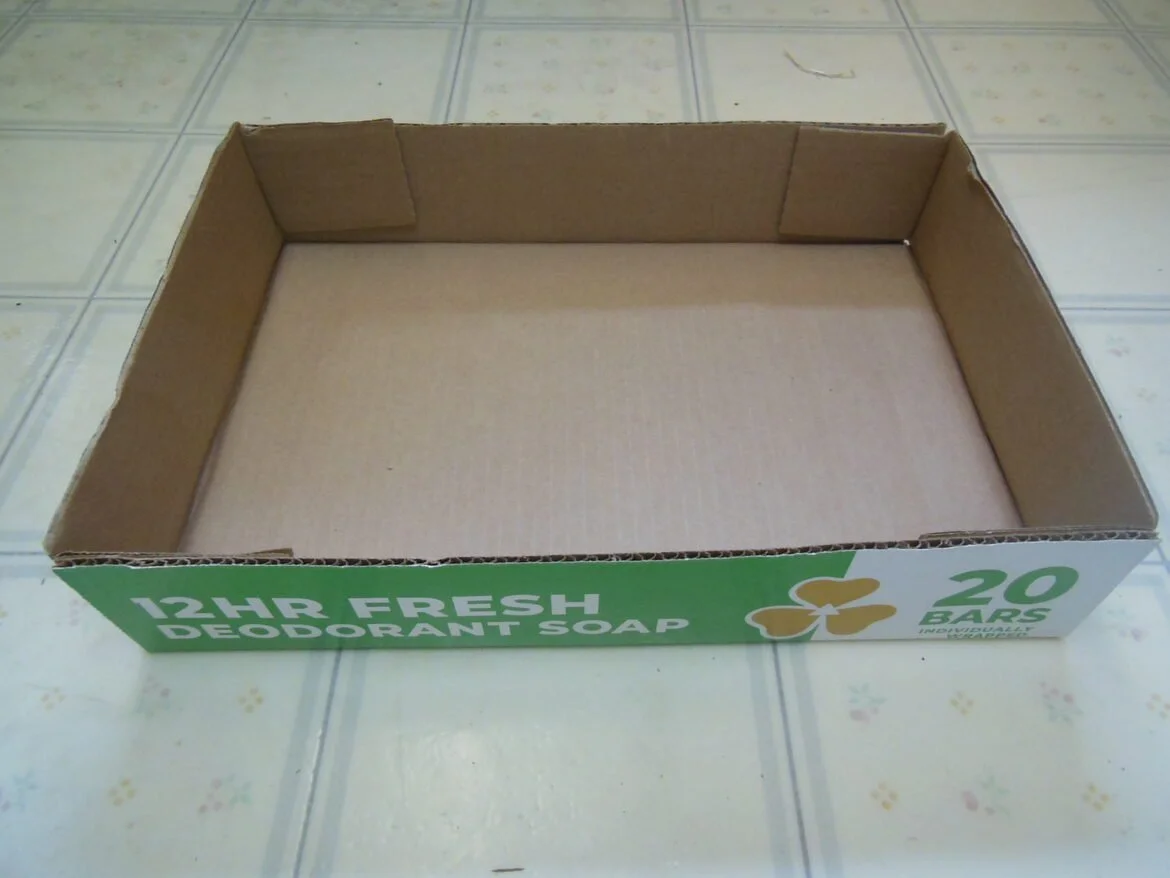
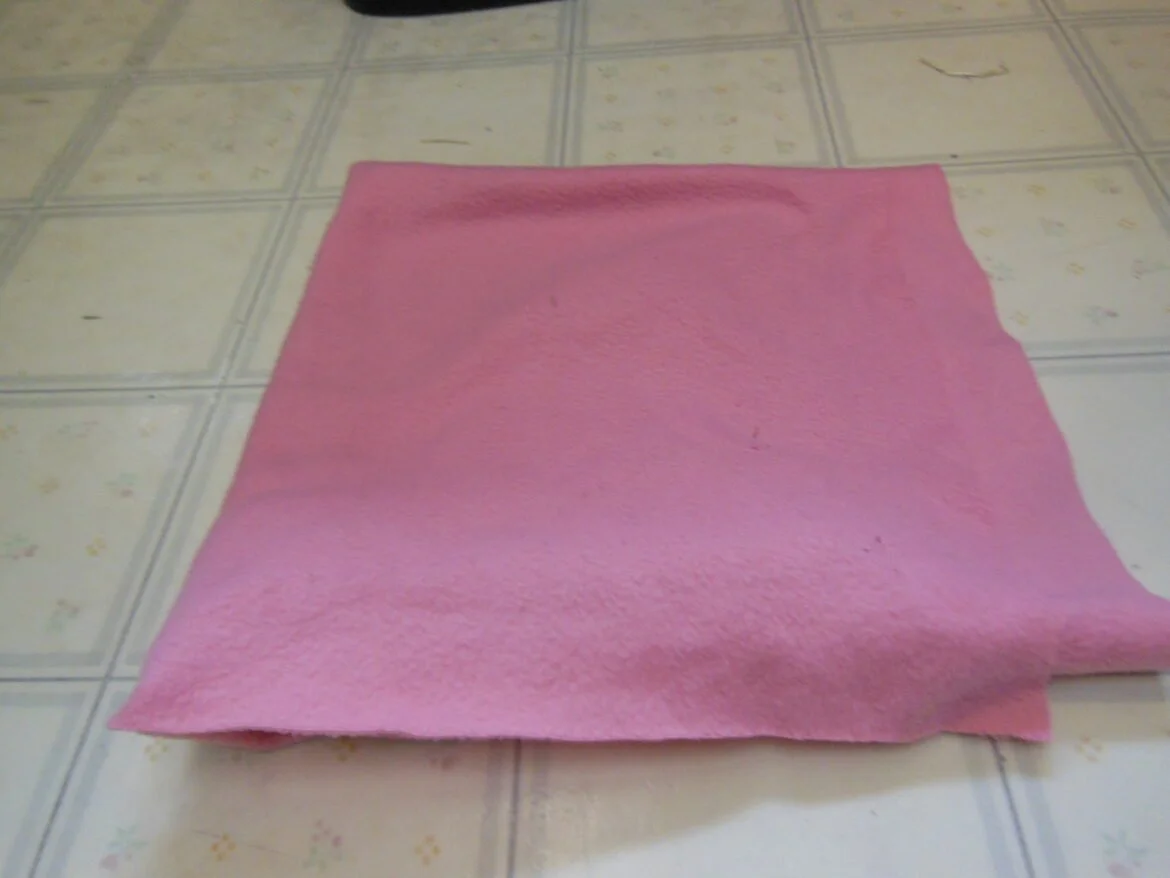
You can use the top of a cardboard box, large cat litter box or similar items.
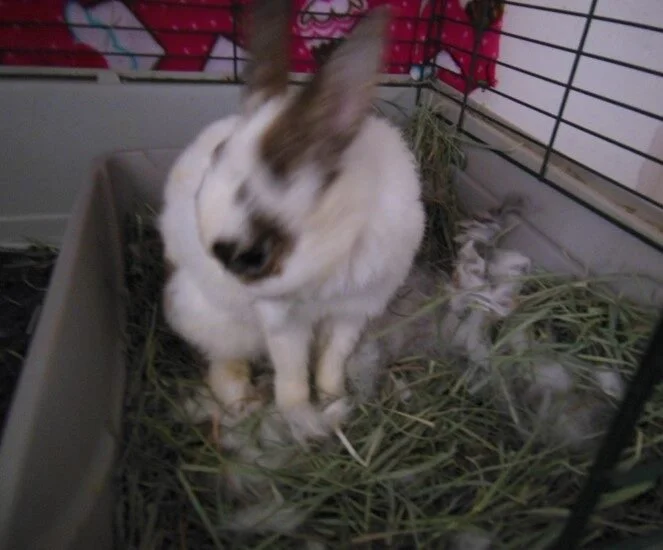
Melody gave birth to Solo in her litter box. We then using this for her nesting box.
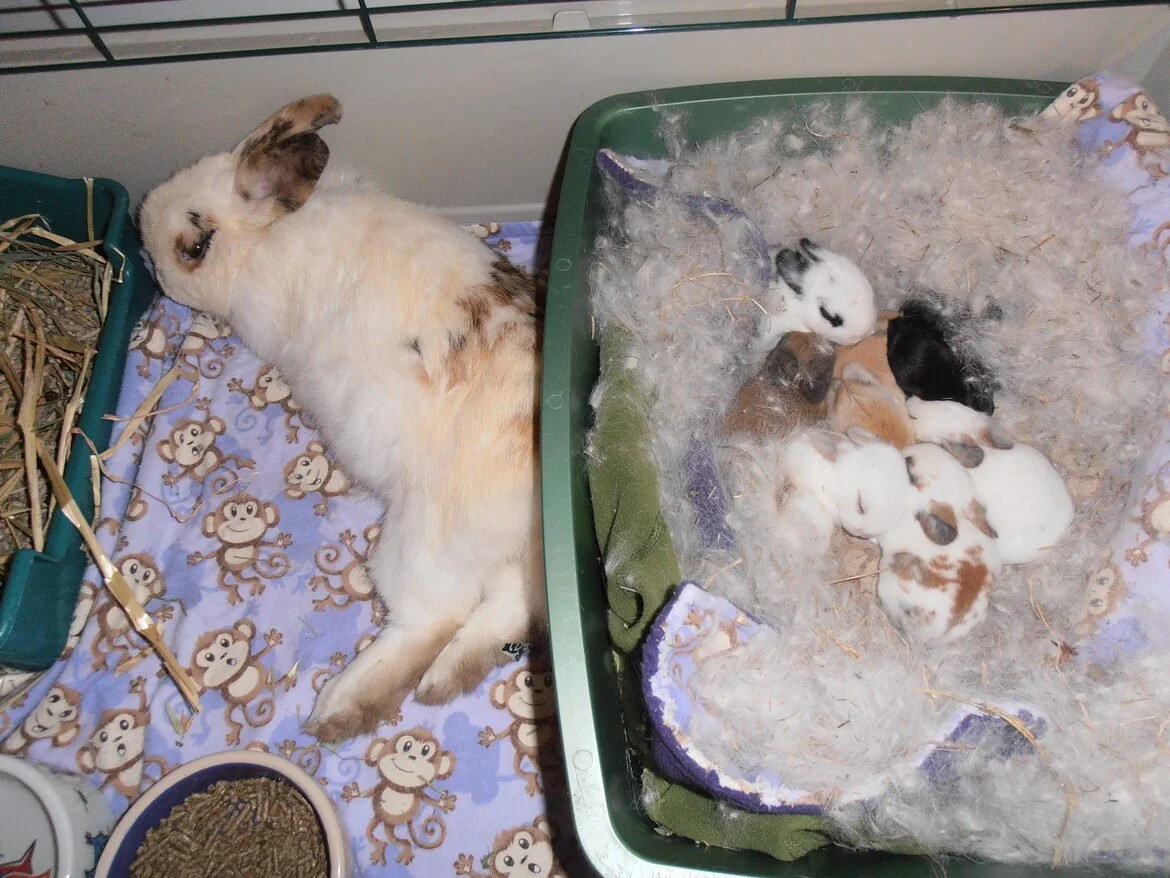
When we rescued Brook and her 10-day-old kits from a challenging outdoor situation, we used a litter box with fleece at the bottom and transferred kits with their nesting material to the litter box.
Guidelines:
Use a cat litter box or similar container with high sides, leaving only a small gap between the top of the kits and the top of the box. This helps prevent kits from being accidentally pulled out when the mother hops out after nursing.
Place soft material at the bottom of the nesting box to provide warmth and comfort.
Place the kits gently into the nesting box, then cover them with the mother’s fur.
You should be able to feel their body heat by holding the palm of your hand just above them.
As they grow, the kits will begin moving around more.
Housing for Mother Rabbit
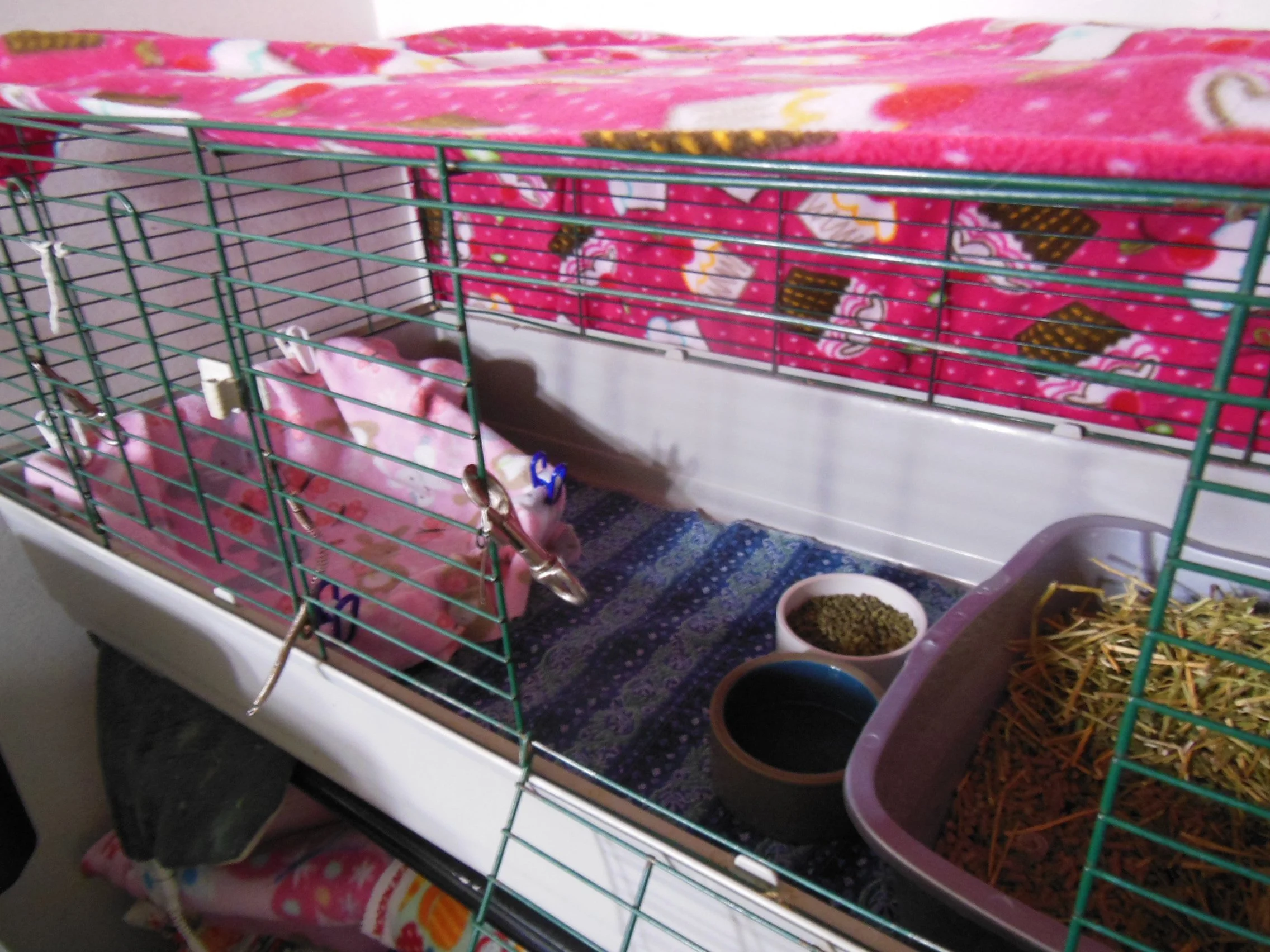
We use a two-door Marchioro cage (currently out of production) or a Prevue Pet Products Ranch Universal Small Pet House for the mother. She stays in there at night, with space for her nesting box and litter box.
1. The cage has a solid plastic base about which prevents the kits from slipping out.
2. Place a soft fabric on the bottom of the cage.
3. Place nesting box one side.
4. Place Mom’s litter box on the other.
5. Place her food and water next to her nesting box away from the kits.
6. Once the kits hop out you need to change to a water bottle for the Mom. The kits may get stuck in her water bowl.
7. Place a 24/7 Electric Heating Pad below the cage on the side of her nesting box.
8. Place the cage on a table to avoid any cold drafts.
9. Place Fabric on top and the 3 sides to allow prificay for the Mom.
10. You can place fabric on the side of her nesting box to allow extra privacy during nursing.
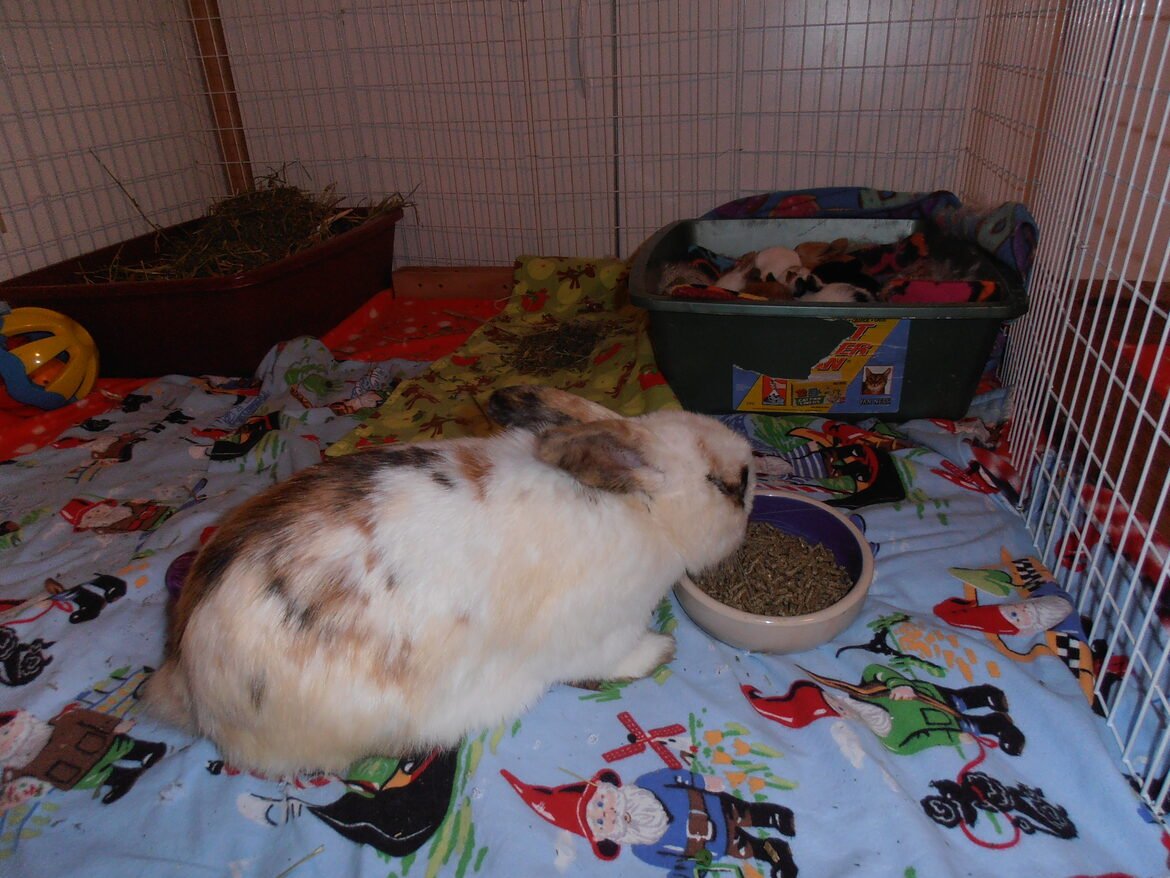
If a Marchioro cage or similar enclosure is not available, the mother and kits can be housed on the floor using a “baby” X-pen with tighter bar spacing during the night. You can also place cardboard on the sides to prevent the kits from escaping.
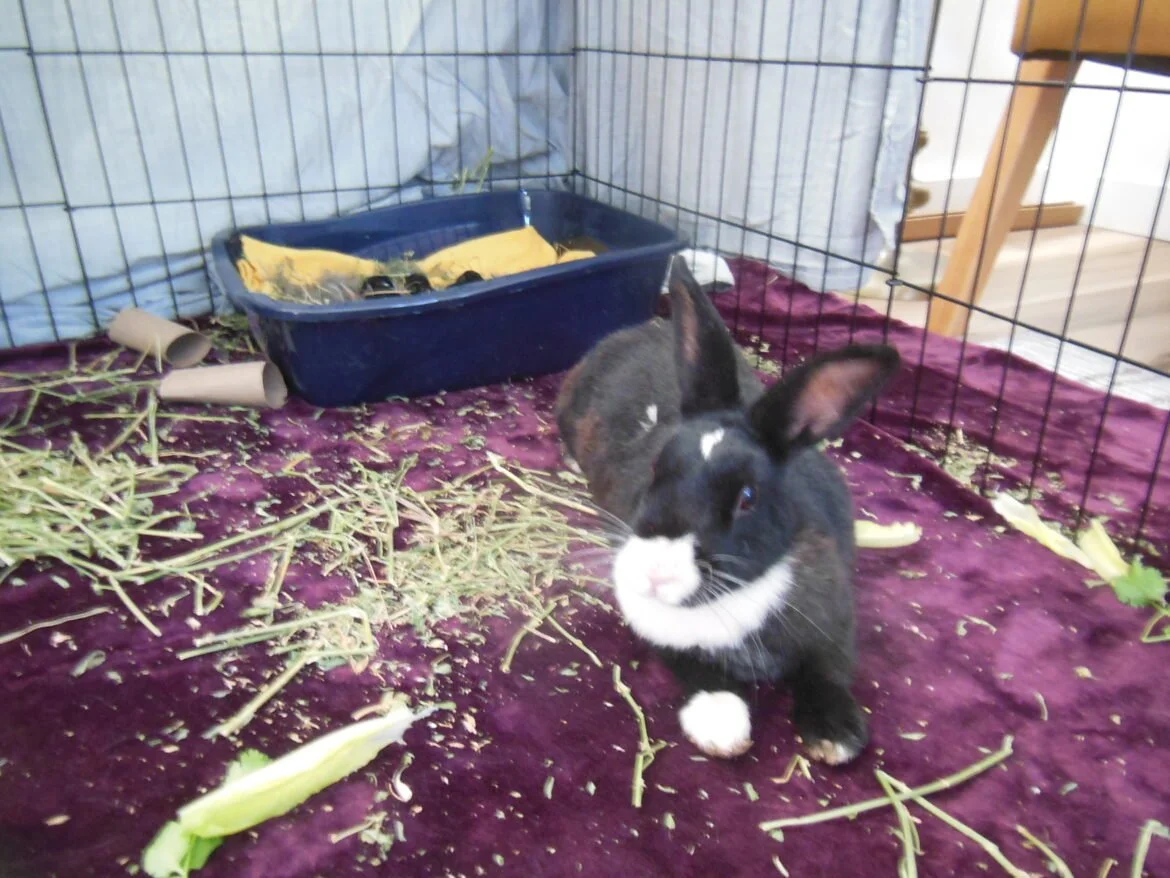
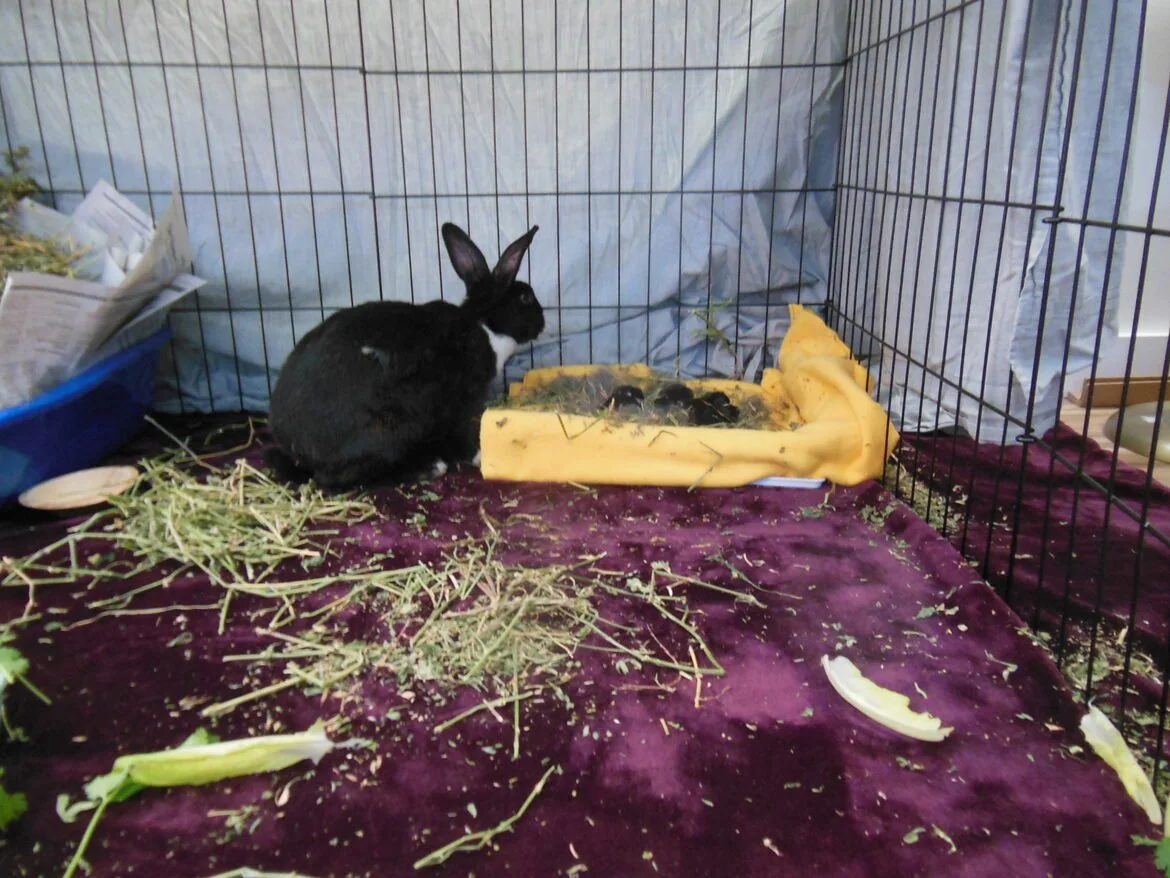
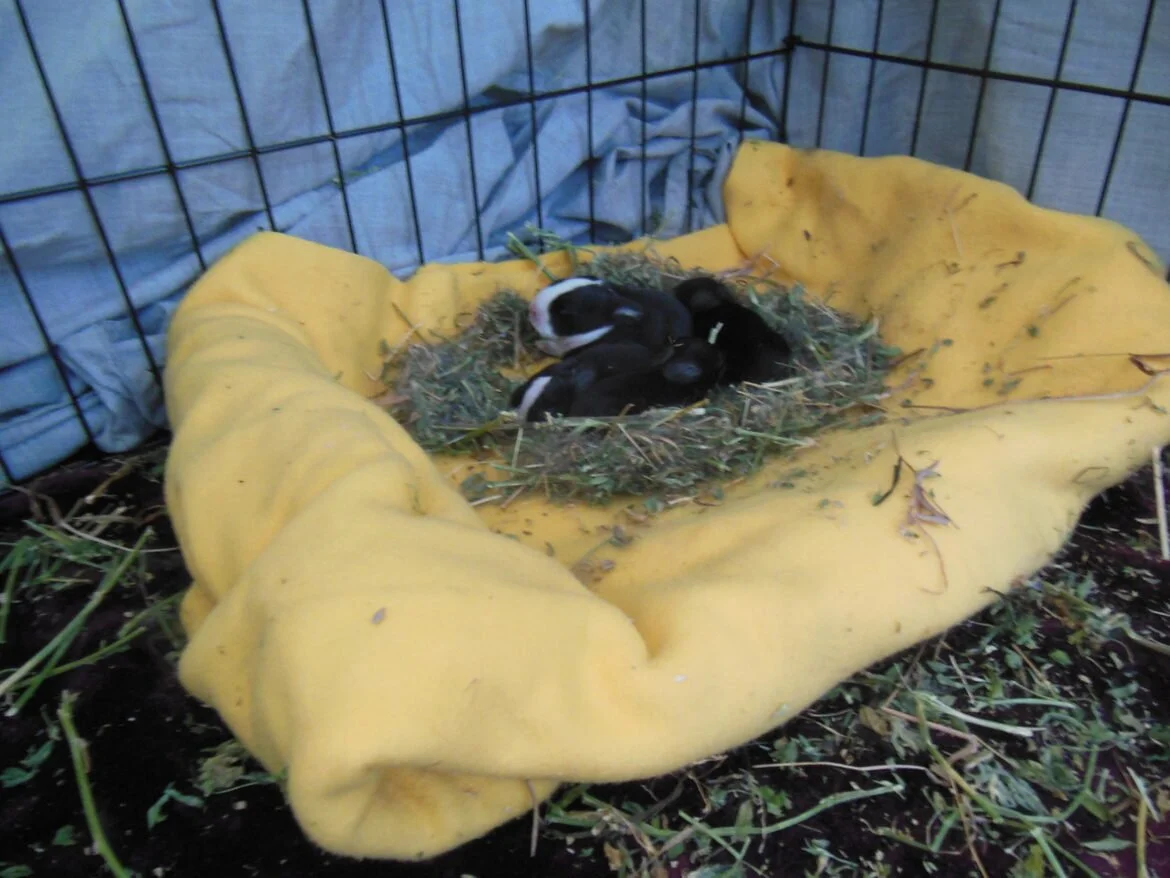
During a recent rescue, we found a mother with seven-day-old kits who struggled to hop into the litter box. We removed the box, raised some sides with cardboard, and ensured the kits remained safe.
Housing for Mom and kits Key Points
1, Quite and safe place for Mom and her kits.
2. Secure sides of housing in the event kits get out from their nesting box.
3. Place a heating pad set to low under their nesting box.
4. Place the Mom's water bowl AWAY from the nesting box.
5. Convert to water bottle once kits hop out of nesting box on their own.
6. Take into account Mom's physical state if she cannot hop into nesting box.
Playtime for Mom
During the day, allow the mother playtime inside the house away from her kits. The purpose has three important reasons.
1 You may need to facilitate one-on-one nursing before returning her to the kits.
2 Larger kits will push smaller ones away during nursing if they have constant access, which may hinder one-on-one nursing.
3 Mom will need her alone time to eat and rebuild her milk supply for her night time feeding.
If you need to do one on one nursing of the smaller kits you will know that she has milk. One on one is usually done at dinner time. Since she has been away during the day you know that she has milk. One on one is done with the smallest kits most in need. You will know that the smallest will have access to Mom during dinner. Mom will nurse as normal when she goes back with them at night.
We will cover one-on-one nursing.

Daily Health Check for baby rabbits.
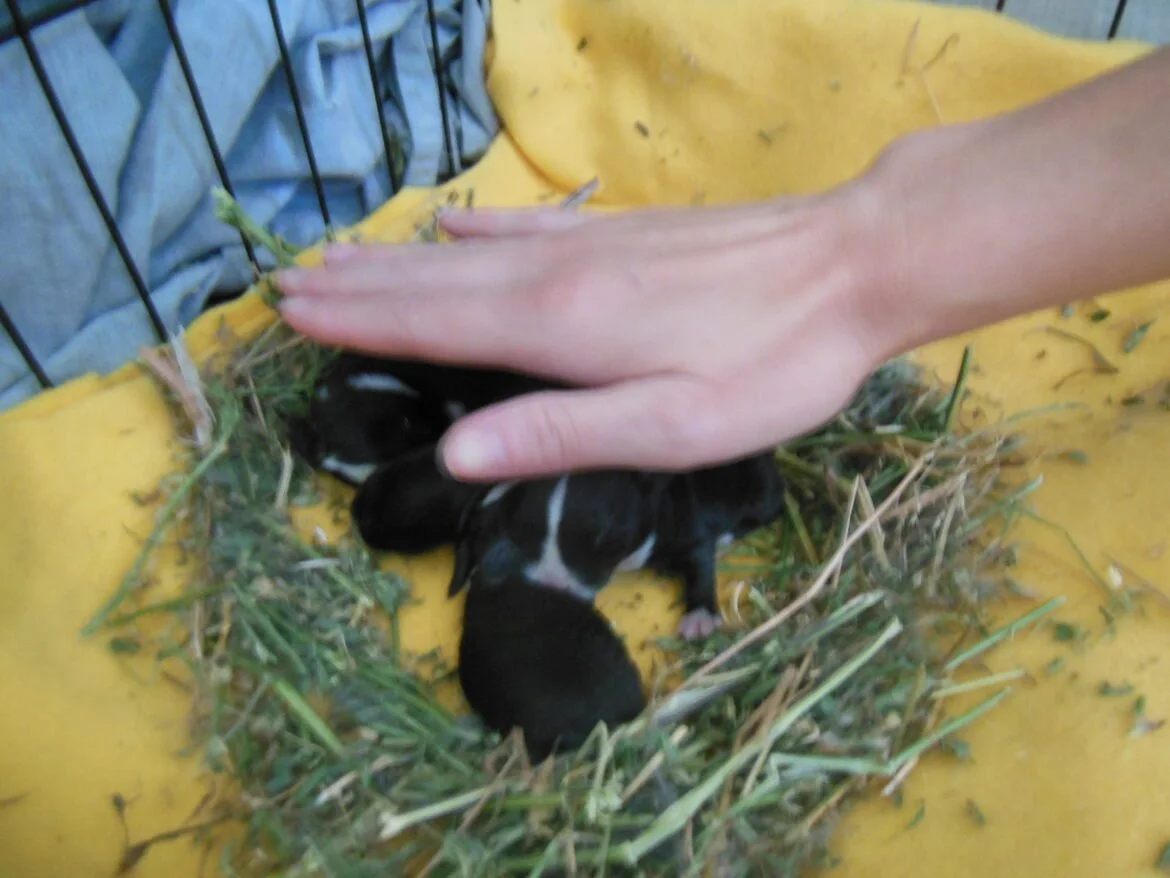
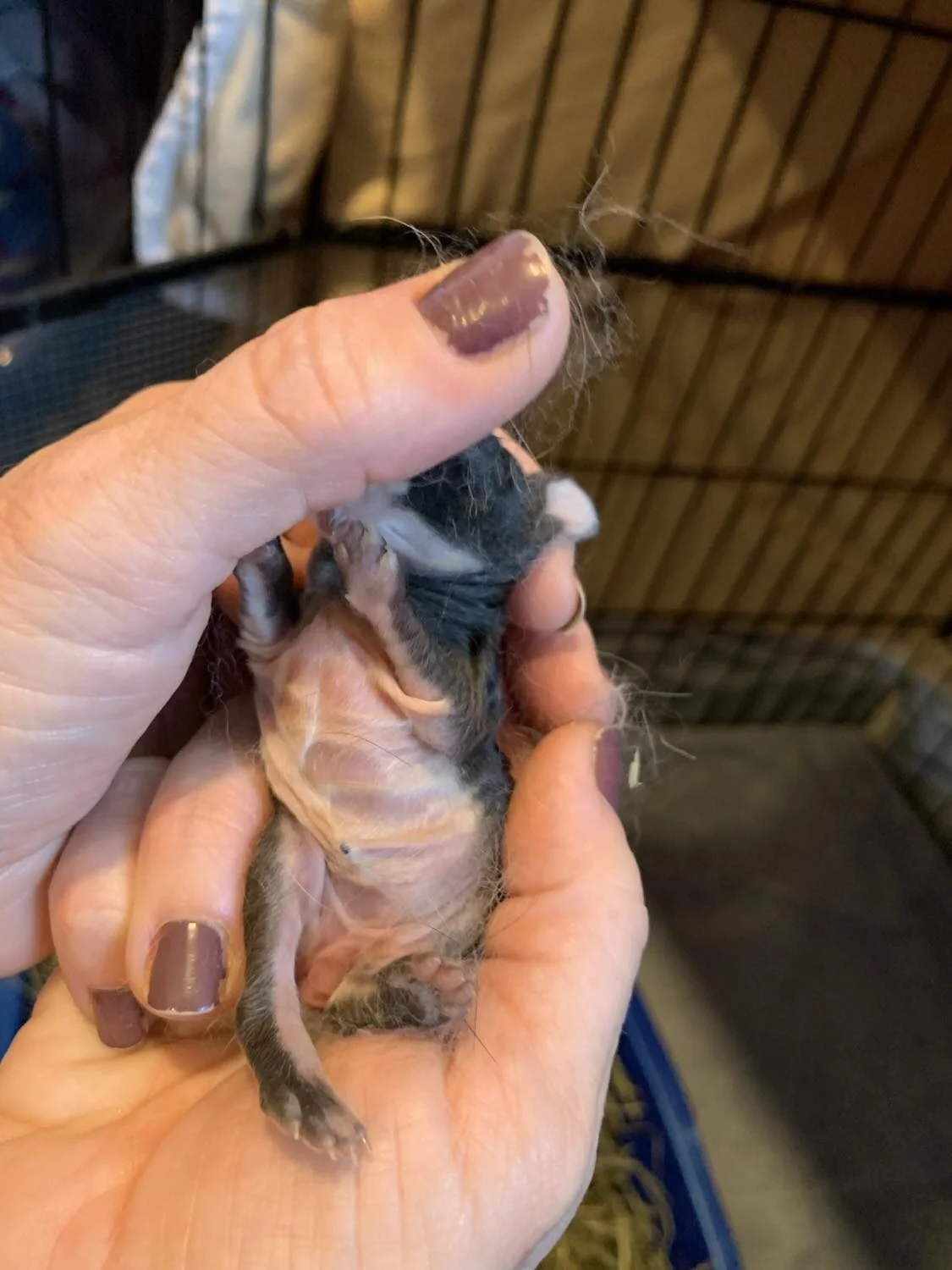
It is important to establish a baseline value for the kits’ weights starting on Day 1 using a scale that measures weight in grams. You should weigh the kits at about the same time each day and record the values. You can note the weights by size, color, or any distinguishing markings on the kits.
1 weigh each kit grams and note the date. The kits should ALWAYS gain weight. Losing weight is a 911 if you see a trend. The kits should gain about 10% each day. If the trend is gaining weight that is good sign.
2 The kits should feel warm to the touch. You should feel their body heat when you place the palm of your hand just above their nesting box.
3. look at the kits stomach you should not see folded fur
You should only hold them to do Daily Health Check or to move them. Each time you hold them they are losing body heat.
Rescue Update. It was Nov of last year that a local shelter asked us to help a Mom and kits. The shelter volunteer who we worked with made a nesting box for the kits. She needed help to rescue the Mom. We worked together along the members of the community to rescue the Mom. We then were able to rescue her kits. The volunteer fostered the Mom and kits. We trained her on the care of the kits. We also trained her on how to do "one on one" feeding for the smallest most critical kit with the Mom. The Mom later adopted the Mom (Zuna) and the smallest kit (Zion). We were very happy to see them during a visit with Dr. Stern. Zion is now bigger then the Mom.
One-on-one Nursing with Mom
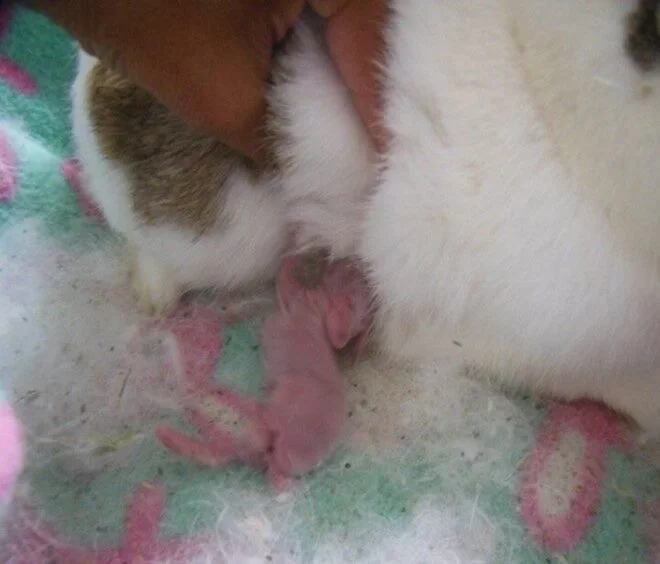
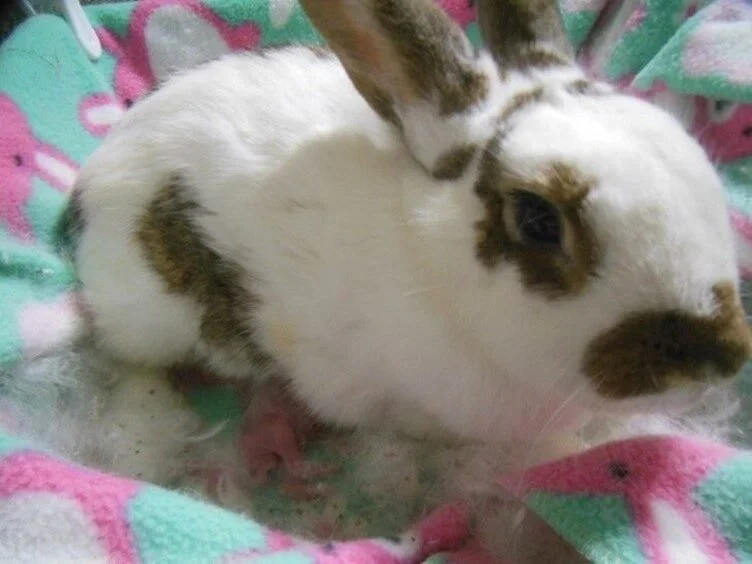
Mother’s milk cannot be replaced. It provides complete nutrition, and hand-feeding kits under 5 days old is very difficult and can interfere with their ability to nurse from Mom.
Some smaller kits may need one-on-one nursing. This should be done at dinner time, after Mom has been away from the kits during the day, when her milk supply is fullest.
Place Mom on a chair or couch while you sit on the floor so you can see the kits clearly. Gently position the kits under her stomach and guide them to her nipples. You may need to calmly hold or pet Mom to keep her still. You should be able to see the kits actively nursing.
One-on-one nursing gives smaller kits first access to milk and is critical for their survival. A top-opening carrier can be used if needed, but it is less effective because you cannot see the kits nurse.
Kits feel cold
It is important that kits are warm. Kits who are cold are unable to digest their Mom's milk. They should feel warm in the palm of your hands. You should feel their body heat when you place your hand just over them in their nesting box. You have a kit who feels much colder then the others. You can do the following.
1 Place a heating pad which is on 24/7 set to low under their nesting box.
2. Block off cold draft to the area.
3. Place the kits in the center of the nesting box with the coldest one in the middle. The body heat of the others can help warm up the kit.
Food for Mom
Because Mom is nursing, she needs unlimited alfalfa hay and young/baby pellets. Recommended pellet brands include Oxbow or Sherwood Pet Health.
You may offer Mom romaine lettuce, spring mix, and carrot tops. Do not give parsley, as it can reduce or sour her milk supply. Other greens are not recommended unless you have experience with them.
Feed greens to Mom only and keep them away from the kits. Kits should not have greens until they are about 12 weeks old, as they cannot digest them earlier and may develop digestive issues such as “poop butt.”



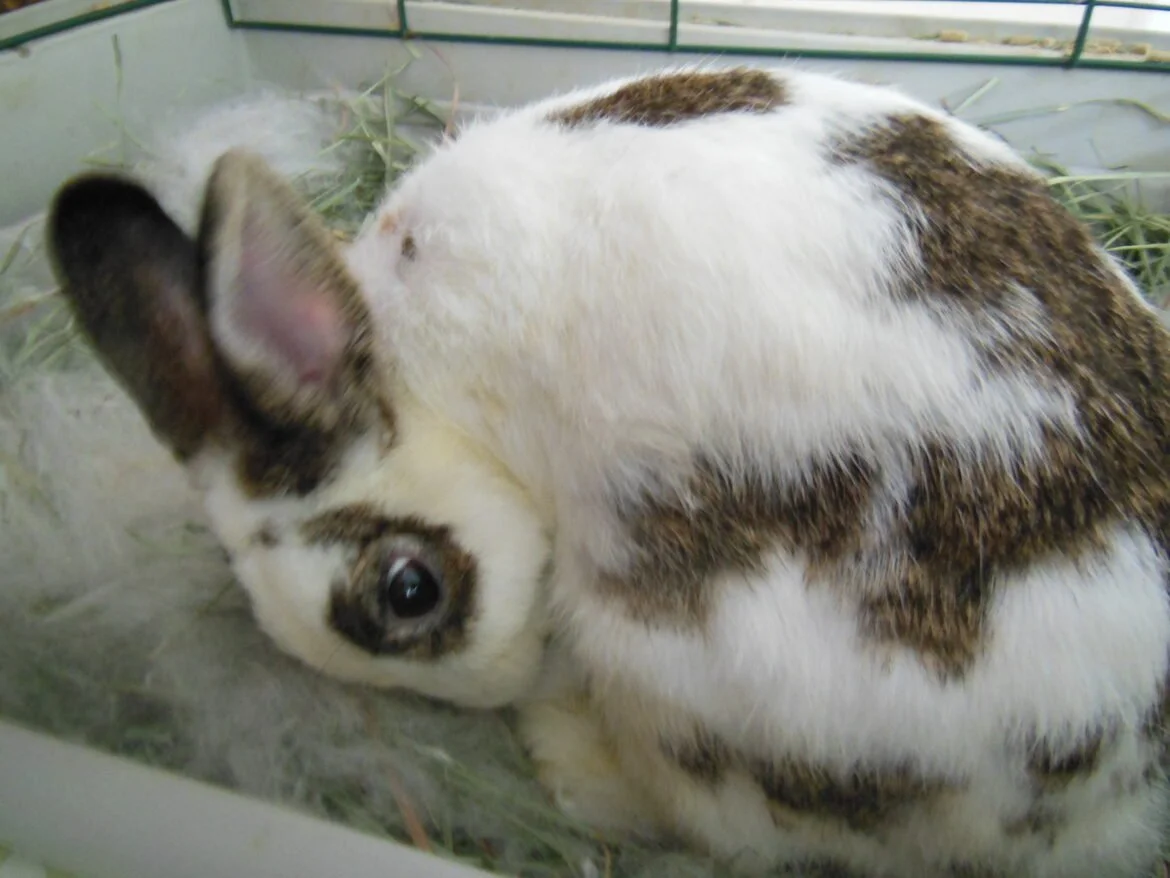
Mom Nursing Her Kits
Hungry kits will make a high-pitched sound. If it has been 12 hours since the last nursing, Mom should be returned to her kits.
When nursing, Mom will arch her back to allow milk to flow. The kits will nurse on their backs or in any position they can to access her milk.
Grooming During Nursing
While nursing, Mom will clean and groom the kits’ private areas and stomachs. This grooming is critical for digestion and helps stimulate the kits to urinate and pass stool.
Baby Hops
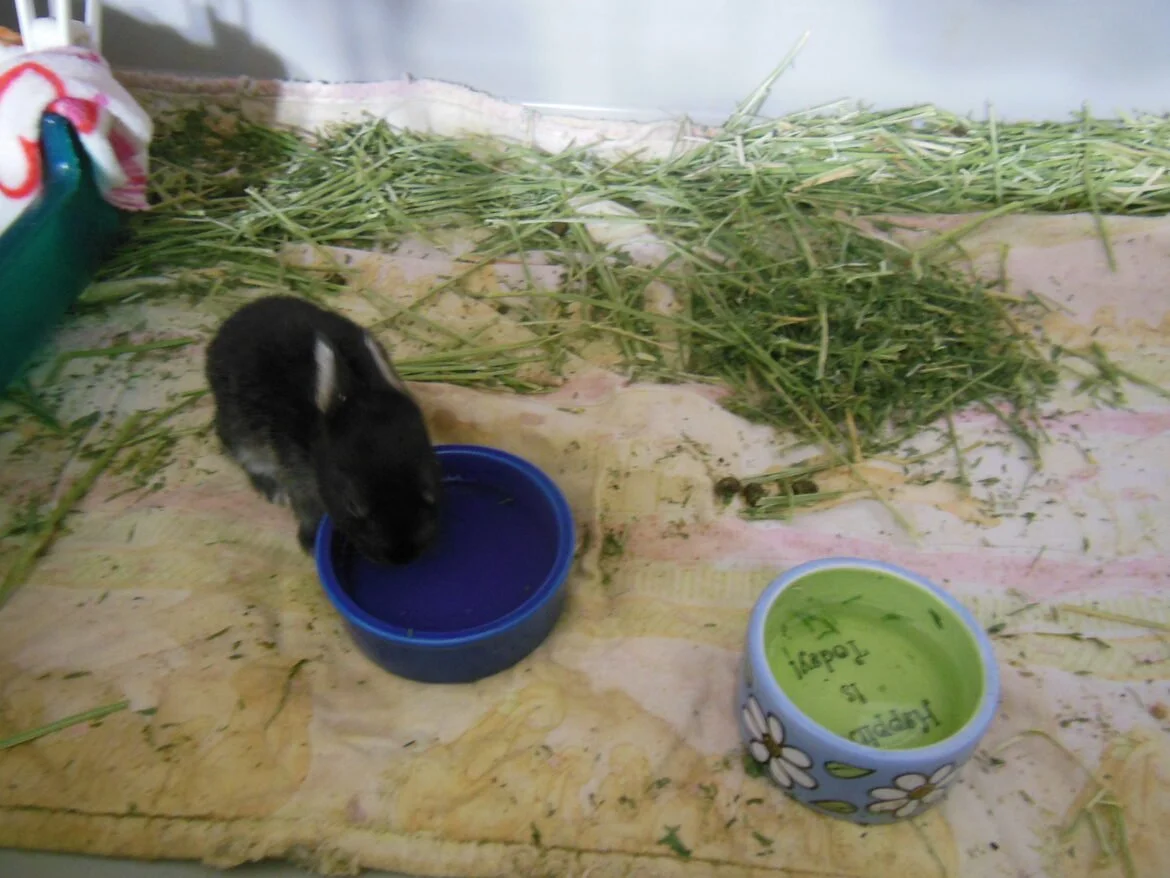
Once the kits begin hopping out of the nesting box, remove Mom’s water bowl and use a water bottle. Kits can hop into a bowl and drown.
If Mom stays with the kits at night, switch her water bowl to a bottle. If using a bowl while Mom is with the kits, place it on a raised surface so only Mom can reach it.
Use a shallow “baby water bowl” for the kits. The kits should only be able to drink from it, not climb into it.
Mom and Kits Time Line out to 1 Year
3 weeks
Mom’s kits can start to eat solid food. We will place a small amount of a Alfalfa flakes in their area.
4 weeks
Mom’s kits should be weaned (stop nursing) at about 4 weeks (28 days). The kits will continue to nurse if Mom allows it, until about 7 to 8 weeks. They may nurse for a short time when Mom is eating. Of course, there are smaller kits who may need to nurse until about weeks 5 or 6. The first assessment of their gender can be done at this time, and you will be able to confirm it as they get older.
7 to 8 weeks
At this time, the kits can become very hormonal, which can lead to fights. They can cause great harm to each other when they fight, similar to adult rabbits. The kits need to be separated if they fight. The gender can be confirmed at this time, and the boys and girls should be split up into different foster sites. Mom can stay with the females.
12 weeks
The males can be fertile at this time. You will need to examine whether one or both testicles have dropped. If they have, you must remove any unspayed females that have not been removed by this time. Males, based on your exotic DVM, can be neutered at this stage. We recommend that the rabbits be at least 2 lbs and that both testicles have dropped. Your exotic DVM should examine the kits prior to neutering for size, age, weight, and overall health.
Mom 12 weeks
Mom can be spayed at 12 weeks if she has not been nursing her kits for 2 weeks. She needs to be separated from nursing her kits, as this can affect the anesthesia during her spay. It is understood that we are not DVMs. Your DVM should be aware that she was a nursing mom and know when she last nursed. We use 12 weeks to allow Mom private time to recover from having kits.
Mom’s Diet after kits and or spay
Mom was on unlimited alfalfa hay and baby pellets. You will need to transition her to adult hay and pellets over a 3-month period. Start with a small portion of adult hay during this time. Gradually change from unlimited baby pellets to adult pellets, scaling back the portion of pellets to the adult portion during this period.
Female Kits 6 months
Female kits can be spayed at about 6 months if they are at least 2 lbs. By this age, their organs are more fully developed for the major operation. The procedure should be performed by an exotic rabbit DVM who has conducted a pre-spay exam.
Kits can be fed until they are 10 months to a year old.
We don’t give kits greens until about 12 weeks. They need to start with small amounts, just a leaf or two. If you give too much, they might get "poopy butt." They can reach adult size at about 10 to 12 months. Remember to start small and introduce a new type of green one week apart.
Kits' pellets are unlimited until about 8 to 10 months. You can start to transition them to adult pellets and portions from 10 months to a year. Each kit is different, of course. Please contact your exotic rabbit DVM or your local 501(c)(3) rabbit rescue group for exact details.