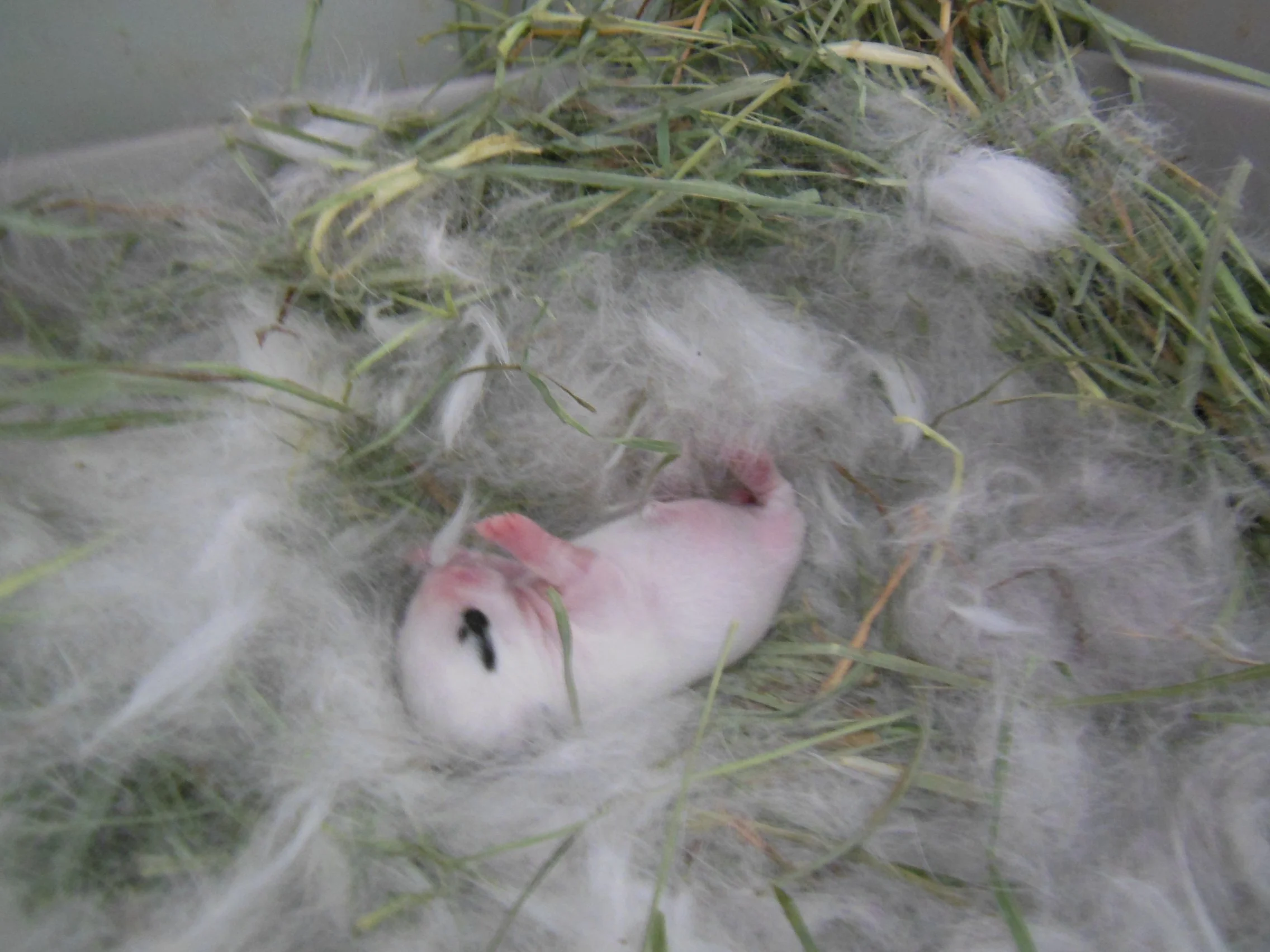
New Born Kit (baby rabbit) Care Guide first 72 Hours
The purpose of this guide is Triage of Mom and Kits while you seek help. We go over the care of on this website. The first 72 Hours are Critical in the their life.
Newborn Rabbit Check List
Newborn Kit Care Guide Summary
Critical First 72 Hours:
Move Dad away from Mom ASAP.
Mom can become pregnant once she delivers.
Move Mom, Dad and kits indoors
Each Minute means LIFE and Death for the kits.
Kits who are cold have a High Risk of passing away.
Create Nesting Box for kits.
Keep Mom/kits in safe in a quite area away from other pets.
Do Not Post or Google Read this guide and then post. ACT NOW
Contact a Rabbit Rescue Group for assistance if needed.
Housing and Nesting:
Use a secure, warm nesting box with soft bedding.
Keep the mother and kits indoors and away from stress.
We have cared for hundreds of new born kits over 15 years for several 501 c3 Rabbit Rescue Groups in the San Francisco Bay Area. We have worked with well know Exotic Rabbits DVM on the care of kits. We have lost several kits but have saved many critical kits. We will give our advice that we have learned through both saving and losing kits.
What to do when you find new born rabbits (kits)
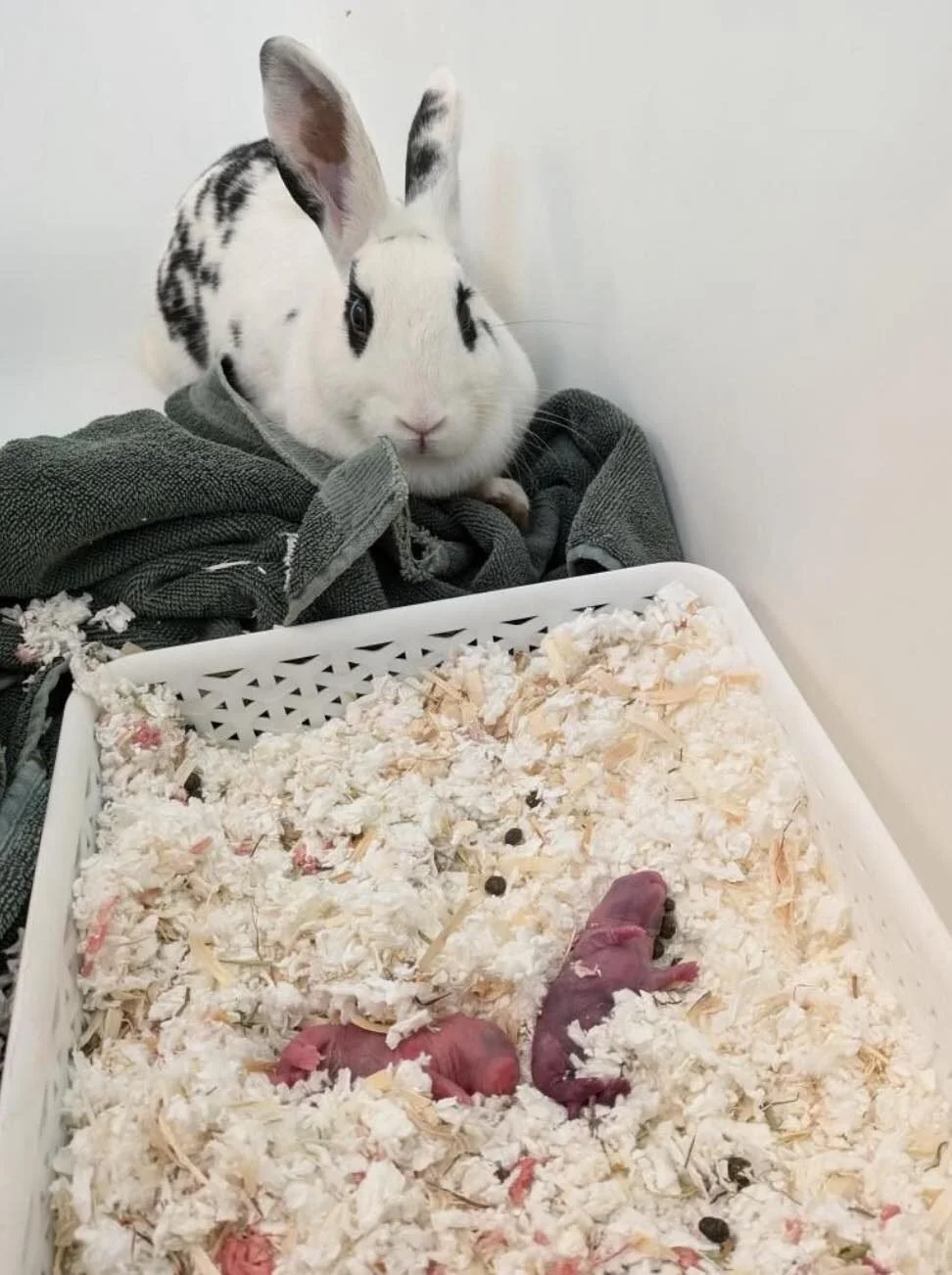
You may find that Mom has delivered kits (baby rabbits).
If you have both Mom and Dad, you must move Dad into separate housing immediately. A female rabbit can become pregnant again right after giving birth, which can result in a “back-to-back” litter in 28–30 days.
To identify the parents, you may need to gently pick up each rabbit and check their private parts, located just above the tail. Male anatomy will be visible near this area. If both rabbits are female, try to match the color of the pulled fur in the nest to one of them. You can also check each female to see if one has pulled fur from her stomach or neck, which indicates she was pregnant within the past 28 days.
If the rabbits are outdoors, you need to move Mom and the kits indoors immediately. Kits that get cold have a high risk of dying. Unlike cats, rabbits cannot move their babies, so carefully search the area for any kits that may have been born outside the nest.
If the kits were born outdoors, place all kits and nesting material into a small box (you then moved them to their nesting box). Then move both Mom and the box into a warm indoor area.
You will need to create a proper nesting box for the kits to keep them safe and warm using her nesting material.
Baby Rabbit Nesting Box
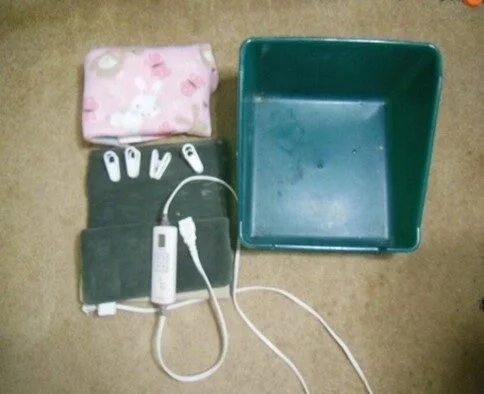
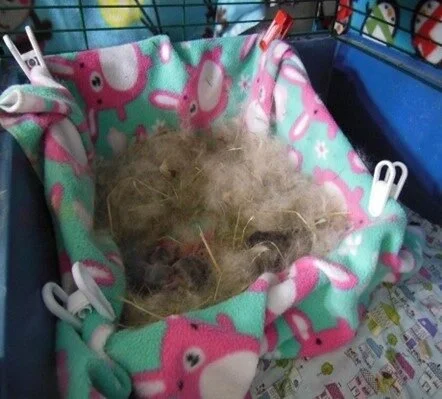
High Back Litter Box, soft fleece, clips and baby electric heating pad.
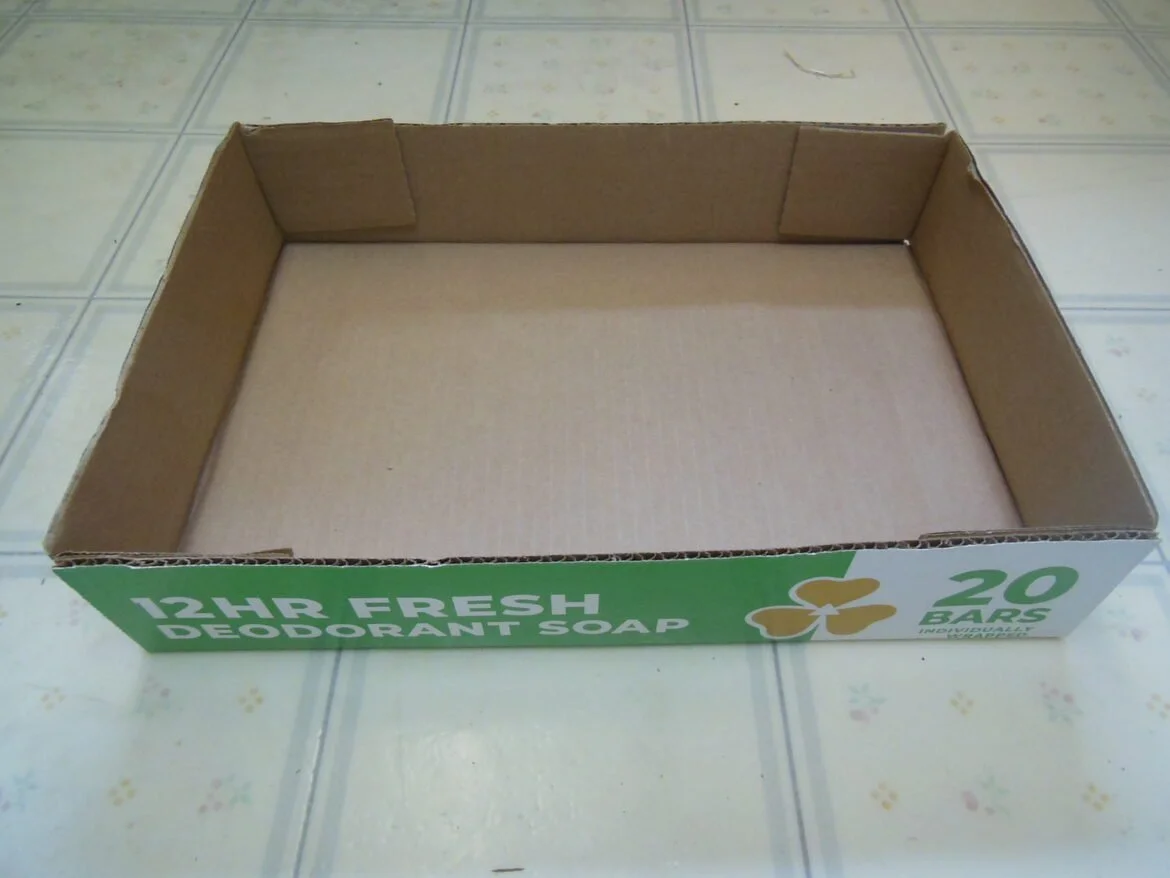
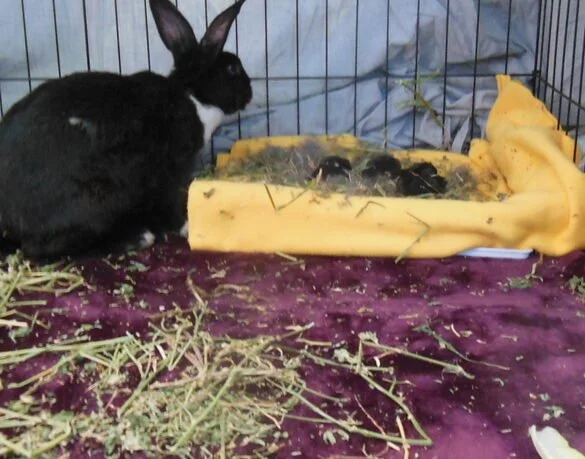
You can use a cardboard box with a top (such as a large cat litter box) as the nesting box. Line it with soft material, then place the kits, nesting material, and Mom’s fur inside. Add a layer of soft fabric to keep the kits warm and secure.
The nesting box should be large enough for Mom to hop in and nurse, and high enough to prevent kits from being pulled out when she leaves.
Nesting Box Setup:
Use one nesting box.
Place fleece or other soft material on the bottom.
Add her nesting material, place the kits, and cover them with Mom’s fur.
Baby Rabbit Triage Care
The next step is to create a safe indoor space for Mom and her kits. This should be a quiet room indoors, away from other pets. Place the nesting box and kits in this room.
Mom should have unlimited alfalfa hay and young/baby pellets. We only give Mom romaine lettuce, carrot tops, and spring mix. Do not give parsley or similar greens, as they may affect her milk.
Mom and kits are now in a secure space.
This guide covers triage care for the first 72 hours only. We will later cover:
Care of newborn kits
Orphaned kits and surrogate mom care
Daily health checks for each kit
How to handle critical kits
Emergency feeding when needed
You may need to adjust the setup for long-term care (8 weeks or more).
You can post and ask for help if needed.