Bunny 101: Rabbit Care Information
RHDV2, GI Stasis, Myxomatosis and spay / neuter
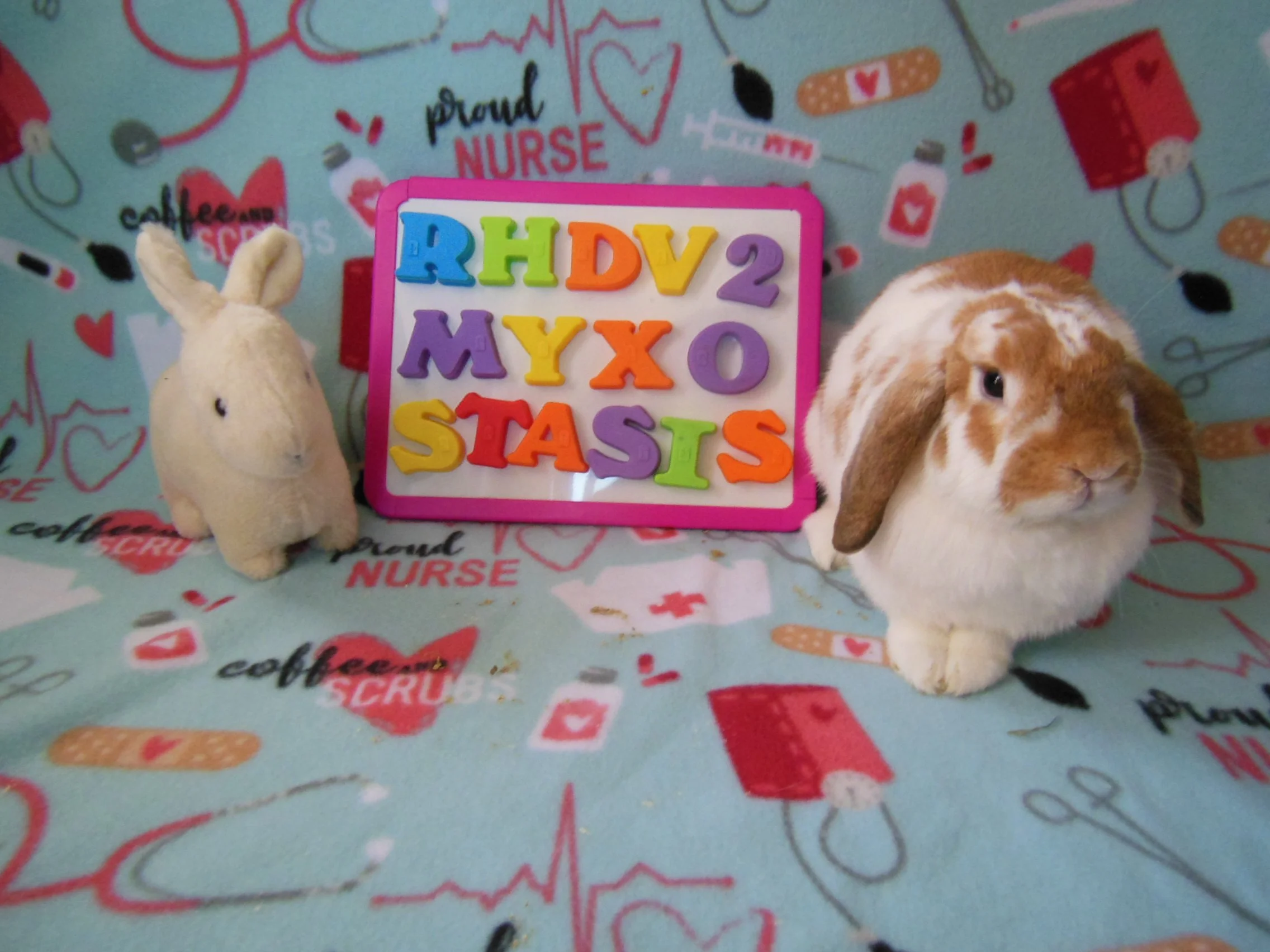
We recommend that your house rabbit remains indoors 100% of the time because there are many dangers for house rabbits who do live outside.
RHDV2(Rabbit Hemorrhagic Disease Virus Type 2) which is a highly contagious and deadly virus for a rabbit. In the United States, there is a vaccine that is safe and effective in preventing the disease. For more information and education on RHDV2, consider the following online resources at
Myxomatosis (commonly known as “Myxo”) is a deadly virus that is spread through transmission via insect bites by fleas and mosquitoes. There is no vaccine or treatment for it and the best mode of prevention is to keep your house rabbit indoors.
Rabbits are prey animals. They may hide symptoms of illness when they are not well. They may also experience a change in their behavior when they are sick.. A rabbit may go into GI stasis for several reasons and may show significant behavioral changes when this occurs. Without treatment from an exotic rabbit veterinarian, a rabbit can pass away within 24 hours.
Why Spaying and Neutering Your Rabbit Is Important
Spaying and neutering are important parts of responsible rabbit care. Unspayed female rabbits have a very high risk of developing reproductive cancers, particularly uterine cancer, as they get older. Unneutered males can also develop reproductive problems, including testicular tumors.
Rabbits are considered exotic pets, and their surgeries should be performed by an experienced exotic-animal veterinarian who is knowledgeable about rabbit anesthesia and surgery.
We volunteer with several 501(c)(3) rabbit rescue organizations in the San Francisco Bay Area, where we regularly see the benefits of spaying and neutering.
When Should Rabbits Be Spayed or Neutered?
Females: Many veterinarians recommend spaying female rabbits at around 6 months of age, provided they are healthy and large enough for surgery. Your veterinarian should determine the appropriate timing based on the individual rabbit's weight, health, and development.
Males: Male rabbits can often be neutered once their testicles have descended, commonly around 8–12 weeks of age. However, the timing should be determined by an experienced rabbit veterinarian. Early neutering can sometimes be more technically challenging if a testicle retracts during surgery.
Behavioral Benefits
Spaying and neutering can significantly reduce hormone-driven behaviors. Both male and female rabbits may display unwanted behaviors when they are not fixed, including territorial marking, mounting, aggression, and difficulty accepting another rabbit as a companion.
After surgery, rabbits need time for their hormones and behavior to settle.
Female rabbits generally need several weeks to recover fully from spay surgery. Male rabbits may continue to exhibit hormonal behaviors for several weeks after neutering while their hormone levels decline.
Important: A newly neutered male can remain fertile for a period after surgery. For this reason, he should be kept away from an unspayed female and should not be bonded with a female rabbit until your veterinarian confirms that it is safe.
Spaying and neutering can help rabbits live healthier, safer, and more manageable lives while also making successful rabbit bonding easier. Always consult an experienced exotic-rabbit veterinarian to determine the safest timing for your individual rabbit.
Disclaimer: If your bunny is in distress or if you have any concerns, don’t hesitate to promptly contact your local licensed Exotic Rabbit Veterinarian. I am not a licensed Exotic Rabbit Veterinarian and this should not be a substitute for official medical advice by a board licensed Exotic Rabbit Veterinarian.
Gastrointestinal (GI) stasis in rabbits is a serious condition where the digestive system slows down or stops, leading to severe health issues. Early detection is crucial, and common signs include:
Reduced or no appetite: Rabbits may show less interest in food or stop eating altogether.
Decreased or absent fecal production: You might notice fewer, smaller, or no fecal pellets.
Lethargy: Affected rabbits often become less active and may sit in a hunched position.
Abdominal discomfort: Signs include teeth grinding, a tense abdomen, or a bloated appearance.
Changes in grooming habits: A rabbit may groom less, leading to a dull or unkempt coat.
If you observe any of these symptoms, it's essential to consult a veterinarian promptly, as GI stasis can progress rapidly and may become life-threatening without immediate treatment.
We see this all the time on social media posts: “My rabbit is sick. What should I do?” The answer is that you should see an exotic rabbit veterinarian as soon as possible.
We are medical rabbit volunteers for a local rabbit rescue group, and we regularly teach people how to take their rabbit’s temperature.
It is important for your rabbit’s health that you know how to take their temperature. Just like people, when rabbits are sick, checking their temperature can help you determine how serious the situation may be.
If your rabbit’s temperature is low, you should provide heat support. If your rabbit’s temperature is high, you can place a small amount of cool water on their ears. Rabbits release body heat through their ears.
Rabbits cannot vomit. What goes into a rabbit’s digestive system may not always be able to come back out, which is why preventing them from chewing or swallowing dangerous objects is so important.
Rabbits have a delicate and relatively narrow digestive system, so you must bunny-proof every area where your rabbit has access. Rabbits commonly chew electrical cords, baseboards, furniture, and other household objects. They may also eat plants that are toxic to them if those plants are within reach.
Swallowing an inappropriate object or material can cause a blockage in the digestive tract, which can lead to painful gas, gastrointestinal stasis, and potentially life-threatening bloat. A rabbit’s condition can deteriorate very quickly, and a serious gastrointestinal problem can become fatal within hours if it is not treated promptly.
If you suspect your rabbit has eaten something dangerous, has stopped eating or producing feces, appears bloated or painful, or is behaving unusually, contact an experienced rabbit-savvy veterinarian immediately.
Rabbit’s Home Setup
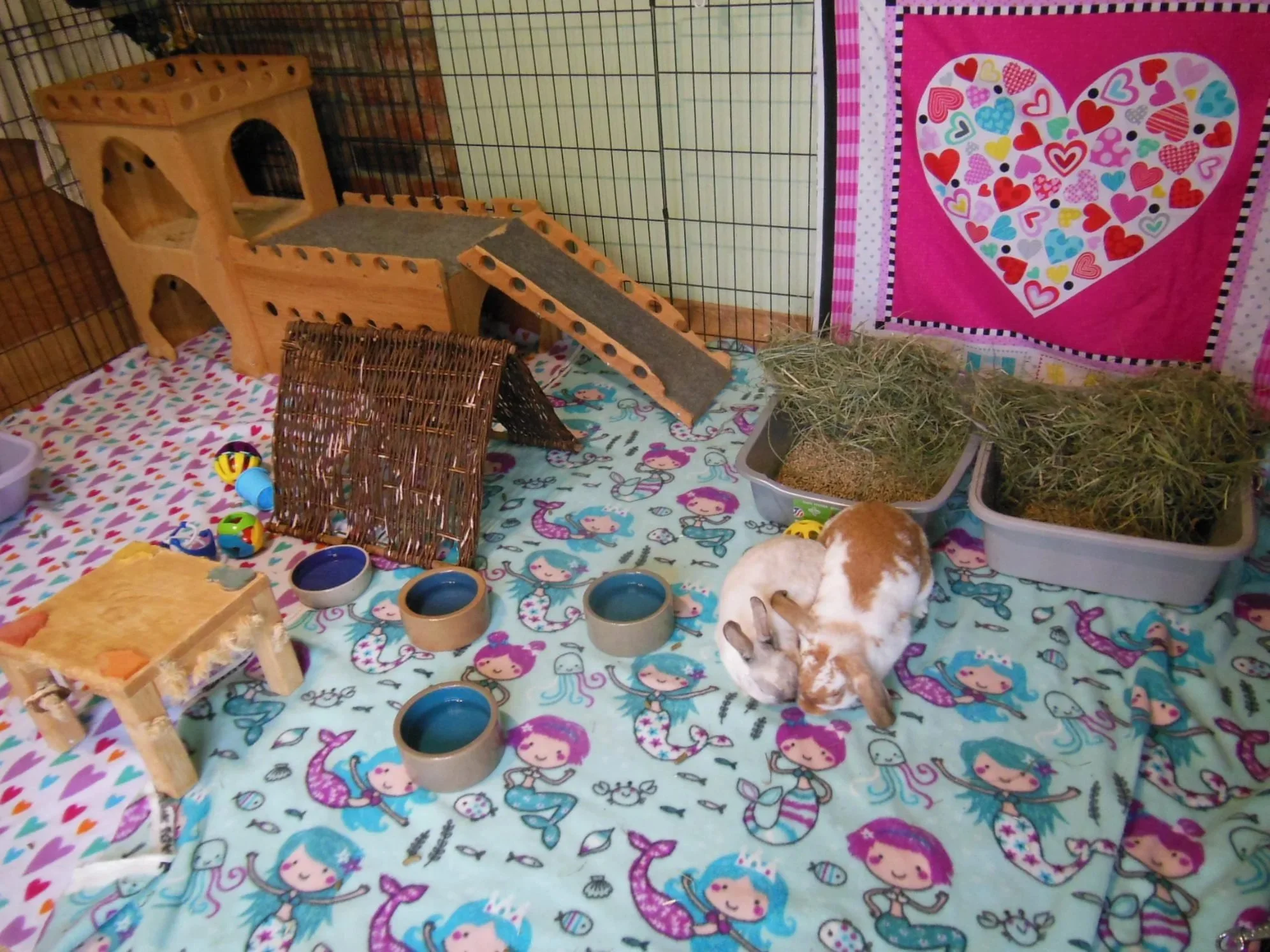
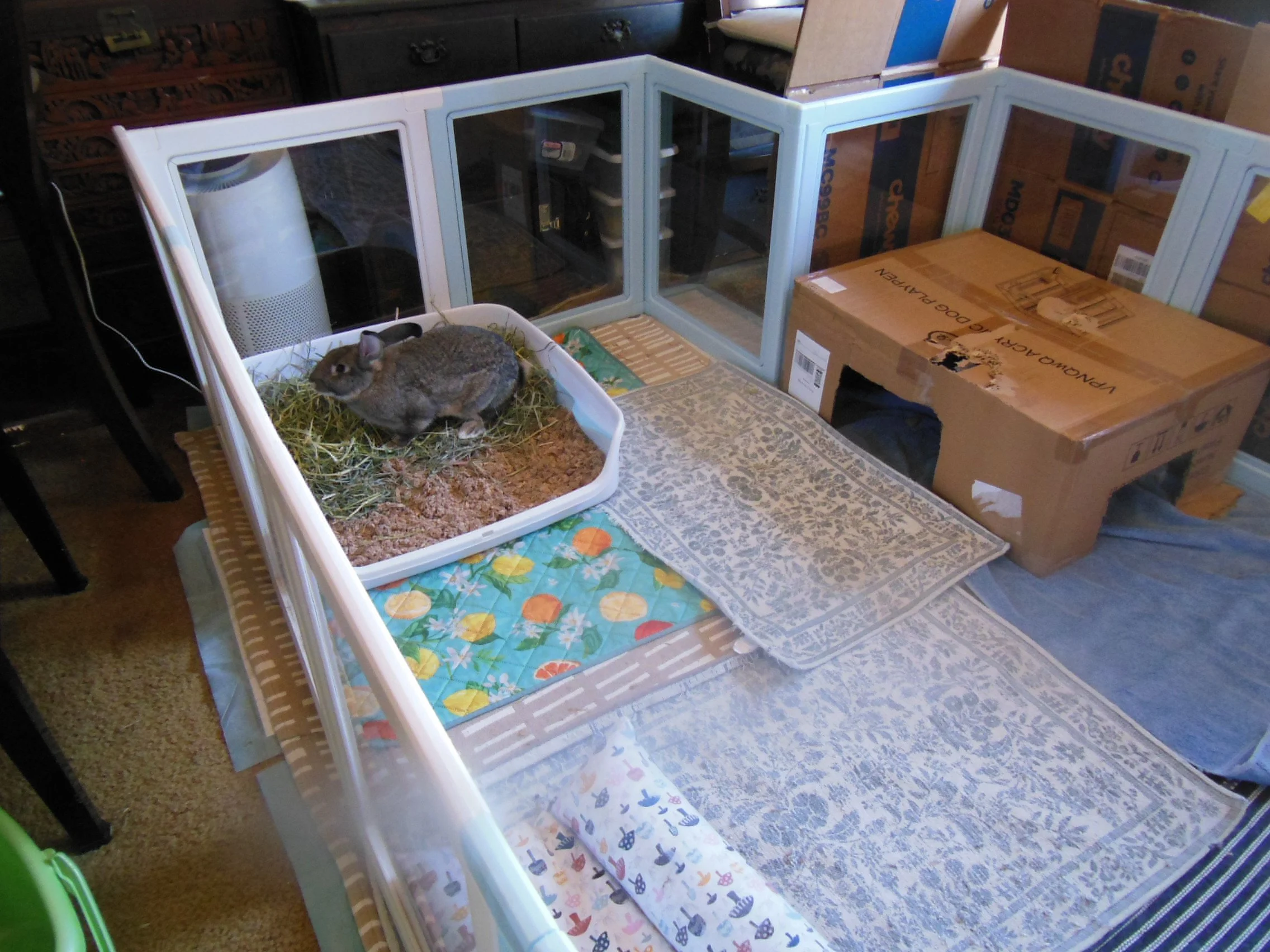
Your rabbit should be housed in an X-Pen or similar, providing enough room for the rabbit to hop around. 24 square feet of living space (the area of a typical 4’ x 6’ X-Pen) is recommended. If you have a bonded pair, the area should be much larger for both rabbits to move around freely.
X-pens come in different heights from 24" to 36" - even up to 48” tall - meant for those rabbits who are active “jumpers.” Those who are housed in an X-Pen may have “playtime” in a larger space, i.e., an X-Pen with a greater area, or even in a hallway or similar. If you can, your rabbits can also have their own room to live in and have playtime all in one space!
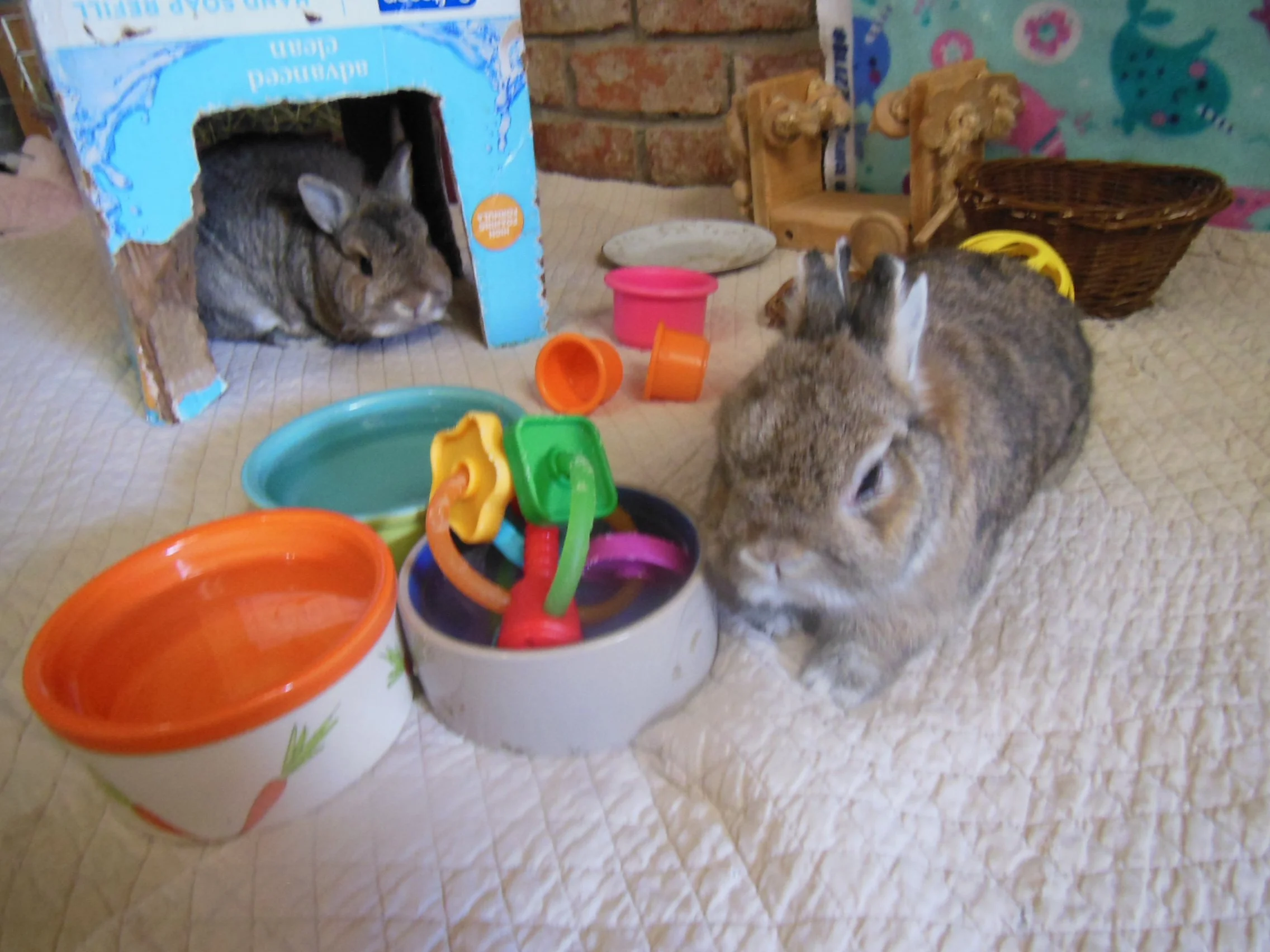
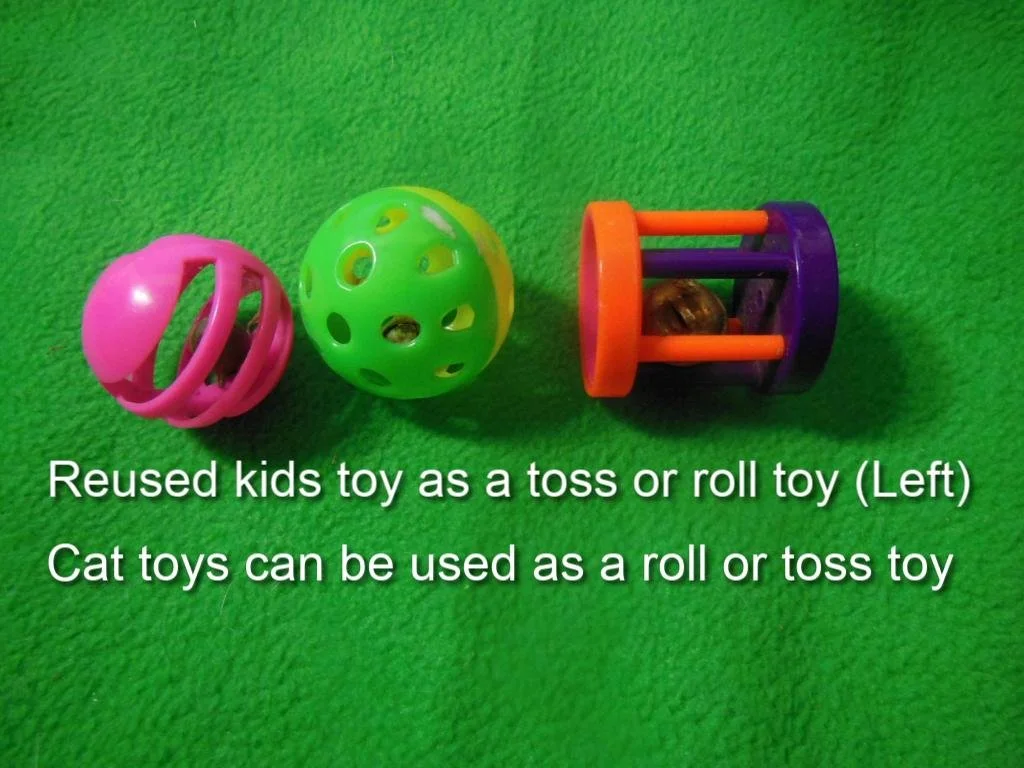
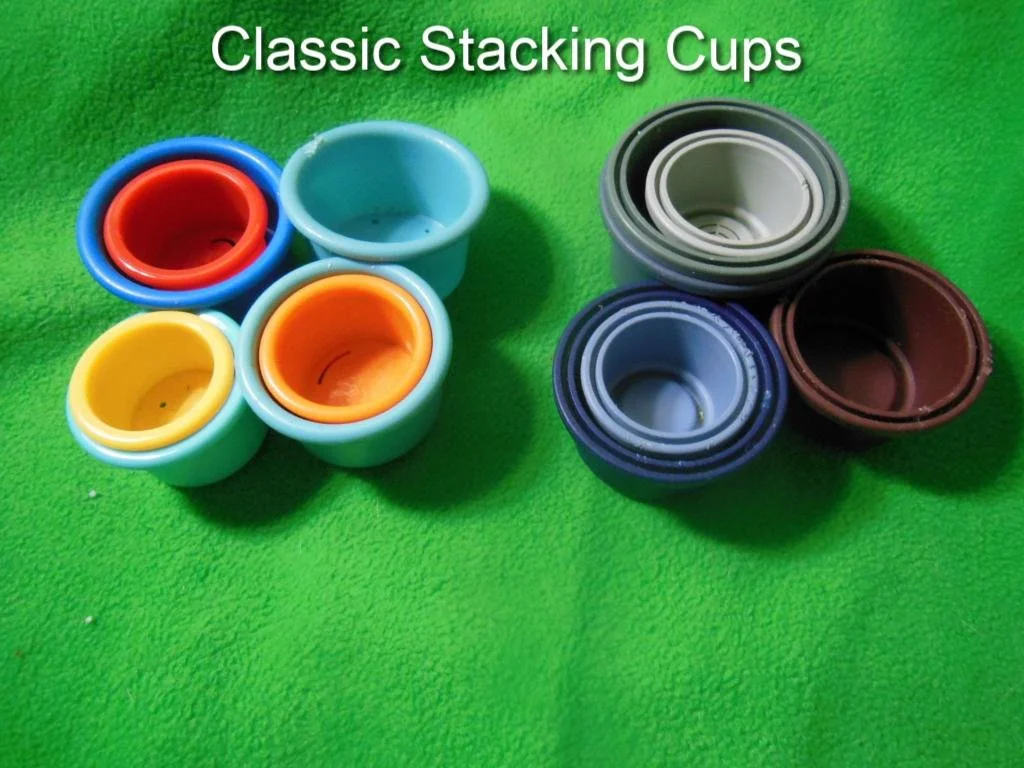
They will need a litter box, unlimited hay and a solid heavy water bowl. The litter box and water bowl should be cleaned every day or so. They will also need toys and a Willow Tent or something similar as a place to “hide.” Rabbits are prey animals and like to feel safe under something.
Rabbits have a very thin layer of fur on their back legs (or hocks) and need to have a soft fabric like fleece or other soft material to prevent what is called sore hocks ( Pododermatitis ). It is a pain condition where the rabbit’s fur is missing on their feet or hocks. Their skin becomes exposed. It is similar to pain when you have a blister on your hand.
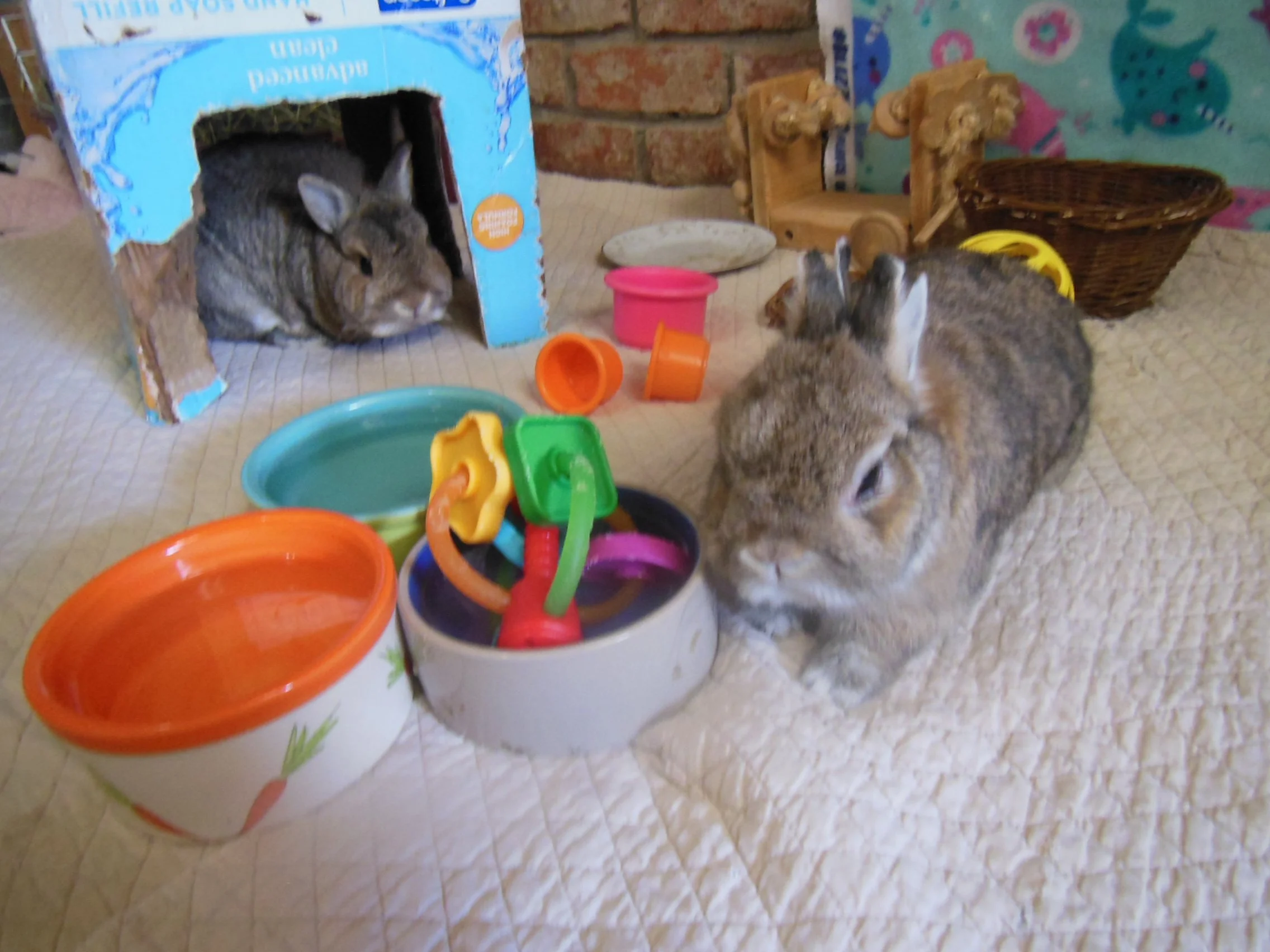
Rabbits need a solid, heavy water bowl that they can’t easily tip over. It’s helpful to provide two or more bowls, especially since rabbits like to put their toys in their water bowls.
Water bottles generally should not be used unless there is a medical reason. They can be difficult to clean, and they don’t allow rabbits to drink large amounts of water as easily as a bowl does.
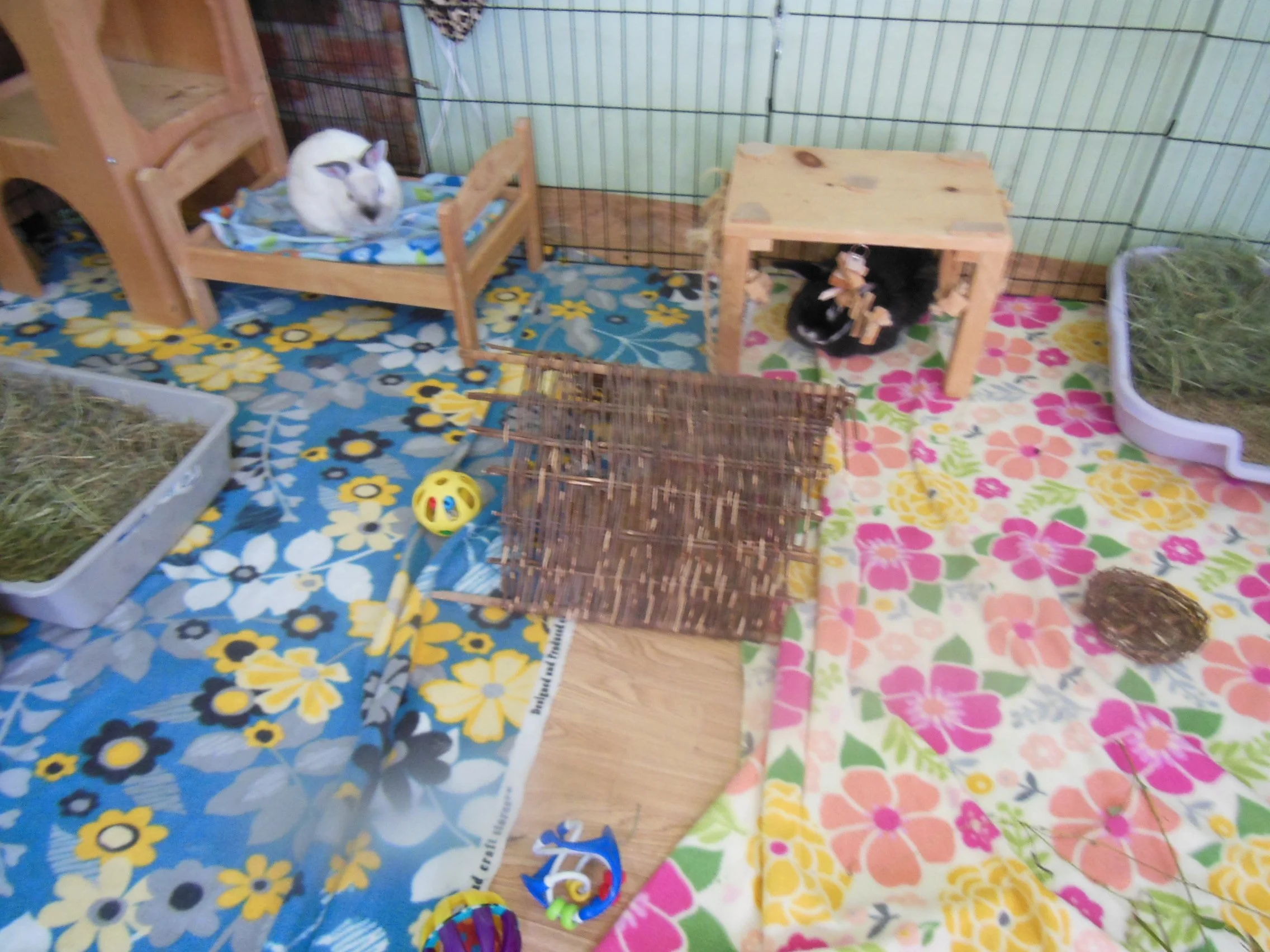
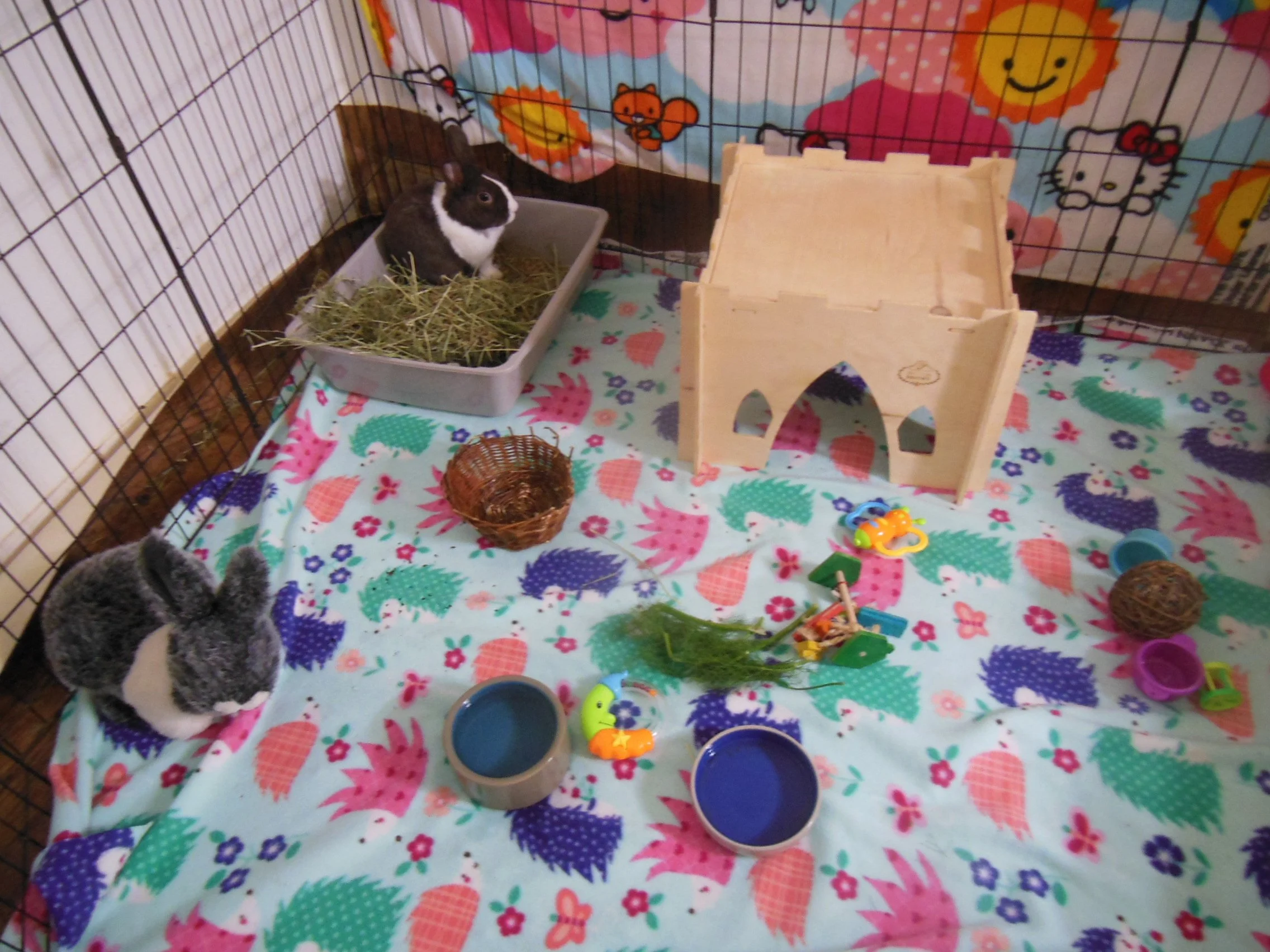
Rabbits are prey animals, so they need a safe, quiet place where they can relax and sleep. A safe space can be a willow tent, a castle, a simple cardboard box, or many other options.
Regardless of the type of shelter you choose, there are two important things they should have in common:
A roof or covered area where your rabbit can lie down and feel protected and safe.
Two exits so your rabbit never feels trapped and can easily escape from the shelter if they become frightened.
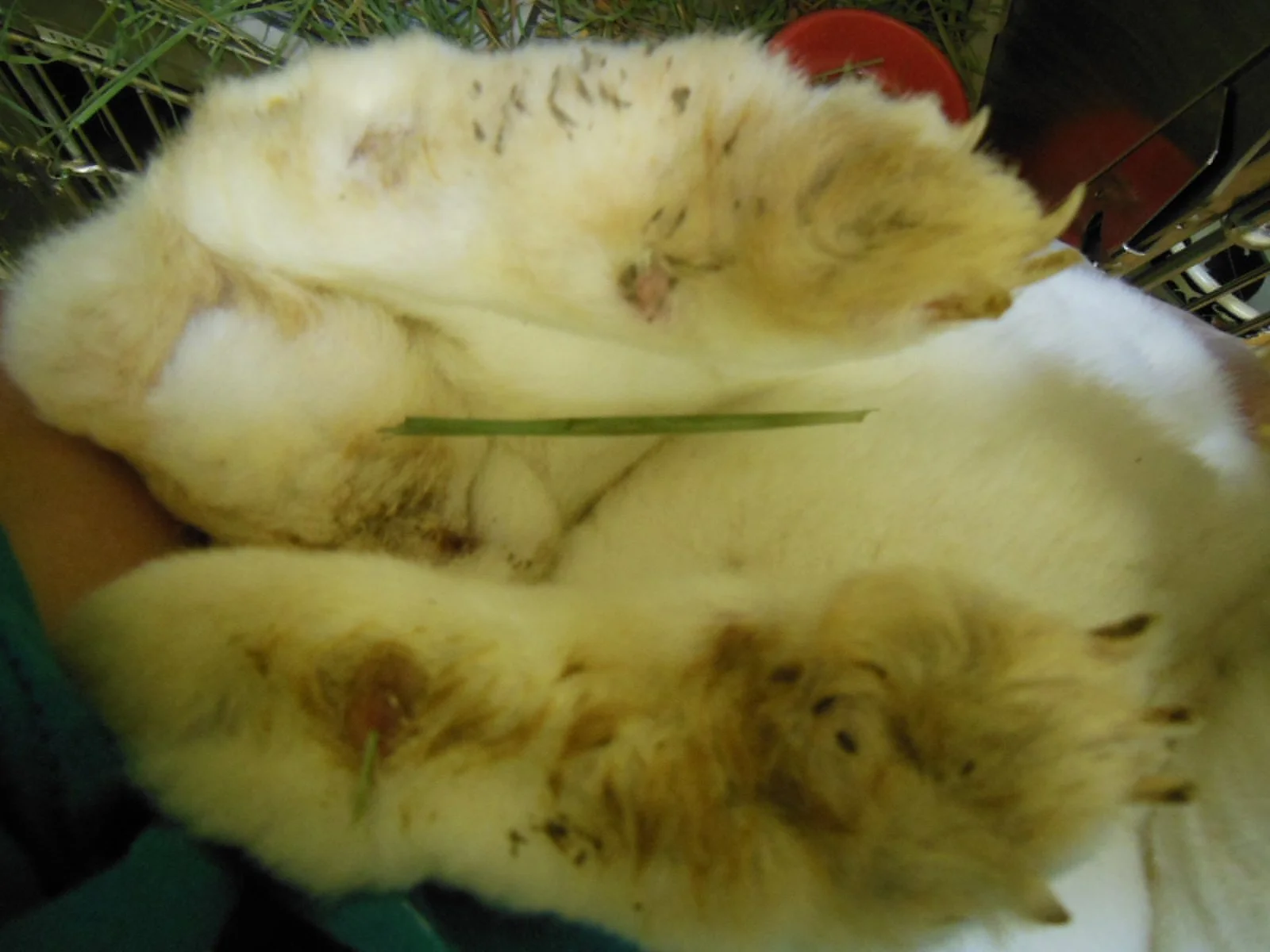
Example of sore hawk and long nails from a rabbit who was turned into the shelter. We helped on the health check.
Rabbit’s room with a baby gate
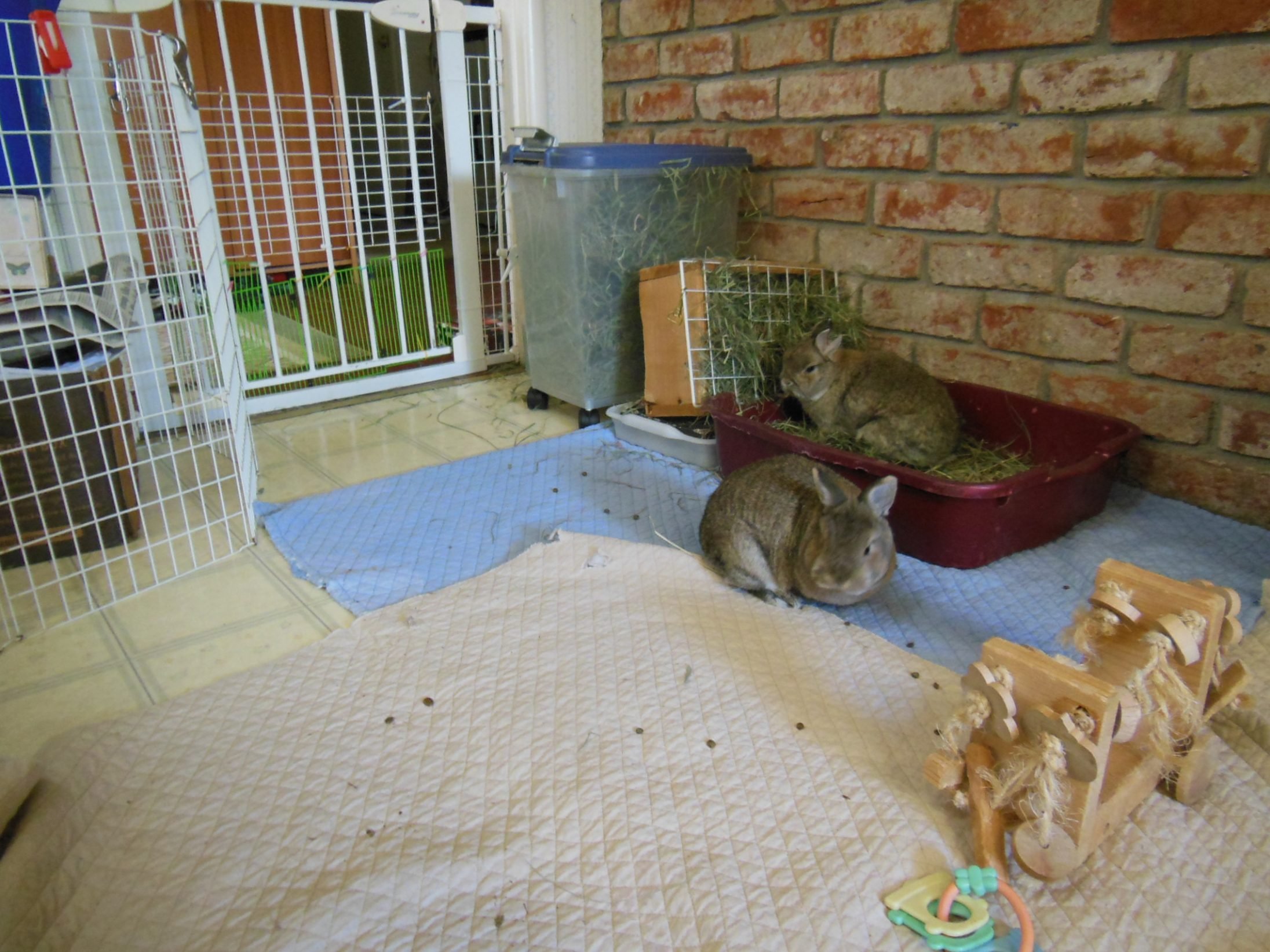
Your bunnies can free-roam in their own room without a door. You can consider using a baby gate if they are in an area with no door to keep them within a space. You can also use a baby x-pen or similar to block off areas of the room.
The home or play area should be free of cords, plants or other things that may cause harm to them. Some rabbits may hop onto tables and push things over that could fall onto them, so these items should be totally removed from the home or play area. You don't want things to fall on them or other items that could fall into their home by accident!
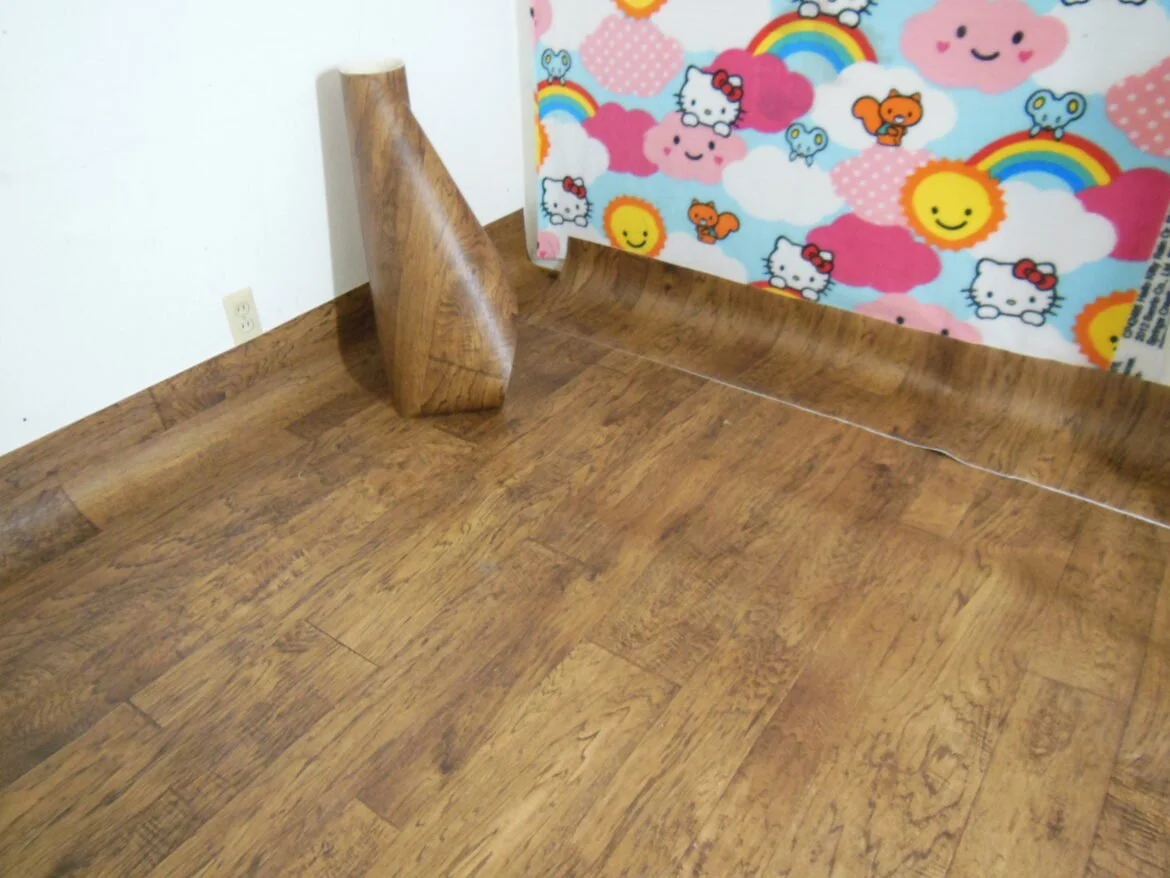
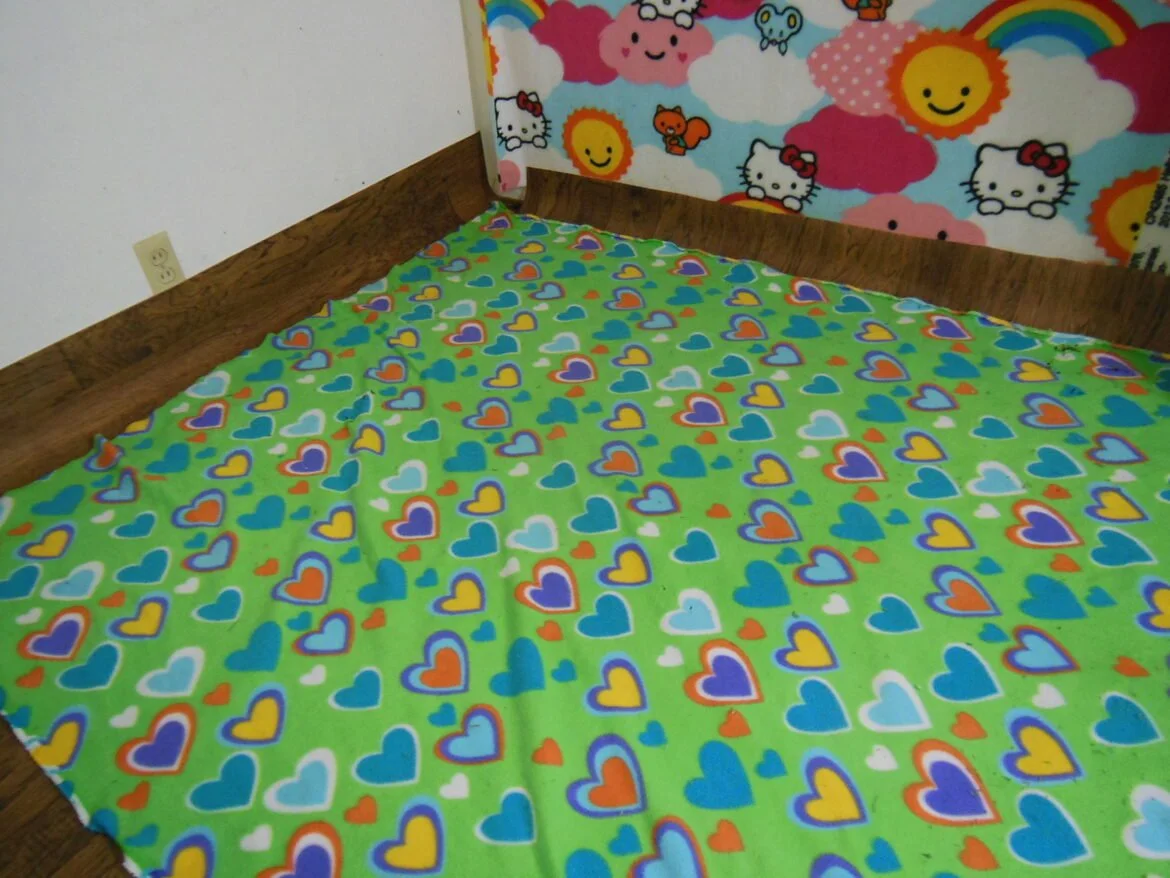
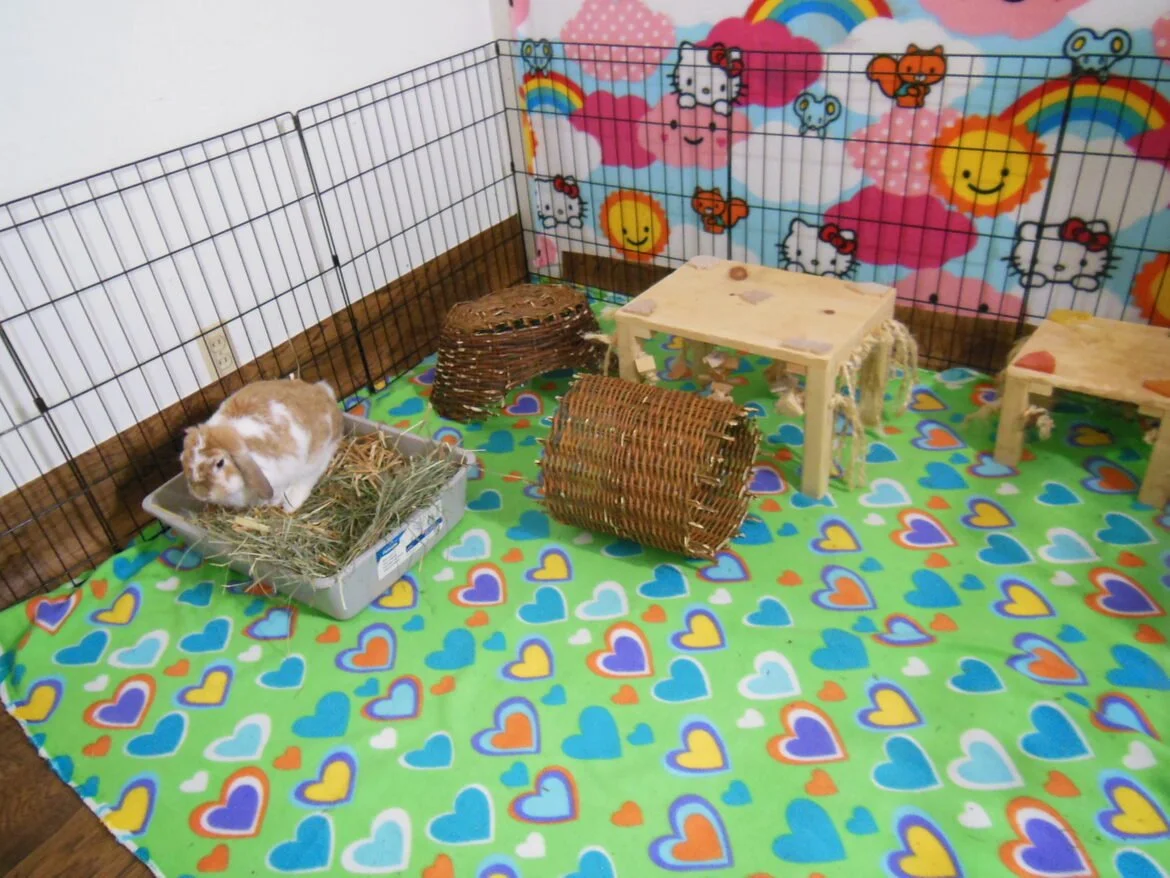
Consider placing vinyl from a home supply store on your floor to protect it and to make clean up simple. The vinyl or similar should fold up along the sides of the walls.
Place your bunny in the area along with the litter box, food, water bowls, hideaway, toys, and treats. You can place the bunny in a carrier and then clean up their place. It is difficult to clean up their area while they are in their home area. You might hear a few "thumps!"
Rabbit needs hay 24/7

Hay is the most important item in your rabbit's diet. Rabbits need to have unlimited access to hay as they tend to eat their body volume’s worth of hay each day. Rabbits - unlike people - are grazing animals and need to eat all of the time to keep their digestive system moving and healthy.
Rabbits tend to spread the hay around their litter box. However, rabbits are very clean and will not eat the soiled hay. You can place the hay in a hay rack on one side of their litter box to keep it clean, fresh, and accessible at all times. Adult rabbits do best with orchard or timothy hay to maintain optimal health.
Of course, there are other types of hay. Oat Hay (treat hay) can be mixed in as a small amount with Orchard and/or Timothy Hay . Oat Hay tends to have more calories which is why they like it. Alfalfa hay is meant for baby rabbits (kits) and Nursing Moms. Long-Fur Adult rabbits can also have some Alfalfa hay mixed in with Orchard and/or Timothy Hay since their long fur requires extra calories to produce.

Rabbit Pellet Time
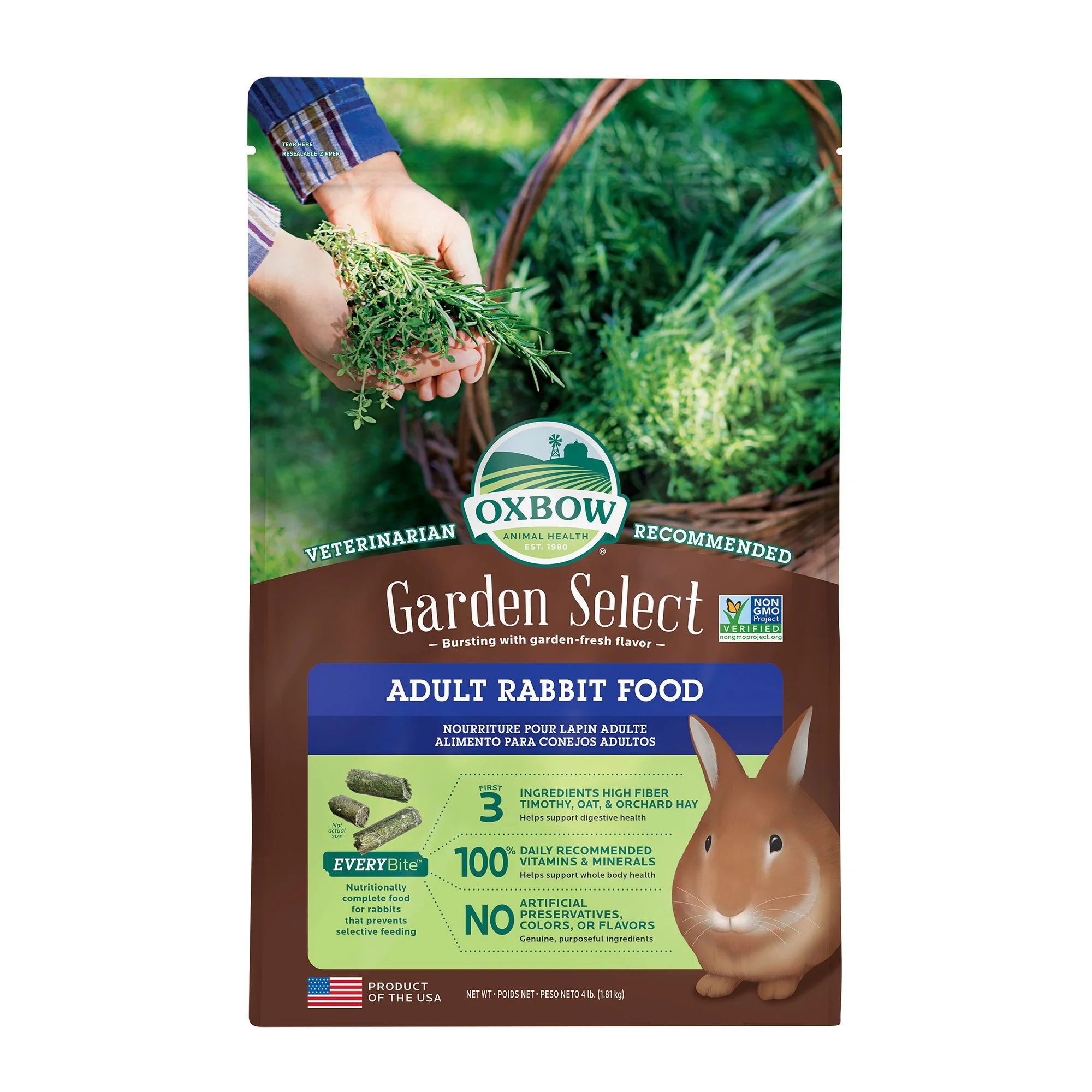

Rabbit pellets should make up only a small portion of your rabbit’s daily diet. Choose a high-quality pellet and follow the feeding guidelines recommended for your rabbit.
We like to use pellets as part of our morning and evening health checks. We make a little sound with the pellet bag to get their attention, then offer them a small amount. A healthy, alert rabbit should typically hop over to greet you when they hear the bag.
This simple routine can become a helpful part of your rabbits’ daily wellness check. It gives you an opportunity to observe their appetite, energy, movement, and overall behavior while also giving them a small treat they enjoy.
We like to make a lot of noise as we get their pellets. We use their pellets as part of their Morning and Dinner Time Health Check.
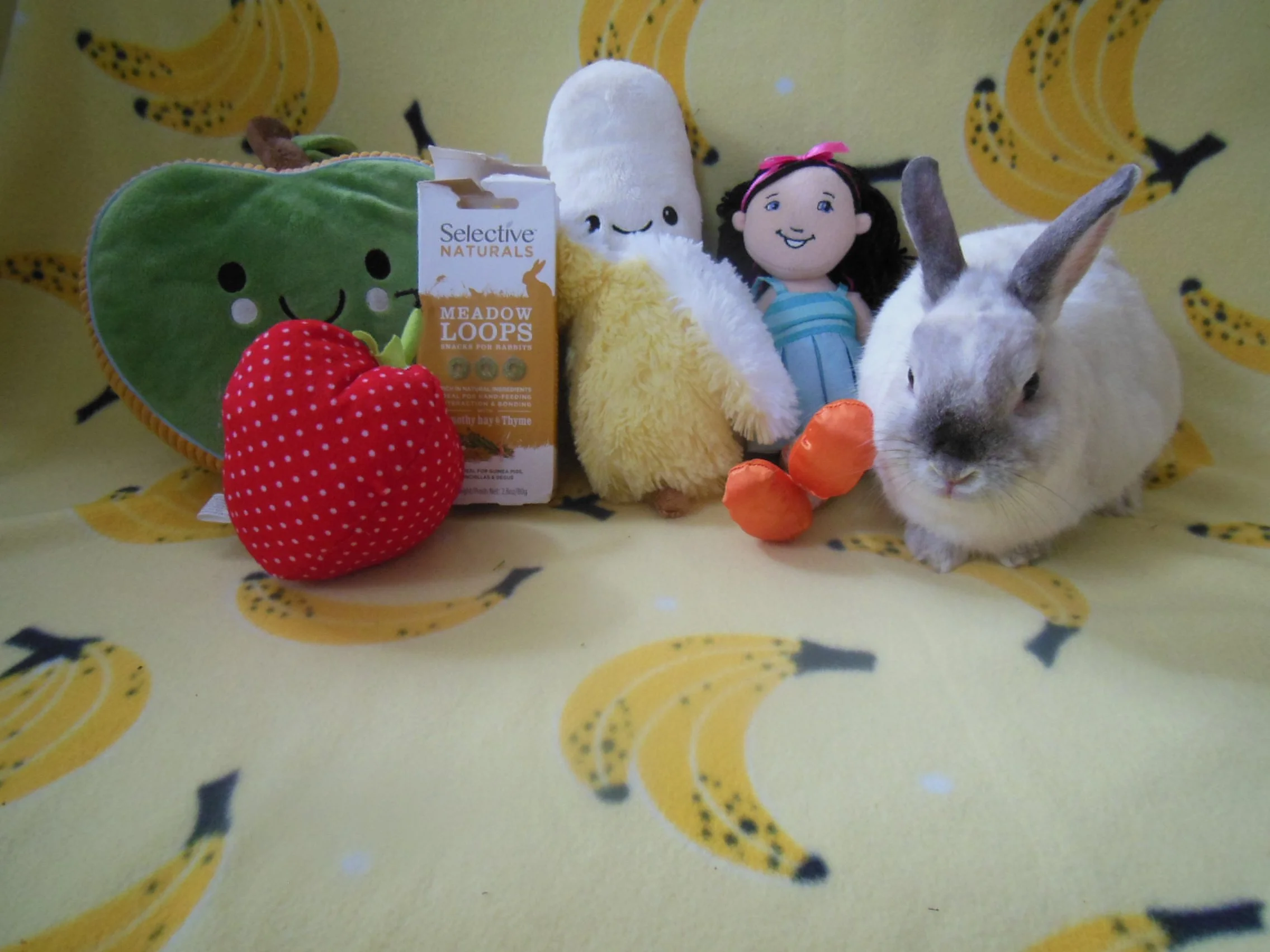
Rabbit Treats
Rabbit treats should be given in very small amounts because many treats contain a large amount of sugar. If a rabbit eats too many treats, it can lead to excess cecotropes, sometimes resulting in a dirty or “poppy” bottom.
Rabbit treats generally fall into two groups. The first group consists of fruits that both you and your rabbit can eat. The second group consists of specially baked treats that are made specifically for rabbits.
Fruit Treats
Bananas are by far one of their favorite treats, especially when the banana is ripe. However, only a very small amount should be given—about the size of one or two blueberries.
Rabbits also enjoy blueberries and strawberries. Slicing the fruit can help release its aroma, which may make it more appealing to your rabbit.
Carrots should not be used as it high in sugar. Carrot tops are fine as a treat.
Baked Treats
Baked rabbit treats are great for rewarding your rabbit after nail trims or other events that may be stressful for them. You can even tap on the treat box to help your rabbit learn that a treat is coming.
Using Treats to Check on Your Rabbit
Treats can also be useful for checking whether your rabbit is feeling well. If you notice that your rabbit does not look or act like their usual self, you can offer a favorite treat.
If your rabbit suddenly refuses a favorite treat, especially when they normally get excited about it, pay close attention to their behavior and appetite. A rabbit that is not eating normally can become seriously ill very quickly. If you are concerned that your rabbit may be sick, contact a rabbit-savvy exotic-animal veterinarian promptly.
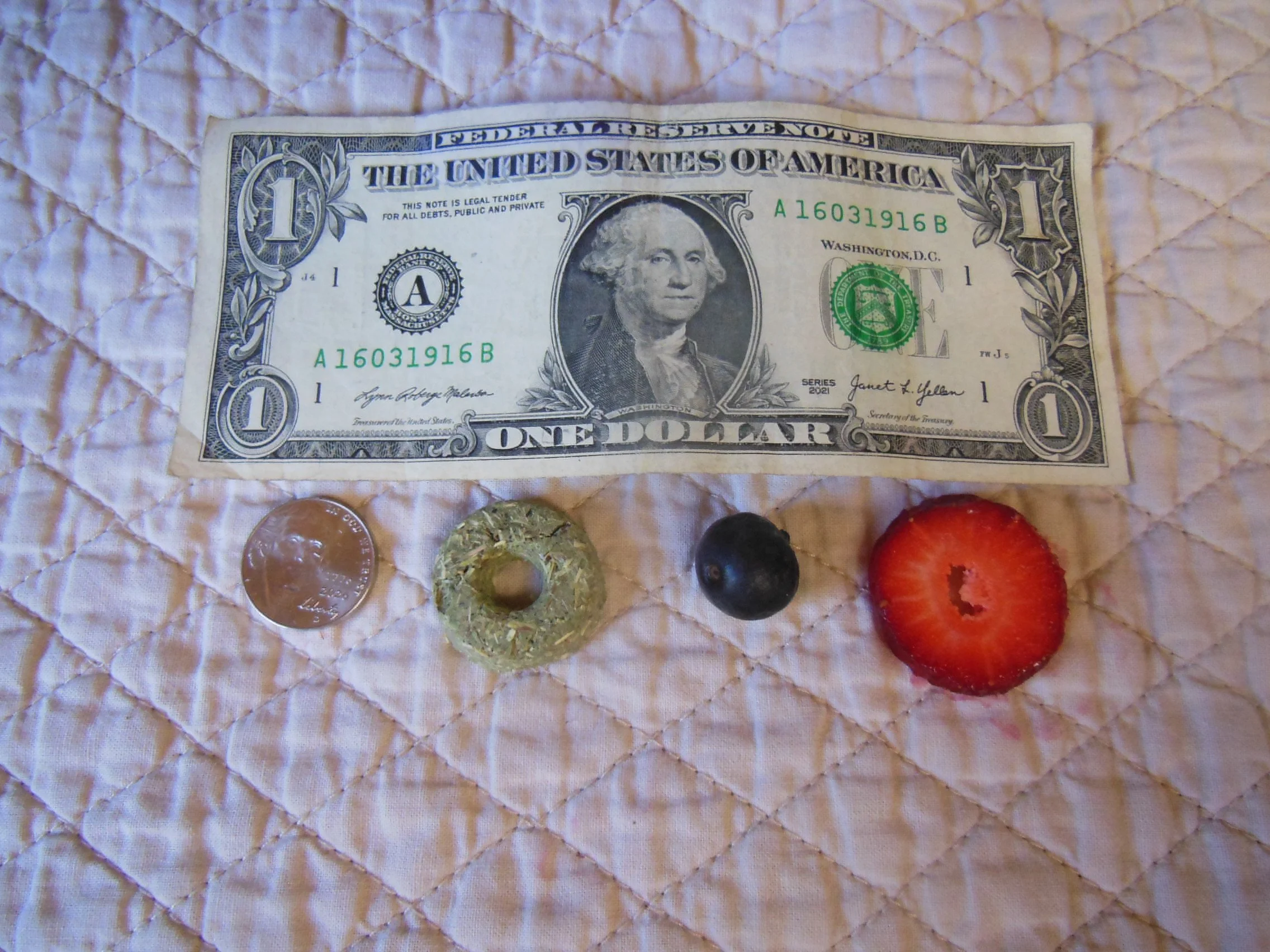
Example of the size of treats that you should use.
Rabbits have very sensitive digestive systems, and too many sugary or starchy treats can lead to soft stools that stick to the fur around their bottom, sometimes called “poopy butt.”
A rabbit’s diet should be primarily unlimited grass hay, with fresh greens and a small amount of pellets; treats should be occasional and tiny.
If a rabbit already has feces stuck to its fur, it’s important to clean it gently and keep the area dry. Avoid forcibly pulling dried feces off, since rabbit skin is delicate. If the diarrhea is persistent, the rabbit stops eating, seems lethargic, or has a dirty bottom repeatedly, a rabbit-savvy veterinarian should be contacted promptly.
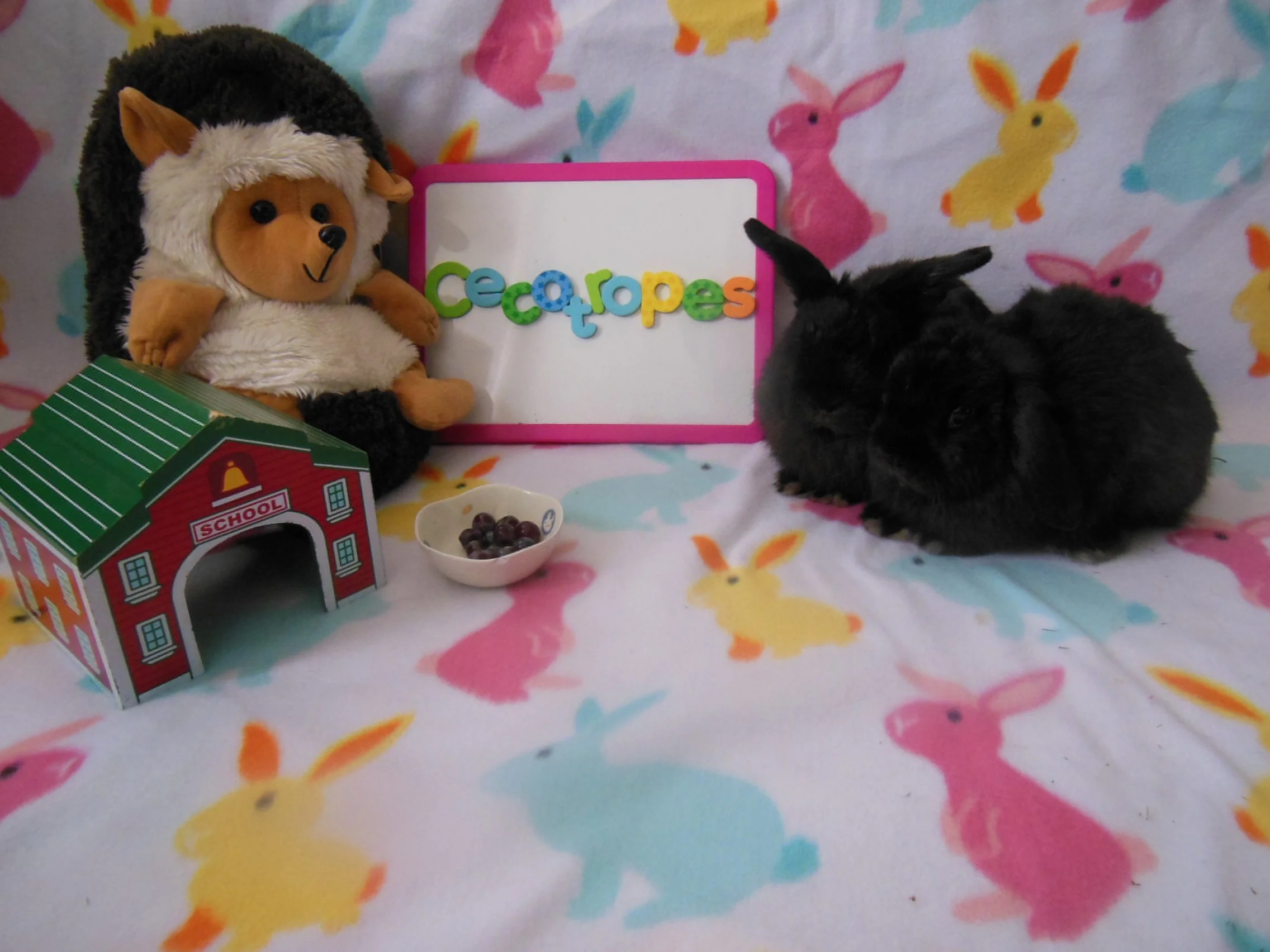
Cecotropes and Rabbit Health
Rabbits have a unique two-part digestive system. One important part of this process is cecotrophy, which means eating their cecotropes after passing them.
Cecotropes are small, soft, moist, and often look like a bunch of dark grapes. They may also have a distinctive smell. Cecotropes are rich in vitamins, beneficial microorganisms, and other nutrients that are important for your rabbit’s health.
Your rabbit should normally eat cecotropes every day. You may see your rabbit grooming its private area and then raising its head as it eats the cecotropes directly. This is completely normal behavior, and you may never see the cecotropes because rabbits usually eat them immediately.
You may occasionally see uneaten cecotropes, particularly with young rabbits. However, if an adult rabbit regularly leaves cecotropes behind, there may be an underlying reason. Too many treats, an inappropriate diet, obesity, stress, mobility problems, or a medical condition can all contribute.
Some rabbits may need assistance accessing their cecotropes:
Older rabbits with arthritis or other mobility problems may have difficulty reaching their hindquarters.
Rabbits wearing a recovery cone may not be able to reach their cecotropes normally. Ask your exotic/rabbit veterinarian for guidance if this occurs.
Rabbits with medical conditions may also need assistance. Your exotic/rabbit veterinarian can advise you on the safest way to help.
If your rabbit cannot eat its cecotropes normally, do not assume that you need to hand-feed them. Consult your exotic/rabbit veterinarian first. They can determine why your rabbit is having difficulty and whether assistance is necessary.
Cecotropes are an important part of your rabbit’s digestive system and overall health. Regularly eating them is a normal and essential behavior for a healthy rabbit.
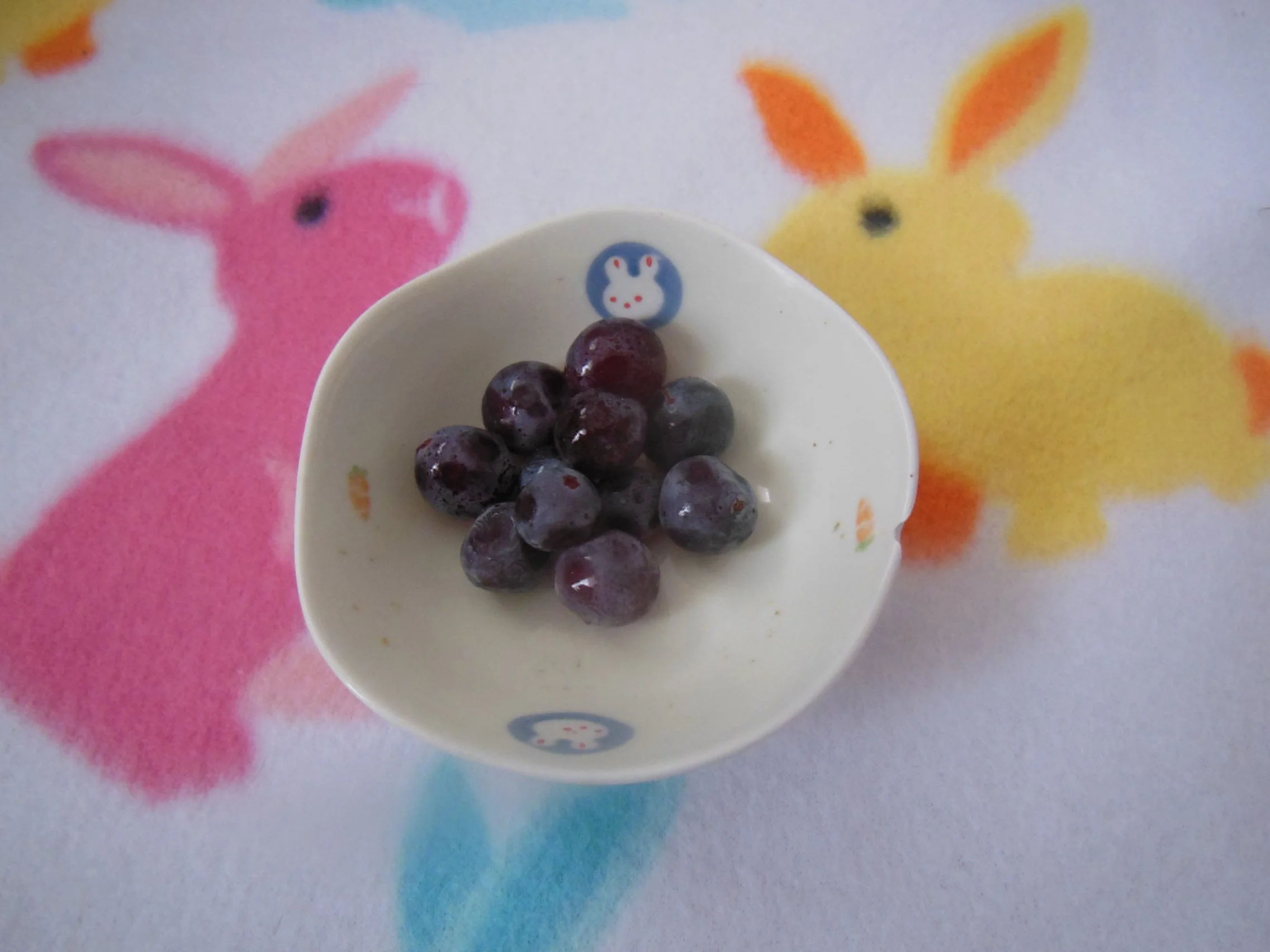
cecotropes look like a bunch of small grapes.
Zora eating her cecotropes
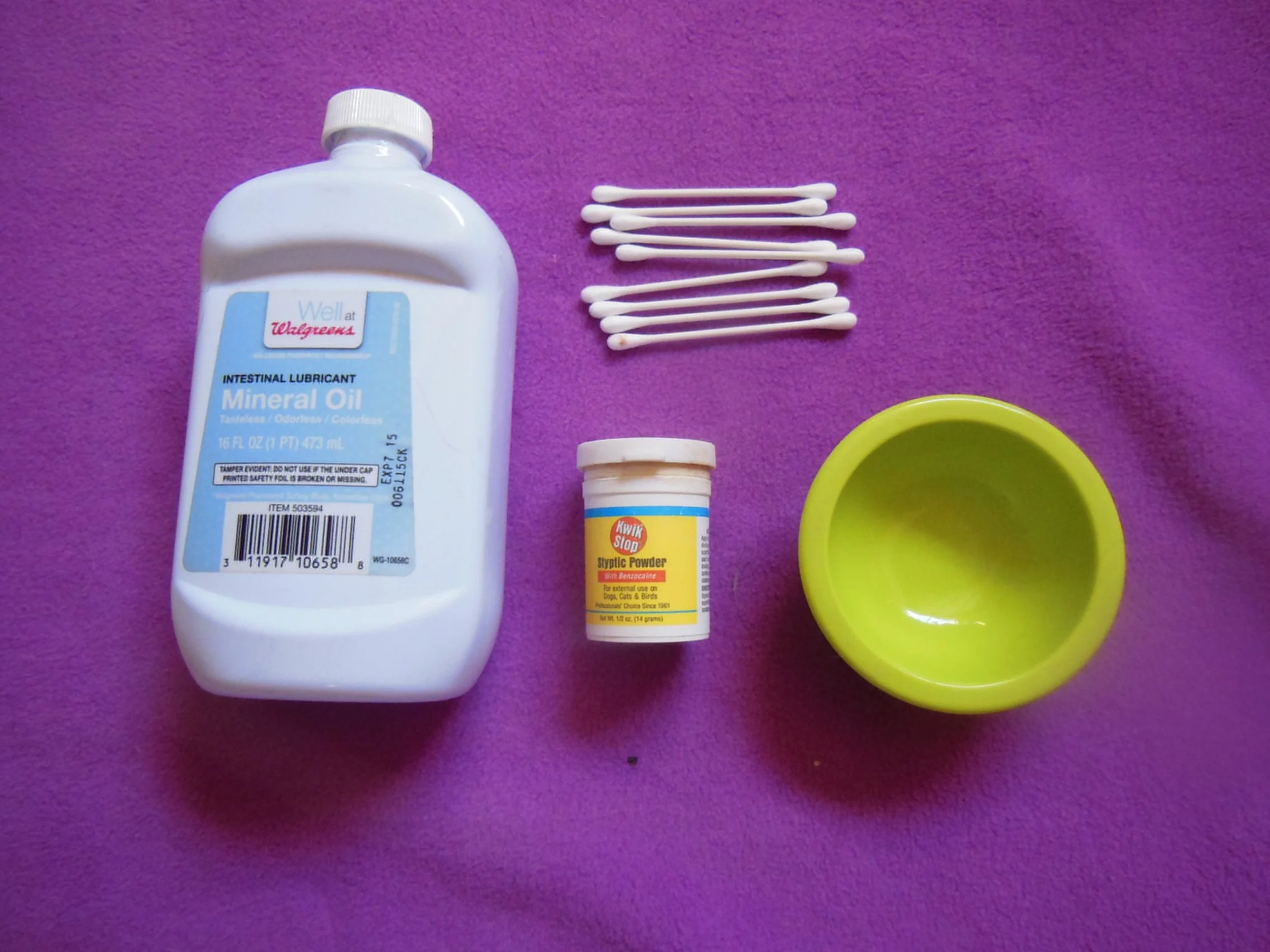
Your rabbit needs to have their nails and scent glands cleaned every 6 to 8 weeks.
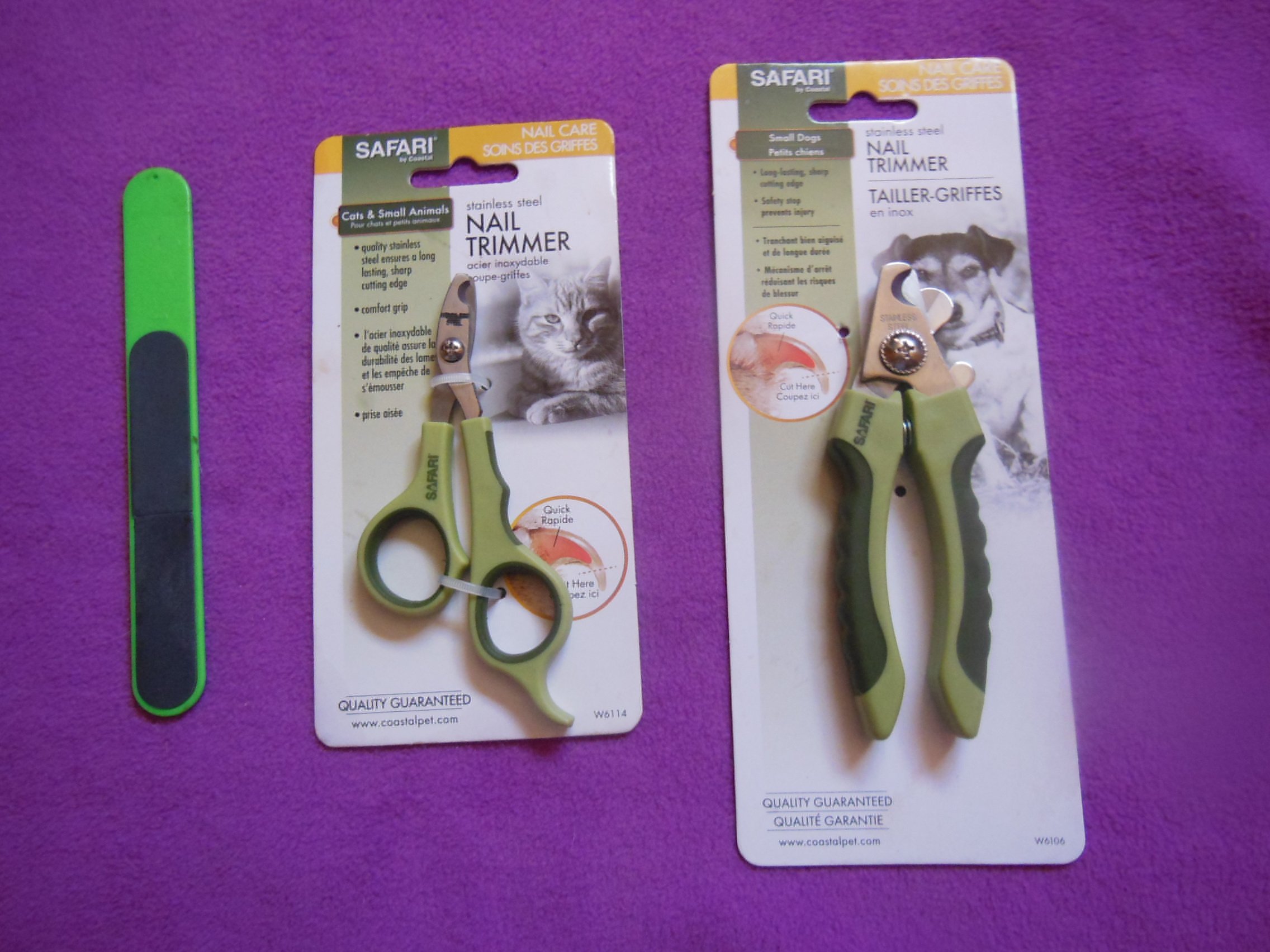
Rabbit’s need to have their fur bushed.
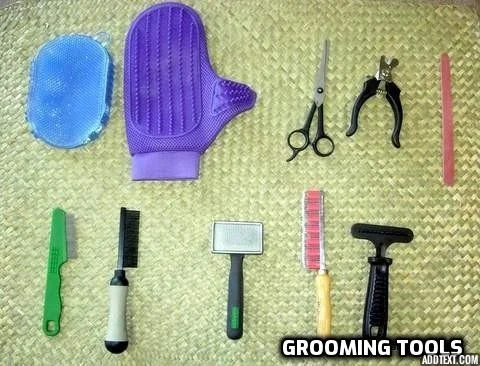
Rabbit’s fur needs to be groomed to help maintain their health. They will have a major molt during each season change. We will go over in detail the brushing for your basic rabbit. We will also go over brushing for long fur rabbits.
Understanding Rabbit Vision
Rabbits have their eyes positioned on the sides of their heads, giving them a very wide field of vision. This allows rabbits to see almost 360 degrees around themselves, which is extremely helpful for detecting predators.
Rabbits also have blind spots, including an area directly in front of their nose. This is one reason a rabbit may not immediately see an object that is very close to its face.
Their vision is especially well adapted for detecting movement. Quick movements can catch a rabbit's attention because, in the wild, detecting a rapidly approaching predator can mean the difference between life and death. Rabbits can also see above and around themselves, helping them watch for predators such as hawks.
Rabbits have dichromatic color vision, meaning they see fewer colors than humans do. They are particularly sensitive to blue and green wavelengths. Red and orange colors are much less distinguishable to rabbits and may appear more like shades of gray or muted colors.
Because rabbits rely heavily on their vision to detect danger, it is important to approach them calmly. Slow, predictable movements are generally less frightening than sudden movements, especially when reaching toward a rabbit's face.
Yes—rabbits have exceptionally good hearing, and their ears are highly specialized for detecting and locating sounds.
A few interesting details:
Each ear can move independently, allowing a rabbit to pinpoint where a sound is coming from.
Rabbits can rotate their ears toward a sound while keeping the rest of their body relatively still.
When they detect something unusual or threatening, they may stand upright, raise their head, and orient their ears toward the source.
Their hearing helps them detect predators and other animals before they are close enough to pose an immediate threat.
Sudden loud or unfamiliar noises can trigger an alarm response because rabbits are prey animals and are naturally alert to potential danger.
Their large, mobile ears essentially work like directional sound collectors, helping a rabbit determine both the direction and potential significance of a sound.
Rabbits enjoy spending quiet time with you. They feel safest when all four feet are supported by a solid surface. They may feel especially comfortable sitting next to you on the couch or resting on your lap, where they can feel your body heat.
Rabbits often feel safest when they can lie next to a wall or in a protected area. They may not feel as comfortable in the middle of a room or around loud or sudden noises.
Rabbits enjoy gentle, slow head pets. You can pet them on the top of their head and slowly move your hand toward the middle of their back. Some rabbits may feel uncomfortable when you pet their tail area or sides. Many rabbits also enjoy gentle ear massages.
We like to lie on the couch with the rabbits and gently pet them. You may hear a soft “rabbit purr,” which is a gentle teeth-chattering sound. This usually means the rabbit is very relaxed and comfortable.
Rabbits have scent glands underneath their chin. This is a sensitive, private area, so you should avoid petting or touching it. You should also avoid petting their stomach area unless you need to do so for grooming, cleaning, or a medical reason.

Rabbit can be litter box trained
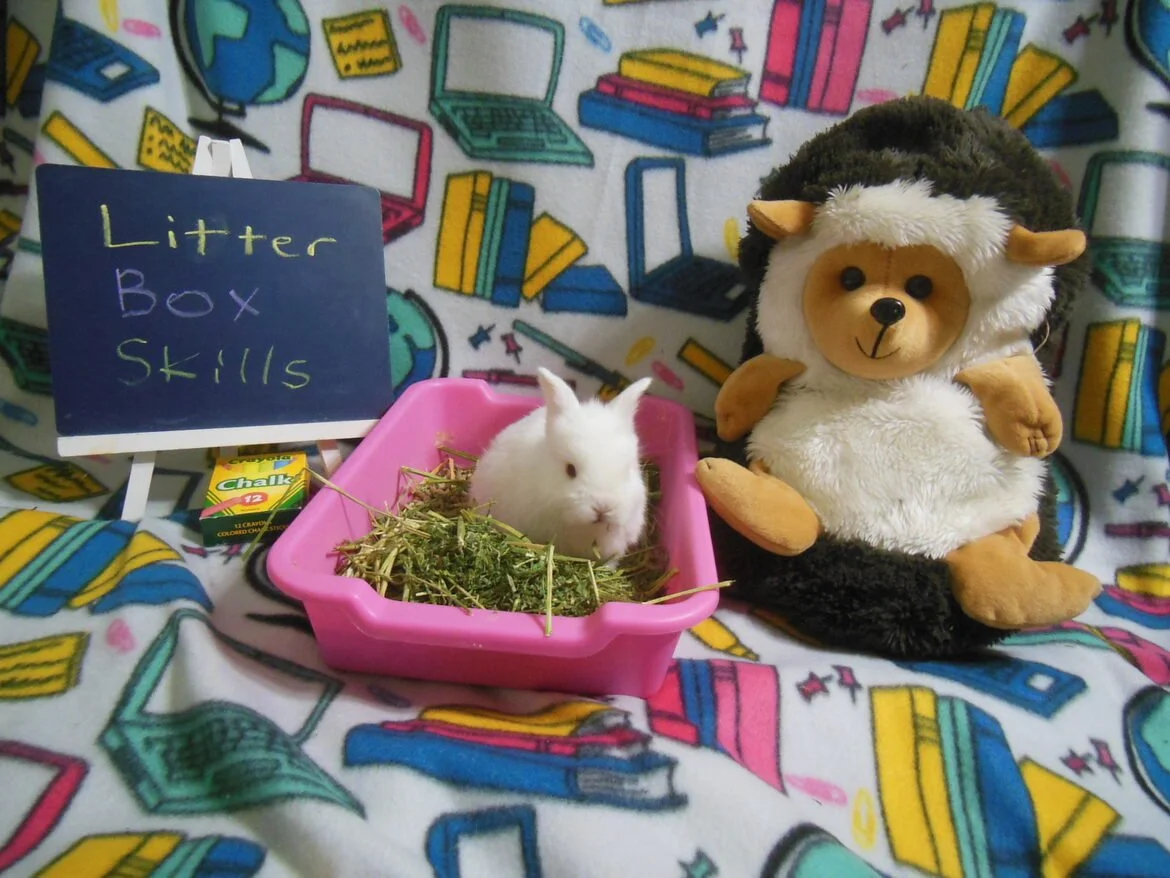
Like cats, rabbits are very clean and like to use their litter box both while eating their hay and doing their business. Use a cat litter box or similar and choose wheat based, plant fiber, paper- based or untreated wood pellets. You should not use clumping or clay-based litter because, if ingested, it could seriously harm a rabbit’s digestive tract.
Their litter box should be placed in a safe corner next to a wall in their housing area. Rabbits would like to feel safe while they eat and do their business. They know that nothing is going after them from the wall. You can place their droppings inside of their litter box for them to understand. If you give them access to a large area, you may need several litter boxes.
Rabbit Greens
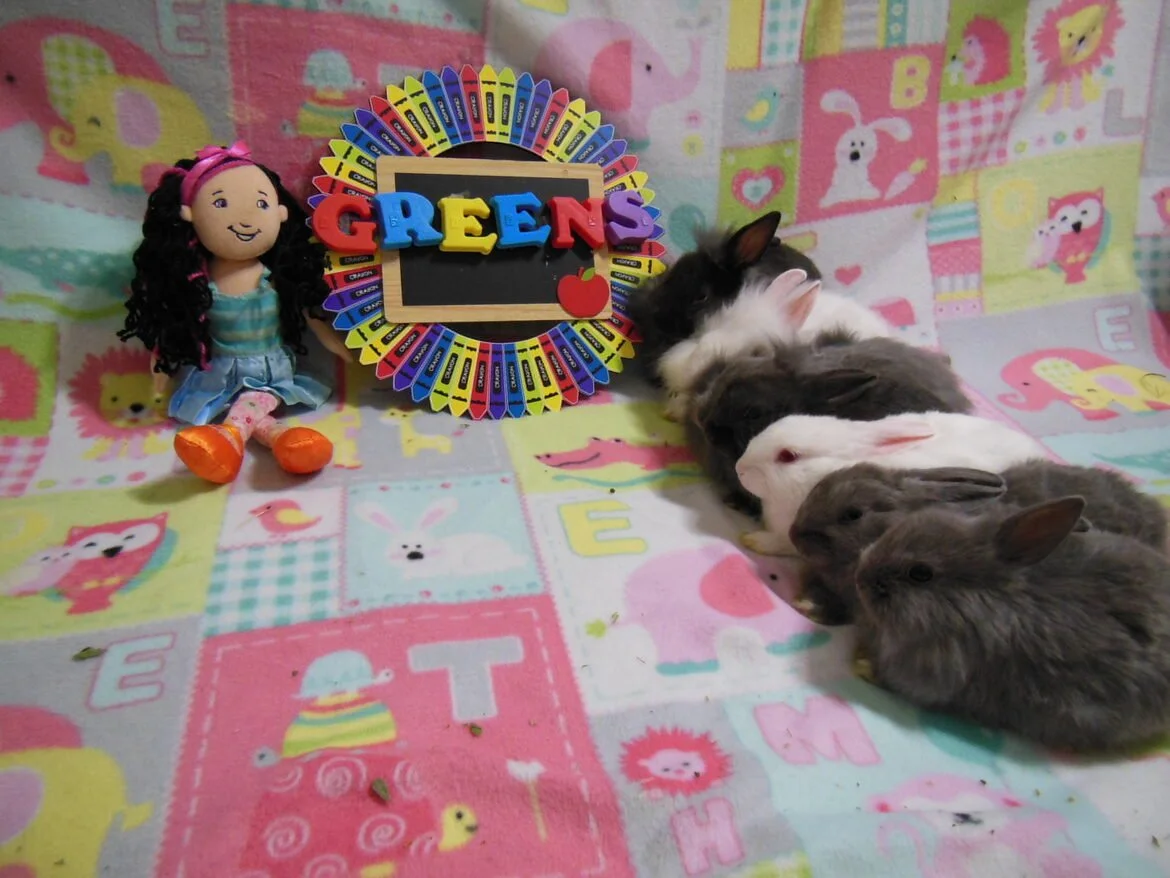
Rabbits like to have leafy greens. Go to the local farmers market for romaine lettuce, dandelion greens, fennel, spring mix, carrot tops, parsley, and much more. Consider planting a garden for your own greens and have the satisfaction of growing what your rabbit eats. There are several types of greens that you can give to your rabbit that are very easy to grow yourself.
Rabbit’s Water Bowl
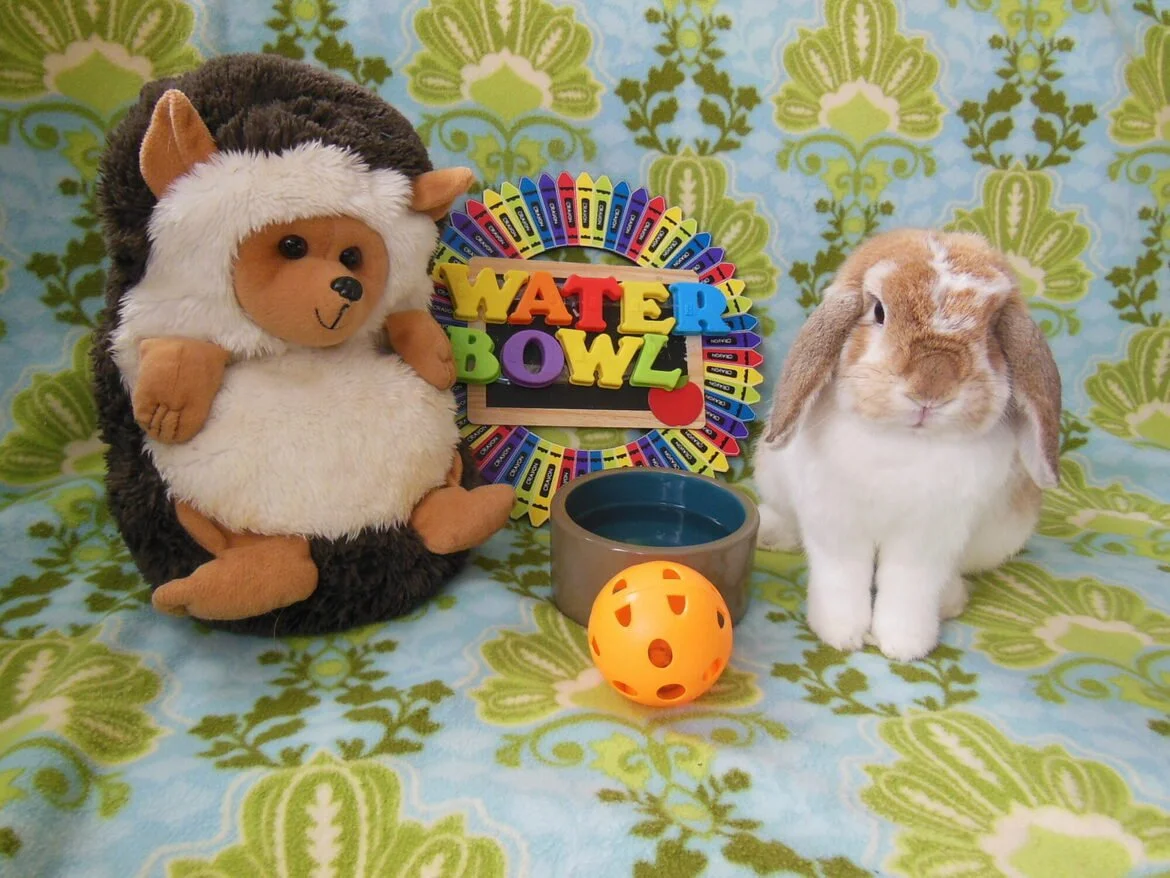
You rabbit should have 1 to 2 heavy ceramic water bowls. Rabbits need to drink a lot of water just like people. Rabbits however do like to put their toys into water bowls. The 2nd water bowl would help in that case. There are times when you may use a water bottle. Water bottles, however, are more difficult to clean than water bowls. There are some rabbits who do get a lot of water on their fur during drinking. If this happens, you can try several different water bowl heights and water level.
Nurse Bunny says, ‘During summer or hot weather, there are several things you can do to keep your rabbit cool.” There are of course other things that you can do. You can close your drapes. Keep them away from direct sunlight. They remove heat through air movement across their body. You can set a fan on low, but do not point it directly at them.
It is important to have a top opening carrier for your rabbit.
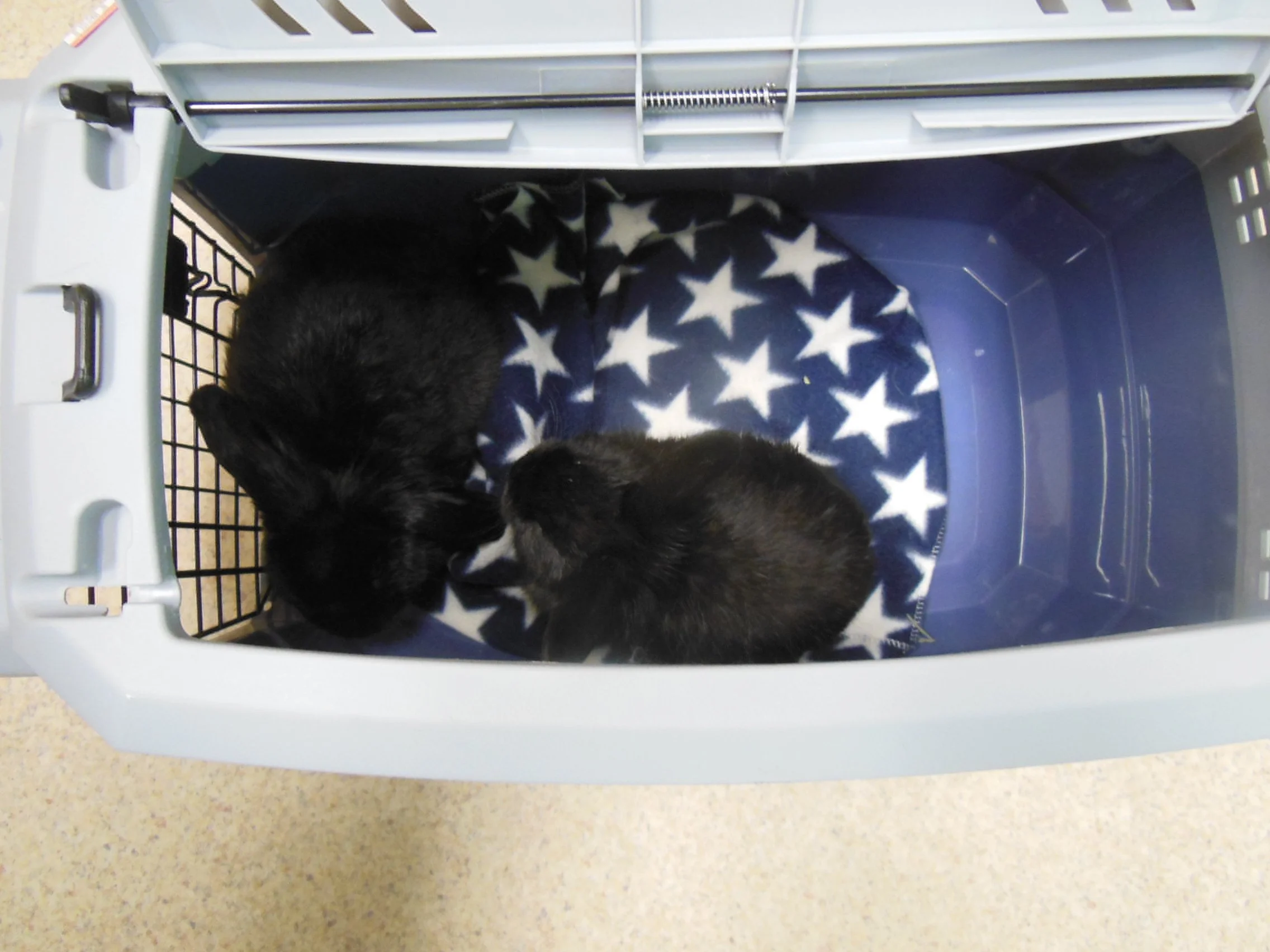
It is important for you to know how to pickup and hold your rabbit. We go over several ways on the following link.
We go over some common rabbit behavior and their meaning.
Your Bunny’s Breakfast and Dinner Health Check
Rabbits are prey animals, which means they instinctively hide signs of illness. They are also exotic animals and require care from an Exotic DVM (Doctor of Veterinary Medicine). Often, the first sign of illness is a change in normal behavior. Rabbits thrive on routine, so any disruption can be an early warning sign.
Daily Breakfast & Dinner Health Check
It is important to perform a daily health check twice a day—at breakfast and dinner—by observing three key items. If you notice a concern, you have valuable time to contact your Exotic DVM or a 911 Exotic DVM.
Hay & Poop
Did your bunny eat their hay?
Are they producing normal poop?
Water Intake
Did they drink their water?
Activity & Interest in Food
Are they active and responsive to greens and pellets?
We make a sound with the pellet bag and spread pellets around both morning and night to encourage movement and interest.
If your bunny is not active or not interested in food, you can try offering a favorite treat. Lack of appetite or activity may be a sign of GI stasis, which often indicates an underlying health issue. Seek immediate attention from your Exotic DVM or a 911 Exotic DVM if this occurs.
Every Bunny Is Unique
Each bunny is different and special. For example, our bunny Zora:
Tends not to eat greens
May soft poop when she does eat too many greens
Often has watery eyes, which we monitor and gently clean daily
If you have a bonded pair, it can be harder to track individual food intake. In this case:
Compare the overall amount eaten day-to-day
Spreading pellets is especially helpful to observe activity and ensure both bunnies are eating
Daily observation is one of the best ways to keep your bunny healthy and catch problems early