Rabbit Ear Cleaning
Regularly checking your rabbit's ears can help you notice excessive ear wax or signs of an ear problem early. Excessive wax buildup may contribute to ear infections or make it more difficult to see an existing infection.
Disclaimer:
We are not exotic rabbit veterinarians. This information is intended for educational purposes only. If you have questions about your rabbit's ears or how to safely clean them, consult your own exotic rabbit veterinarian.
Checking Your Rabbit's Ears
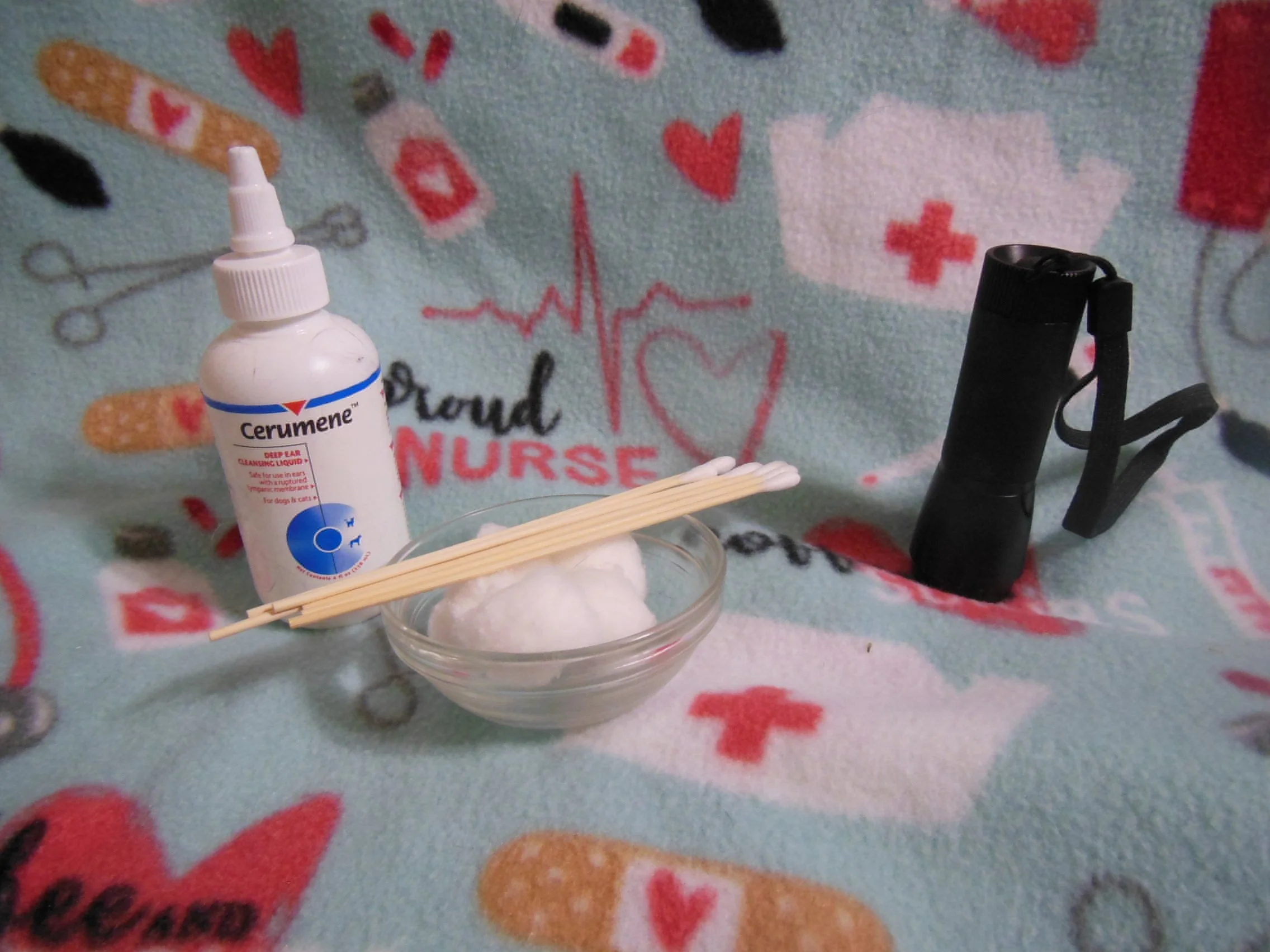
Gently look inside your rabbit's ears. A small flashlight may help you see better.
Inside the ear, you may notice two passages:
The true ear canal, which leads toward the nose.
A false ear canal, which is a normal part of rabbit ear anatomy.
Normal ear wax is usually yellow to light brown in color.
If you see dark brown flakes, crusts, or debris that resembles coffee grounds, your rabbit may have ear mites. Ear mites are contagious and require veterinary treatment. If you suspect ear mites:
Schedule an examination with an exotic rabbit veterinarian.
Wash your hands thoroughly before handling other rabbits to help prevent spreading the mites.
Common Causes of Ear Wax Buildup
Some rabbits are more likely to develop excess ear wax, including:
Lop-eared rabbits, whose ear shape may make natural cleaning more difficult.
Older rabbits with reduced mobility.
Single rabbits that do not have a bonded companion to groom their ears.
Bonded rabbits whose companion does not groom their ears regularly.
Rabbits that naturally produce more ear wax than others.
How Rabbits Clean Their Ears
Rabbits normally help keep their ears clean by:
Scratching their ears and then shaking their heads.
Having a bonded rabbit groom their ears.
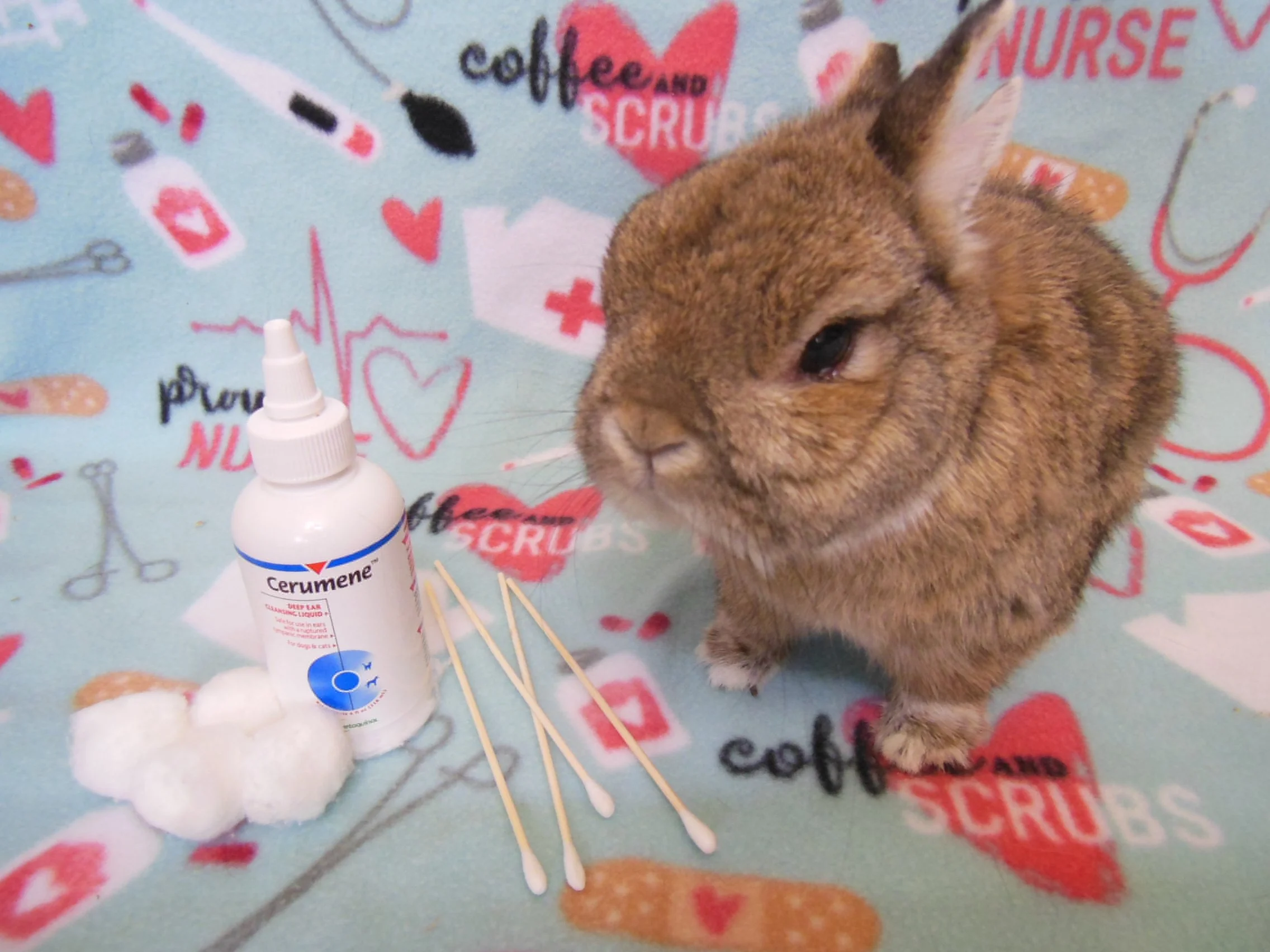
Supplies You May Need
A veterinarian-recommended rabbit ear cleaning solution (available without a prescription).
Long cotton swabs (Q-tips®).
Cotton balls (optional).
Zora is groomed by her Forever Friend. However Zita tends to groom her eyes and her ears.
Sugarplum ear’s are groomed by her Prince Charming her Forever Friend
Cleaning Your Rabbit's Ears
Caution
Never insert a cotton swab (Q-tip®), cotton ball, or any other object into your rabbit's ear canal. Doing so can push wax and debris deeper into the ear and may damage the delicate ear canal or eardrum.
Clean only the portions of the ear that you can clearly see. If wax is deep in the ear canal, do not attempt to remove it yourself.
If your rabbit has excessive wax buildup, foul odor, redness, swelling, pain, discharge, head shaking, or you suspect an ear infection or ear mites, stop cleaning and contact your exotic rabbit veterinarian.
If your veterinarian recommends using a cotton swab, use it only on the visible outer portion of the ear and never inside the ear canal.
Apply a few drops of the veterinarian-recommended ear cleaning solution into the visible part of the ear, following the product directions.
Gently massage the base of the ear to help loosen ear wax.
Warming the bottle to approximately room or body temperature before use may make the cleaning solution more comfortable for your rabbit.
Using a long cotton swab, gently remove only the loosened wax that is visible.
Use additional cotton swabs as needed, always staying in the visible portion of the ear.
If desired, place a small amount of cleaning solution on a cotton ball and gently wipe the visible part of the ear. Do not push the cotton ball into the ear canal.
Continue wiping away any remaining visible wax or cleaning solution.
Your rabbit may scratch or shake its head during or after cleaning. This is a normal response and may help loosen additional debris.
When to Contact Your Veterinarian
Contact your exotic rabbit veterinarian if your rabbit has:
Thick, excessive, or foul-smelling ear discharge.
Redness, swelling, or bleeding.
Pain when the ears are touched.
Frequent head shaking or scratching.
Head tilt or loss of balance.
Suspected ear mites or any signs of infection.
Routine ear checks can help keep your rabbit comfortable and allow potential problems to be identified early. If you are ever unsure whether your rabbit's ears are healthy, your exotic rabbit veterinarian can perform an examination and demonstrate safe ear-cleaning techniques.