Young Rabbit Care Guide: Feeding, Housing & Health
This guide covers the care of young rabbits from 8 weeks to 1 year of age. We support several 501(c)(3) rabbit rescue groups in the San Francisco Bay Area as both a baby care and medical resource site. Our experience includes fostering and adopting rabbits from as young as day-old kits (e.g., Sugarplum) to 2.5-week-old orphans (e.g., Zita), as well as assisting adopters with proper care guidance.
Bunny 101 covers over view of care.
Indoors Only
Rabbits should be kept 100% indoors. Outdoor environments pose serious risks:
Rabbits are prey animals and can become startled easily—even by a bird flying overhead—which can lead to fatal shock or injury.
Frightened rabbits may panic, run into barriers, and break their necks.
Outdoor exposure increases the risk of diseases such as RHDV2 and myxomatosis, often spread by mosquitoes or other insects.
Rabbits may ingest harmful substances from the ground.
Simply put: if you wouldn’t eat food off the ground, your rabbit shouldn’t either.
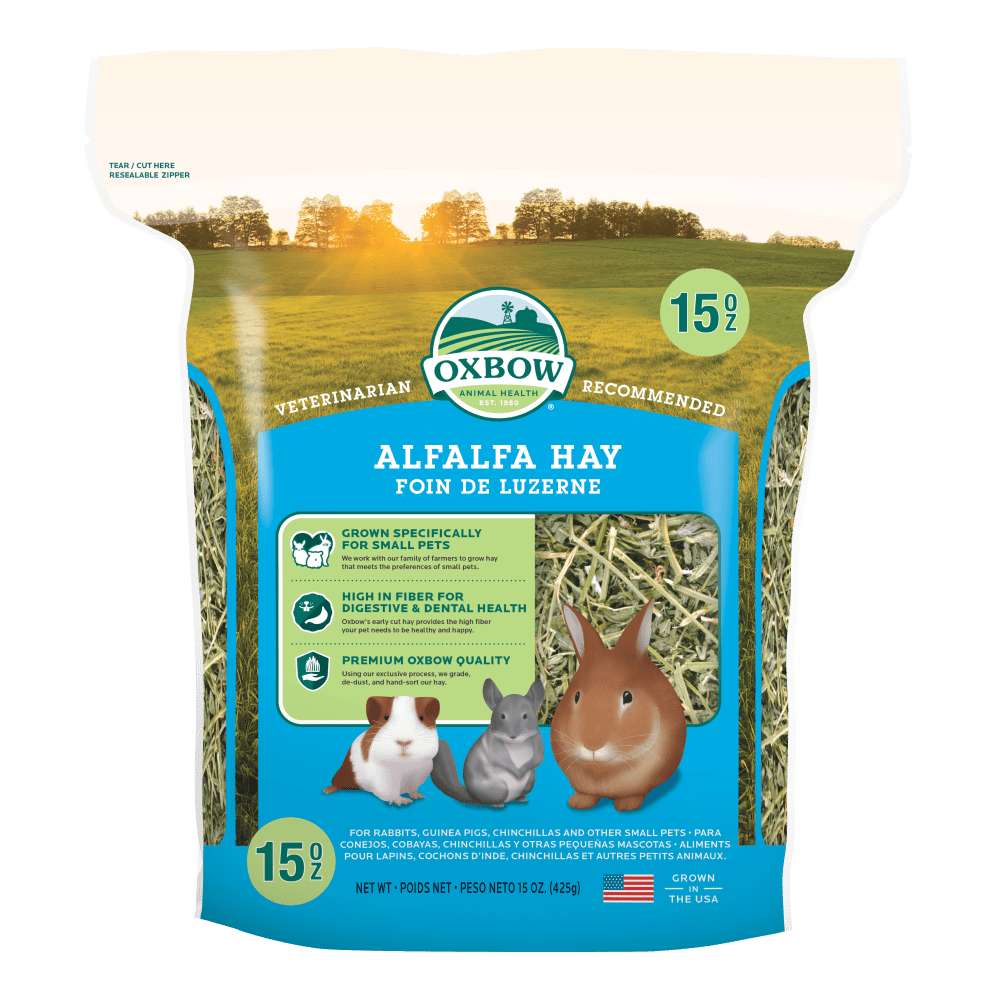
Alfalfa Hay (Primary Diet)
Provide unlimited alfalfa hay for young rabbits.
Transition to adult hay (timothy or orchard) starting around 3 months:
Month 4: 2/3 alfalfa + 1/3 adult hay
Month 5: 1/2 alfalfa + 1/2 adult hay
Month 6: Mostly adult hay
This gradual transition helps prevent digestive issues.
Pellets
Offer unlimited young/baby rabbit pellets.
Recommended brands include Sherwood Pet Health or Oxbow.
Around 3 months, begin transitioning:
Reduce from unlimited to measured portions
Gradually switch to adult pellets
Greens
Introduce greens at ~2 months old.
Start with a very small amount (e.g., a few leaves of spring mix).
Introduce one type of green at a time.
Watch for digestive upset (“poopy butt”); if it occurs, reduce or pause greens.
Gradually expand variety once tolerated.


Housing
Rabbits can live in an X-pen or be free-roam in a safe area.
Provide soft flooring (rugs, mats) to prevent sore hocks (similar to blisters).
Place litter box and hay in a corner—rabbits prefer to eat and eliminate in the same area.
If your rabbit chooses a different spot, move the litter box there.
Playtime
Rabbits like to toss and roll things.
Rabbits like to hop through tunnels.
Rabbits like to find their there treats.
Learn more about Rabbit Toys.
Rabbit Behavior
Binky is their jump for joy.
Periscope is when they stand and look around.
Face Cleaning is very cute
Learn more about Common Rabbit Behavior
Nail & Scent Gland Care
Young rabbits often have sharp nails:
Use a nail file or small animal nail clippers
Scent glands are typically clean in young rabbits but should still be checked periodically.
We go over Nail Trim and Scent Gland Care.
Fur Care
Groom regularly depending on coat type:
Short hair: weekly
Long hair: more frequent (possibly daily)
Prevent matting and reduce ingestion of loose fur.
We have the following fur care guides.
Exotic Rabbit Vet
Rabbits are considered exotic animals and require a qualified exotic veterinarian.
Contact local rabbit rescues for trusted vet recommendations.
Vaccination
Vaccinate against RHDV2:
Initial series: 2 doses, 30 days apart
Booster: annually
Availability and protocols may vary outside the U.S.
Pet Insurance & Lifespan
Indoor rabbits typically live 10–15 years.
Pet insurance (e.g., Nationwide in some states) may help manage costs.
Even without insurance, budgeting for veterinary care is essential.
Rabbit Pet sitters
Rabbits should not be left unattended for more then 24 Hrs. It is important that rabbits have daily health check.
Did they eat their hay?
Did they drink their water?
Did they go to the bathroom and are behaving normally.
If you are gone for more then a day you leave them at a qualified pet sitter or have someone check on them.
You can contact your local Rabbit Rescue Group for a list of qualified pet sitters. If you are planning a vacation you need to book in advance with the pet sitters. They are normally book months in advance of major holiday periods.
Spaying & Neutering
Males (neuter): ~3 months old
Remain fertile up to 8 weeks after surgery
Hormones take 8–10 weeks to settle
Females (spay): ~6 months old (minimum ~2 lbs)
Require several weeks of recovery
Spaying/neutering reduces cancer risk and improves behavior.
Always consult your exotic rabbit veterinarian for guidance.
Unfixed Rabbit Behavior & Odor
Unneutered males may begin spraying as early as 8 weeks, often with a strong odor.
Females may also spray, though less commonly.
Unfixed rabbits should be kept separate from bonded pairs:
Hormones and scent can disrupt bonding
May cause false pregnancy behaviors in females
Digestive Health & Safety
Rabbits cannot vomit.
Their digestive system is delicate and can become blocked easily.
Always bunny-proof their environment to prevent ingestion of unsafe items.
Rule of thumb: What goes in must safely come out.
Providing proper care during the first year sets the foundation for a healthy, happy adult rabbit. Gradual transitions, a safe indoor environment, and proactive veterinary care are key to their long-term well-being.
If you have adopted a un-fixed young rabbit pair.
It is understood that we only bond to rabbits that have been fixed for 8 to 10 weeks. There times when you adopted a pair of un-fixed young rabbits. We will go over what to expect in this case.
Bonding & Pairing in Young Rabbits (Unfixed to Fixed Transition)
Understanding bonding behavior in young, unfixed rabbits is critical—especially as hormones begin to develop. Early bonds can change quickly, and not all pairs will remain compatible through adolescence.
Young Unfixed Male–Male Pair
We cared for Lucky Charm and Lucky Star from Day 1 as fosters, hoping they would eventually be adopted together after neutering. However, around week 10, their hormones began to surge, and their bond broke. This led to serious fighting, making separation necessary for their safety.
We later adopted Lucky Star (Lucky). After both he and Sugarplum were fixed and had 8 weeks for hormones to settle, we successfully bonded them.
Key takeaway:
Male–male baby bonds often do not last through puberty
Hormones can trigger aggression quickly and unexpectedly
Always separate immediately if fighting occurs
Young Unfixed Sisters (Female–Female Pair)
There have been multiple successful cases where sister pairs:
Remained bonded through adolescence
Were spayed at the same time
Continued living together peacefully afterward
Key takeaway:
Female sibling bonds can be more stable than male pairs
Simultaneous spaying improves chances of maintaining the bond
Mother–Baby Bonds (Mom–Son or Mom–Daughter)
Mother-offspring bonds can be some of the strongest and most stable, especially when managed properly.
Spaying the Mother:
Can typically be done around week 10
She should:
Have stopped nursing by ~week 8
Be fully weaned for 1–2 weeks prior to surgery
Always inform your exotic veterinarian about:
Nursing history
Litter timeline
Case Example: Melody & Solo
Melody shared a strong bond with her son Solo:
Solo stopped nursing at ~7 weeks
Melody was spayed at week 10
Solo was neutered at 3 months
They remained together continuously from birth
Their bond held through hormonal changes, and they were eventually adopted into their forever home together.
Similar successful outcomes have been seen with mother–daughter pairs as well.
Overall Bonding Guidance
Early bonds in baby rabbits are often called “baby bonds” and may not last
Hormonal changes (8–12 weeks onward) are the biggest disruptor
The most reliable bonding happens after both rabbits are fixed and hormones have settled (typically 6–8 weeks post-surgery)
Always prioritize safety over keeping a pair together
Rabbit bonding is not one-size-fits-all. While some pairs stay together naturally, others require separation and re-bonding later in life. Careful observation, proper timing of spay/neuter, and patience are essential for long-term success.
We go over rabbit bonding on several pages.