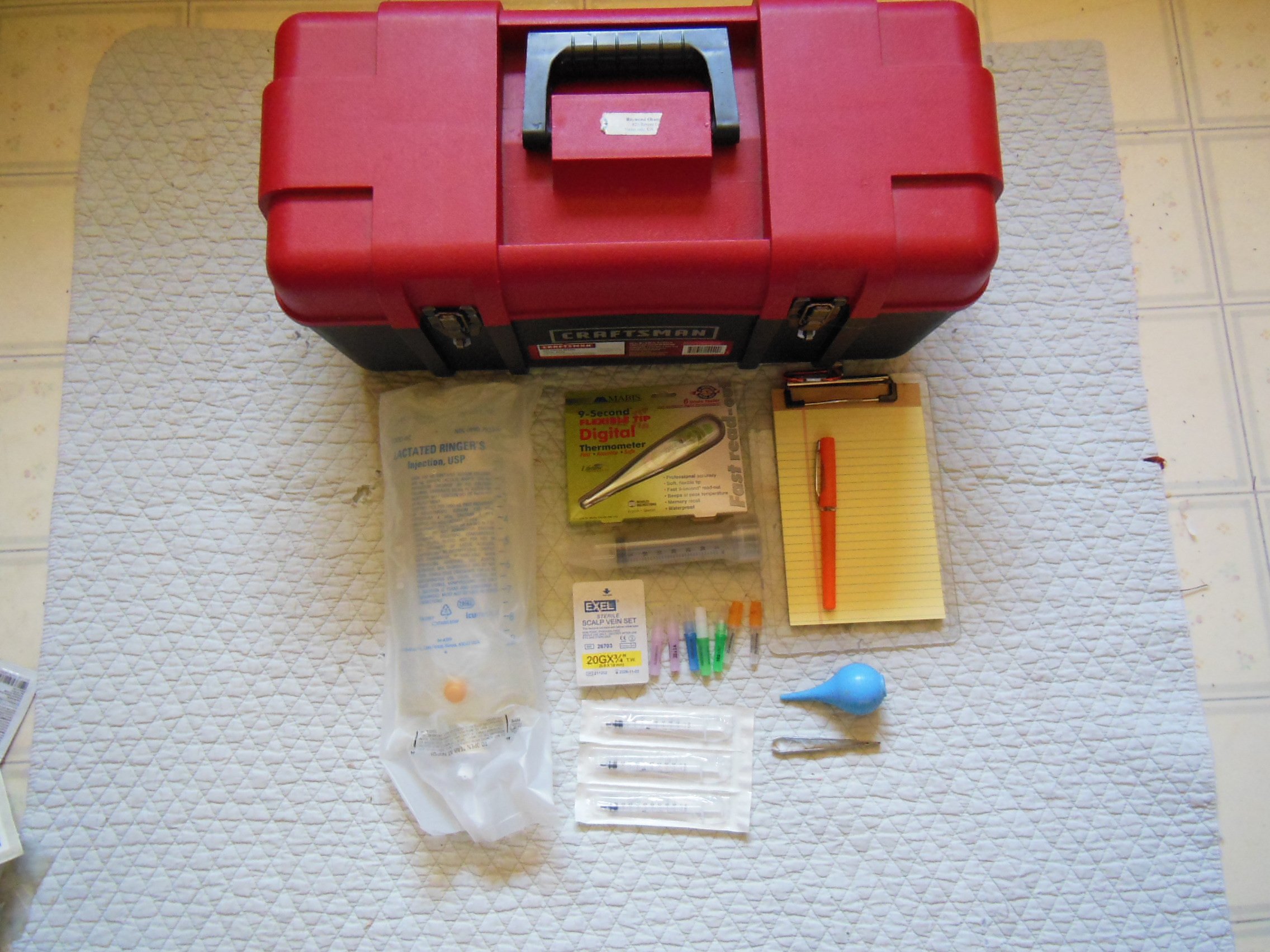
Medical Rabbit kit: We are the medical and new born kit foster site for several 501 (c)(3) Rabbit Rescue Groups in the San Francisco Bay Area for over 20 years.
We have a unique interest in the medical side of rabbit care. We help design pacemakers, defibrillators, and other medical devices with a major medical device manufacturer.
We apply the same questions and critical thinking to the care of our rabbits that we use in our medical device work.
Why?
How did you know that?
What can we expect?
As rabbit caregivers, we believe it is important to ask questions, understand the reasoning behind a diagnosis or treatment, and know what to expect as our bunny receives care.
Disclaimer: If your bunny is in distress or if you have any concerns, don’t hesitate to promptly contact your local licensed Exotic Rabbit Veterinarian. I am not a licensed Exotic Rabbit Veterinarian and this should not be a substitute for official medical advice by a board licensed Exotic Rabbit Veterinarian.
It is important to store the medical kit and all medications in a safe place, out of the reach of children
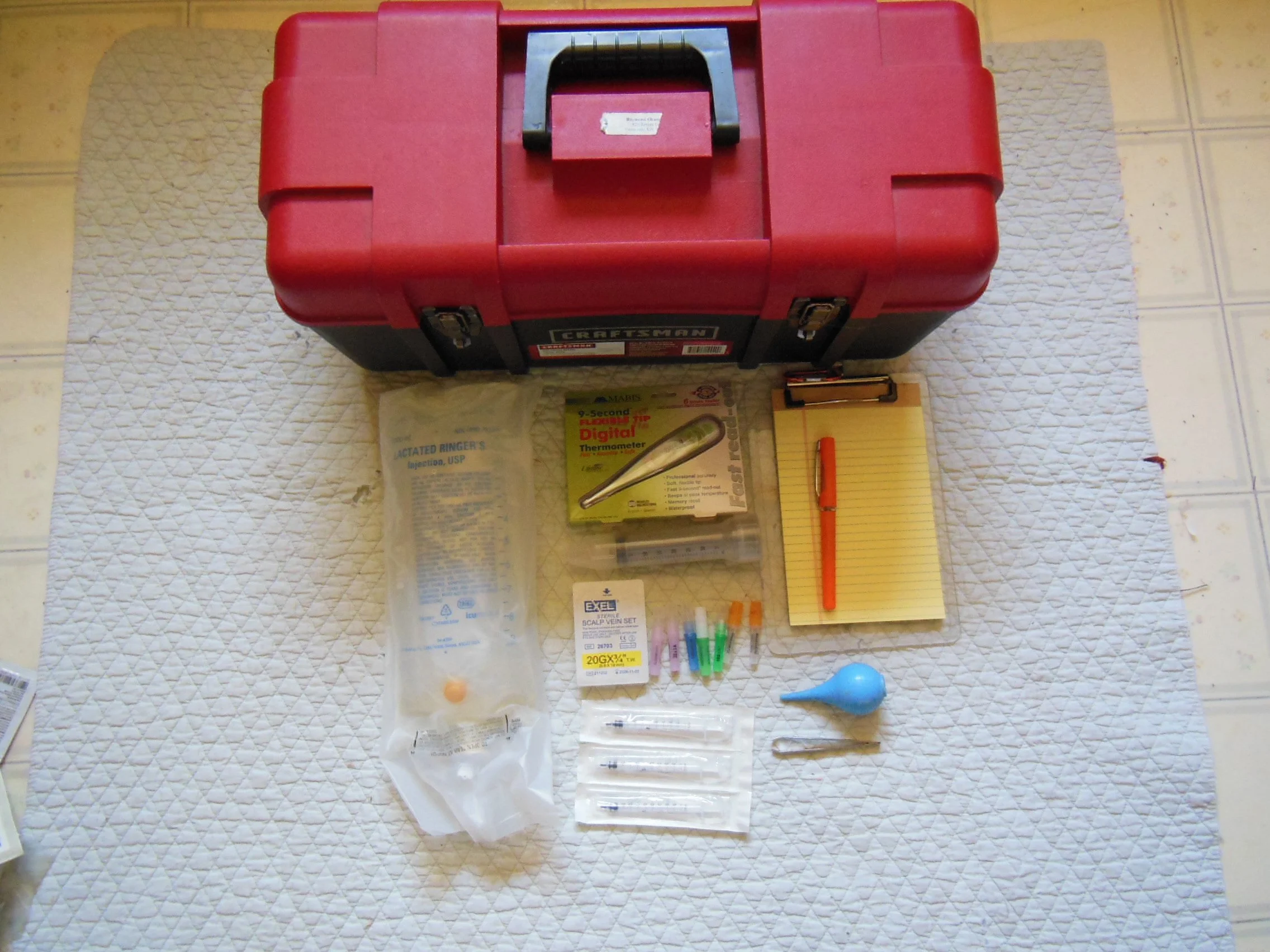

You can use a simple toolbox as your medical kit. We keep it with our other medical supplies in a bookshelf-size storage container. Medications and other items are stored separately in our medicine cabinet.
We have the following items in our medical kits:
Lactated Ringer’s Solution (LRS) — unopened and within the expiration date.
LRS is a prescription (Rx) item. You must also be properly trained on how to administer fluids and understand the appropriate amount of fluids to give.Needles and syringes.
All of the necessary needles and syringes needed to administer LRS.Unopened flexible-tip thermometer.
A flexible-tip thermometer for safely taking your rabbit’s temperature.Baby bulb syringe.
A small bulb syringe that can be used when needed for emergency care.Tweezers.
A pair of tweezers for handling small items when necessary.Notepad and pen.
Use these to record your rabbit’s temperature, medications, fluid administration, observations, and other important information.
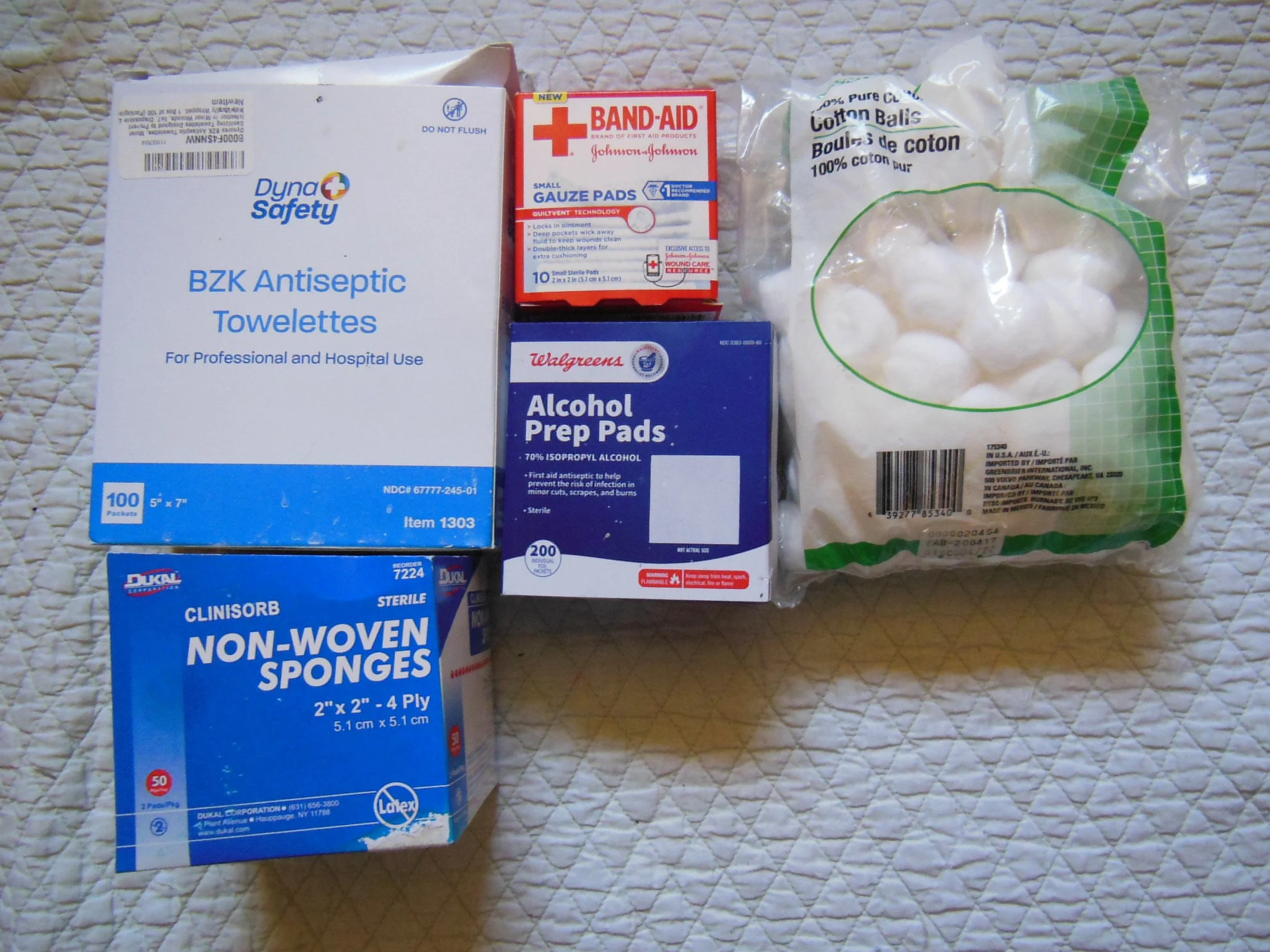
We also have small amounts of various items. Along with several different types of syringes (0.05 ml, 1.0 ml, 3.0 ml, 10.0 ml etc)
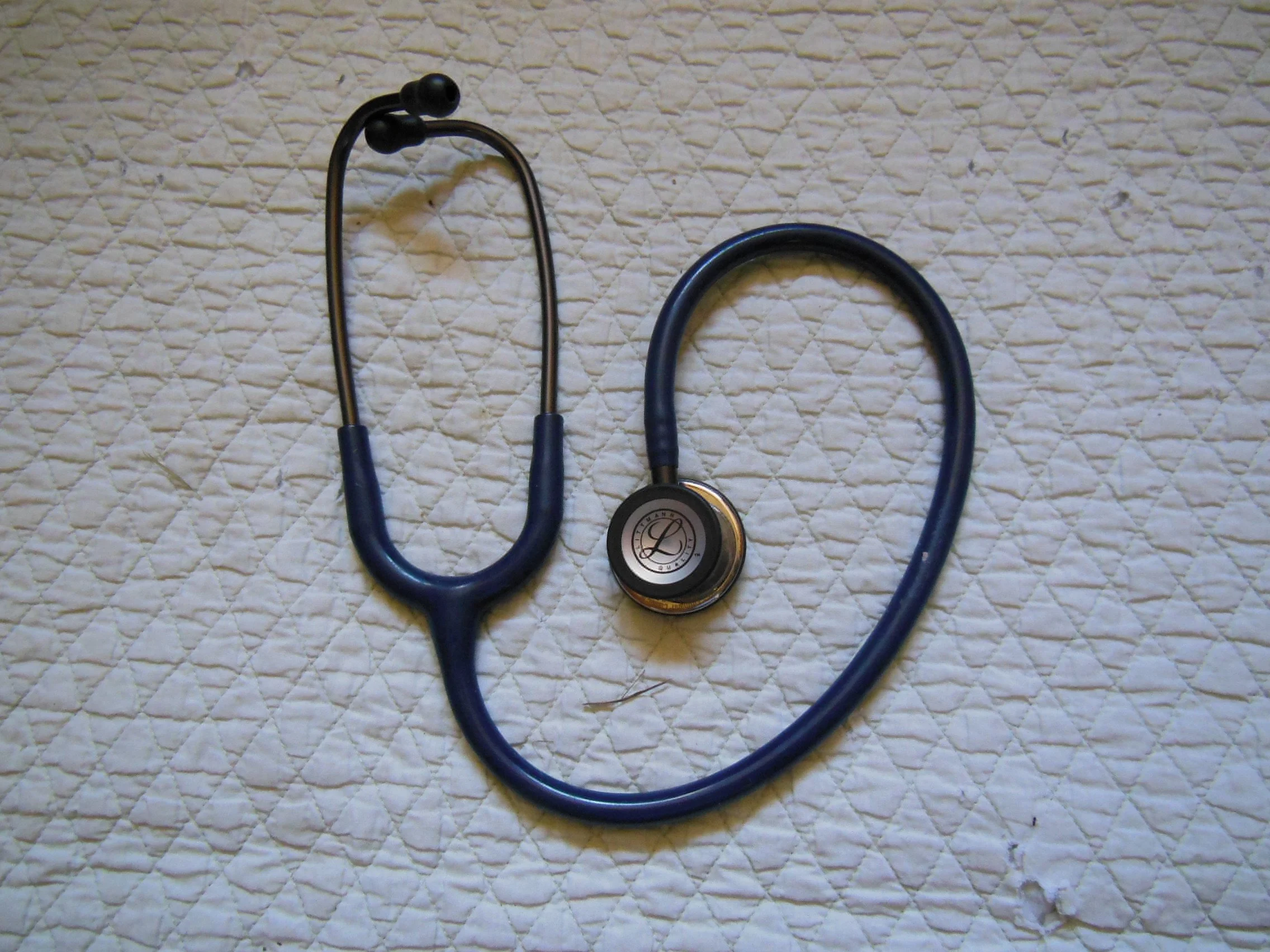
It is important to have a high-quality stethoscope when monitoring a rabbit’s health.
Listen to the rabbit’s heartbeat.
The normal heart rate for a rabbit is approximately 130 to 325 beats per minute.Listen to the lungs.
Listen for any unusual sounds, such as wheezing, crackling, or other abnormal breathing sounds.Listen to the stomach and gut sounds.
Listen for normal digestive sounds. A lack of gut sounds can be a concern and may indicate a gastrointestinal problem.
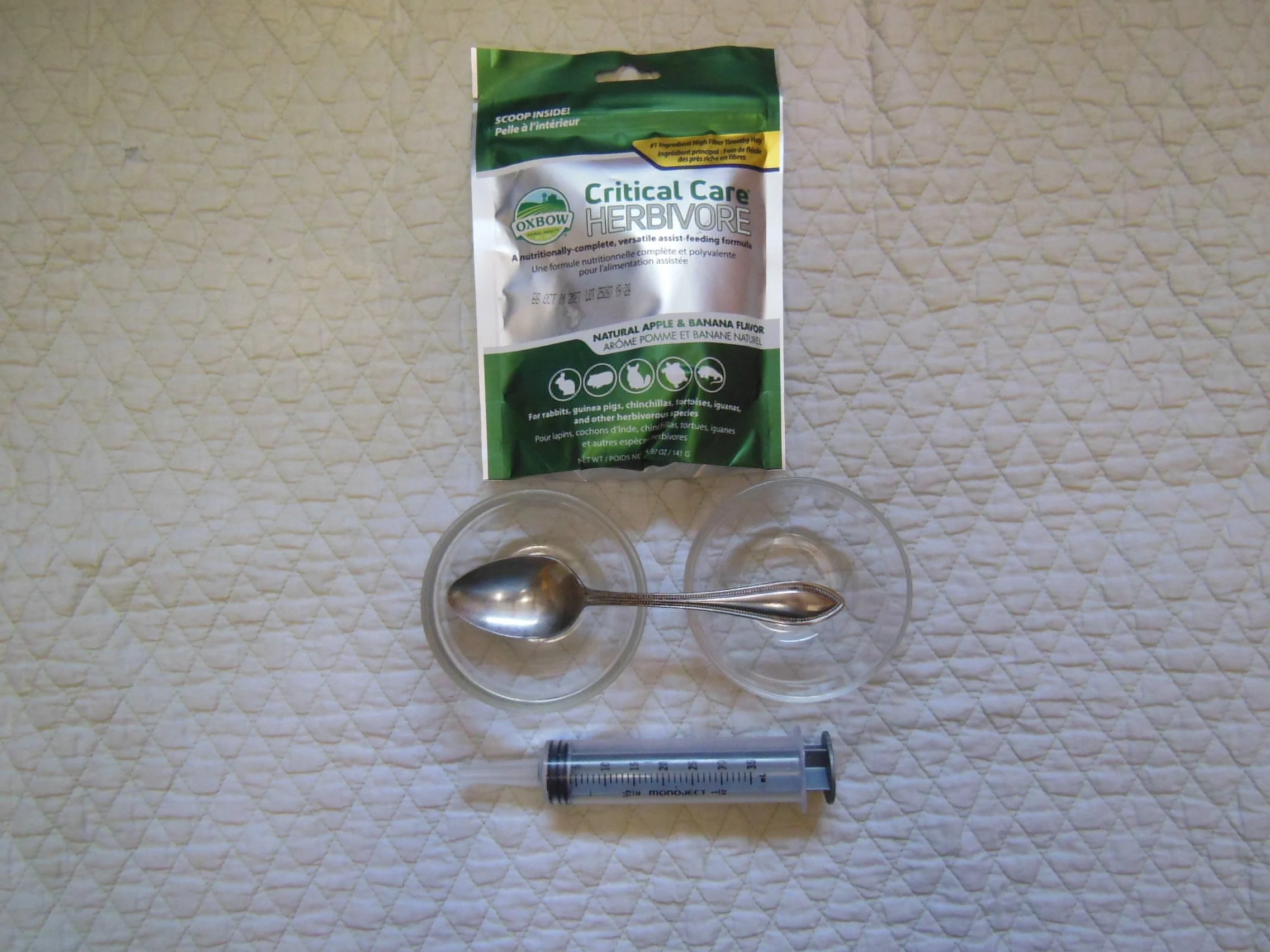
We have an unopened and unexpired bag of Oxbow Critical Care available in our medical supplies. We also have the syringe and mixing bowl used to prepare the Critical Care. We keep a larger bag in our freezer for storage.
Critical Care should only be given under the direction of an Exotic Rabbit DVM.
We see too much incorrect advice given about the use of Critical Care. It is important to understand that you can cause serious harm to your rabbit if Critical Care is given when your rabbit has a gastrointestinal blockage or has a body temperature that is too low.
Oxbow Critical Care.
Keep an unopened and unexpired bag available for emergency situations, as directed by your Exotic Rabbit DVM.Syringe and mixing bowl.
Keep the necessary supplies available to prepare and administer Critical Care when directed by your veterinarian.Proper storage.
Keep a larger bag stored in the freezer according to the product's storage instructions.Always consult your Exotic Rabbit DVM.
Before giving Critical Care, contact your Exotic Rabbit DVM for guidance. Your veterinarian can determine whether Critical Care is appropriate and provide instructions on how much to give and how often.
Important: If your rabbit may have a gastrointestinal blockage or has a dangerously low body temperature, do not assume that Critical Care is appropriate. Contact an Exotic Rabbit DVM immediately.
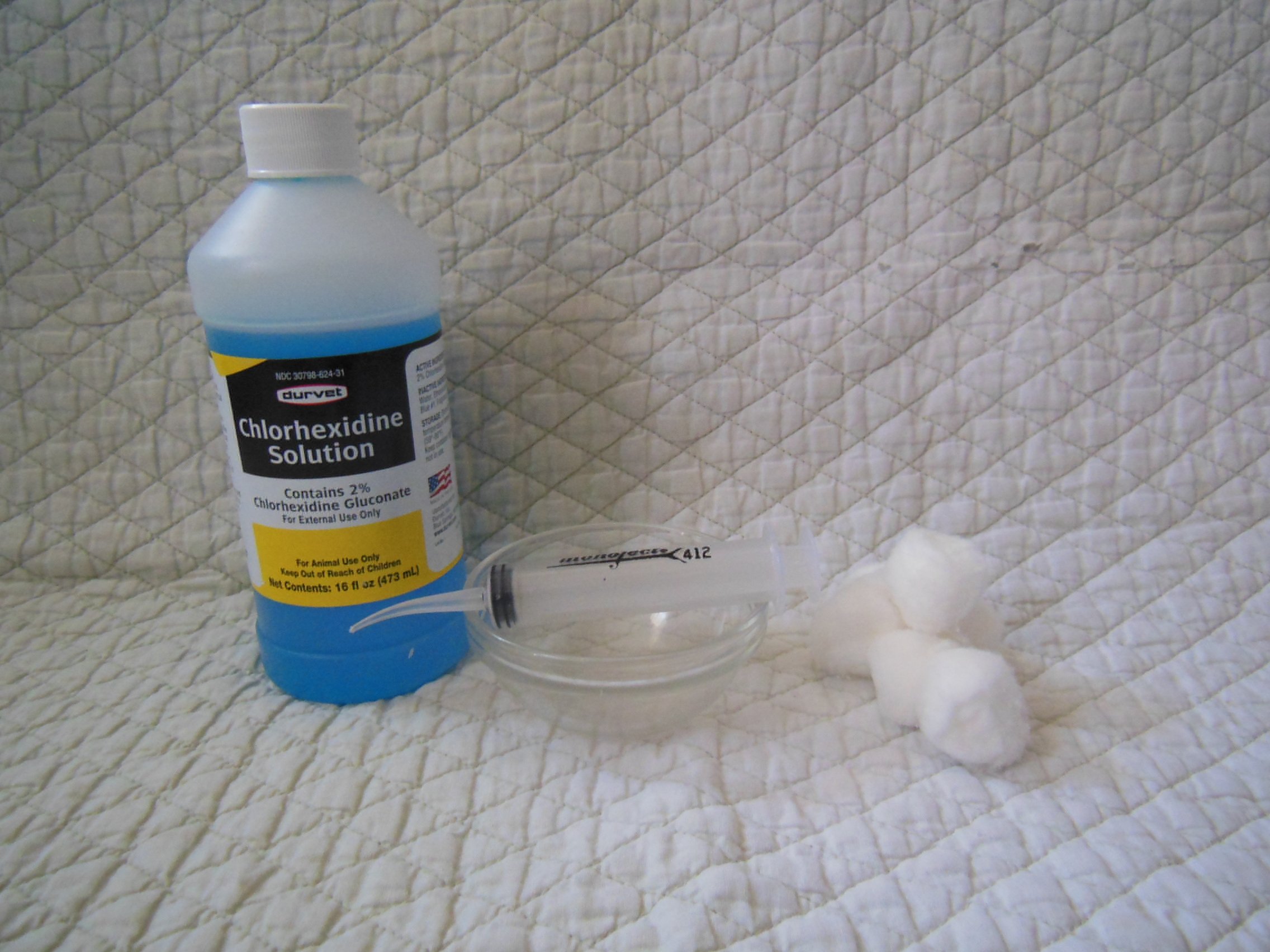
Chlorhexidine Solution can be used for certain minor wounds, such as a small bite or scratch, when properly diluted and used as directed by an Exotic Rabbit DVM.
We often help rabbits who have been abandoned or dumped. These rabbits may arrive with injuries, including large cat scratches. Cat scratches can lead to serious infections and abscesses if they are not properly treated.
There may be times when an Exotic Rabbit DVM is not immediately available. We were trained by an Exotic Rabbit DVM on how to properly dilute Chlorhexidine Solution with water and apply it to a cat scratch using a curved-tip syringe. This can provide temporary wound care until the rabbit can be examined by an Exotic Rabbit DVM.
Chlorhexidine Solution.
Keep Chlorhexidine Solution available for minor wound care, as directed by your Exotic Rabbit DVM.Proper dilution.
Chlorhexidine must be diluted to the concentration recommended by your Exotic Rabbit DVM. Do not use an undiluted solution unless specifically directed by your veterinarian.Application.
When properly diluted, the solution can be gently applied to the affected area using a curved-tip syringe and or cotton ball following the instructions provided by your Exotic Rabbit DVM.Veterinary care.
Wound cleaning is only temporary care. Cat scratches and bites can become serious infections or abscesses, so the rabbit should be examined by an Exotic Rabbit DVM as soon as possible.
Important: Do not use Chlorhexidine near the eyes, mouth, or other sensitive areas unless specifically instructed by your veterinarian. If the wound is deep, heavily contaminated, actively bleeding, or the rabbit is showing signs of illness, seek veterinary care immediately.
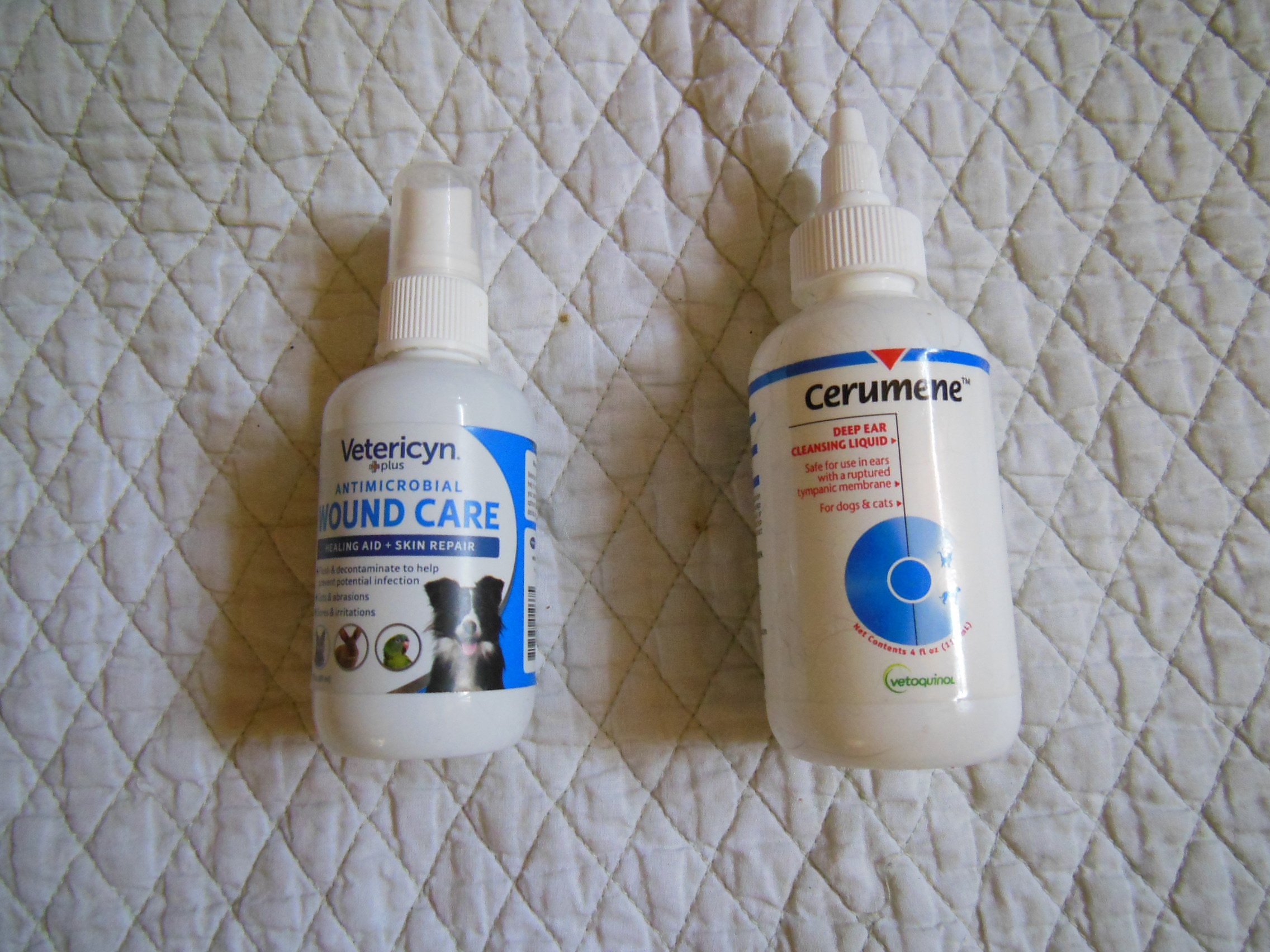
Vetericyn Wound Care for Rabbits is a spray that can be used on minor wounds to help support the healing process.
Cerumene, or a similar ear-cleaning product, may be used to help remove excess ear wax. Always contact your Exotic Rabbit DVM for proper usage and instructions.
Vetericyn Wound Care.
Vetericyn Wound Care for Rabbits can be used on minor wounds to help support the healing process.Ear cleaning.
Cerumene or a similar product may be used to help remove excess ear wax.Contact your Exotic Rabbit DVM.
Always consult your Exotic Rabbit DVM for the correct product, dosage, application, and frequency of use for your rabbit.
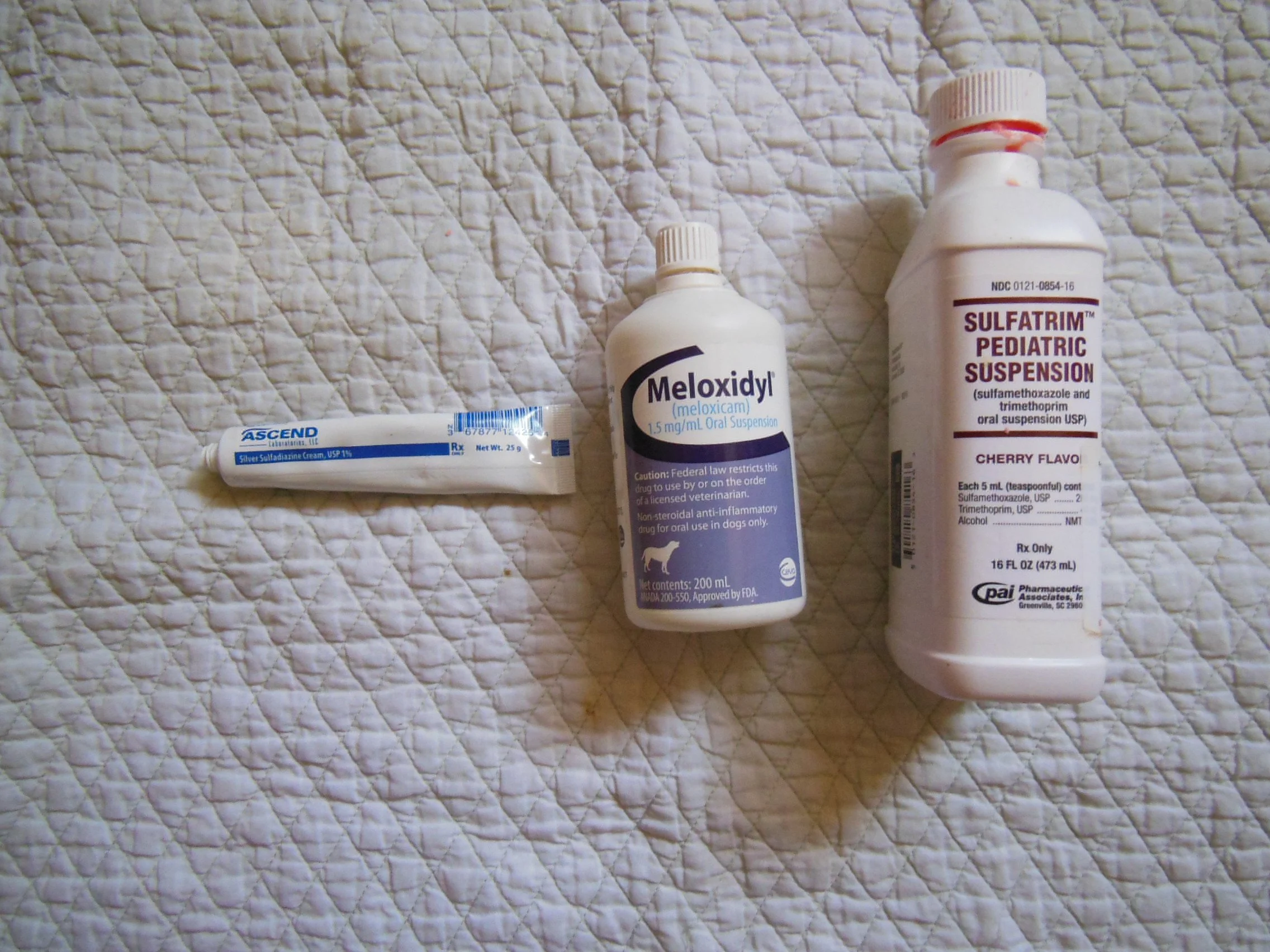
It is economical for you and your 501(c)(3) rabbit rescue group to have several prescription (Rx) medications on hand. These medications will only be administered under the direction of your Exotic Rabbit DVM. There may be times when our medical foster, or another medical foster, needs to administer one of these prescription medications. Providing the prescribed dosage and instructions will also help teach the foster how to properly administer the medication.
Silver Sulfadiazine Cream (SSD) can be used to treat the surface of wounds and help support wound healing.
Meloxicam is a non-steroidal anti-inflammatory drug (NSAID) used in rabbits to manage pain, swelling, and inflammation.
Sulfatrim Pediatric Suspension (trimethoprim-sulfamethoxazole, also referred to as TMS) is a broad-spectrum prescription antibiotic that is frequently used in rabbits to treat certain bacterial and protozoal infections.
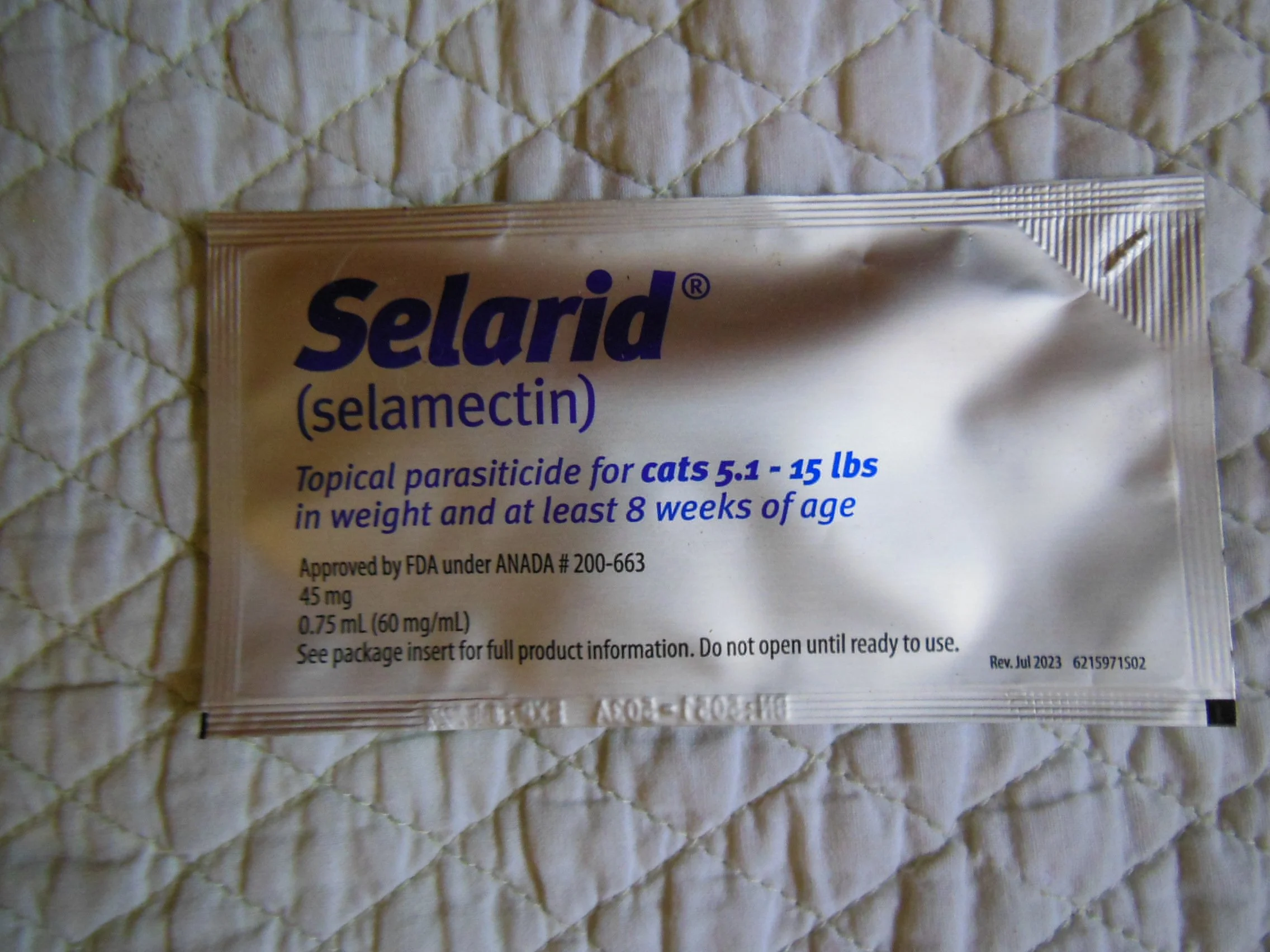
Prescription Flea Medication should be kept on hand for rescued rabbits when prescribed and dosed by an Exotic Rabbit DVM. We sometimes rescue rabbits who have been dumped or abandoned, and these rabbits may arrive covered in fleas.
The appropriate flea medication and dosage must be determined by the Exotic Rabbit DVM based on the individual rabbit's weight, age, health, and medical condition. The medication should only be administered according to the veterinarian's specific instructions.
Having an approved prescription flea medication available allows the medical foster to begin appropriate flea treatment promptly when directed by the Exotic Rabbit DVM.
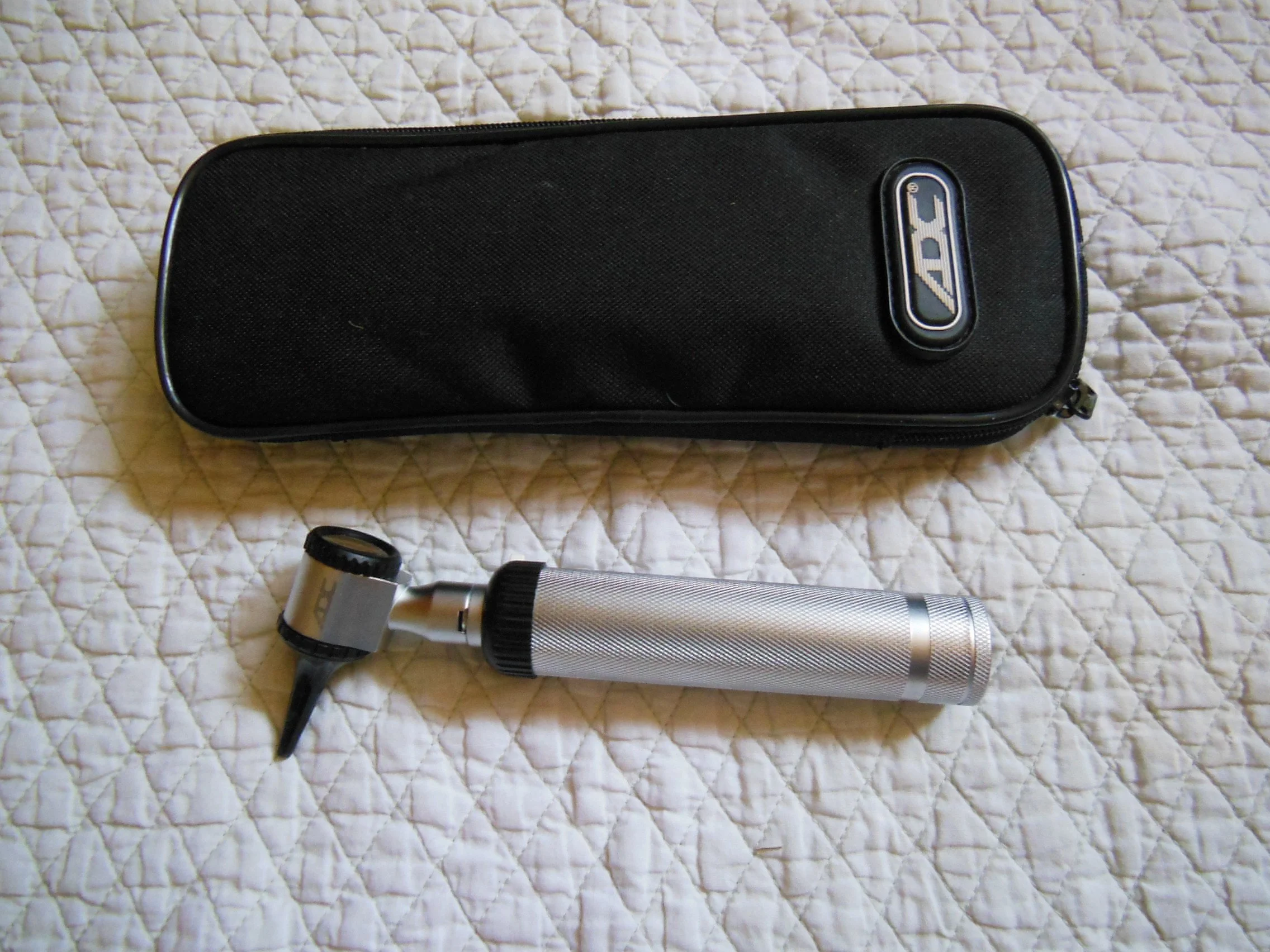
We have an otoscope, which we originally obtained because our Zora is prone to earwax buildup due to her being an older bunny. We were trained by our Exotic Rabbit DVM on how to properly use and clean the otoscope.
We also use the otoscope as part of the Nose-to-Tail examination for new rabbits at the 501(c)(3) rabbit rescue organization where we volunteer. The examination includes a checklist and observations that are recorded on the rabbit’s intake record in the rescue’s system.
Otoscope.
An otoscope can be useful for examining a rabbit’s ears when there is a concern about earwax buildup or other abnormalities.Proper training.
We were trained by our Exotic Rabbit DVM on how to properly use and clean the otoscope.Nose-to-Tail examination.
As part of the intake process at the rabbit rescue, we use the otoscope as one component of the Nose-to-Tail examination of new rabbits.Documenting the examination.
The examination includes a checklist and observations. The findings are recorded in the rabbit’s intake record so they can be reviewed as part of the rabbit’s ongoing care.
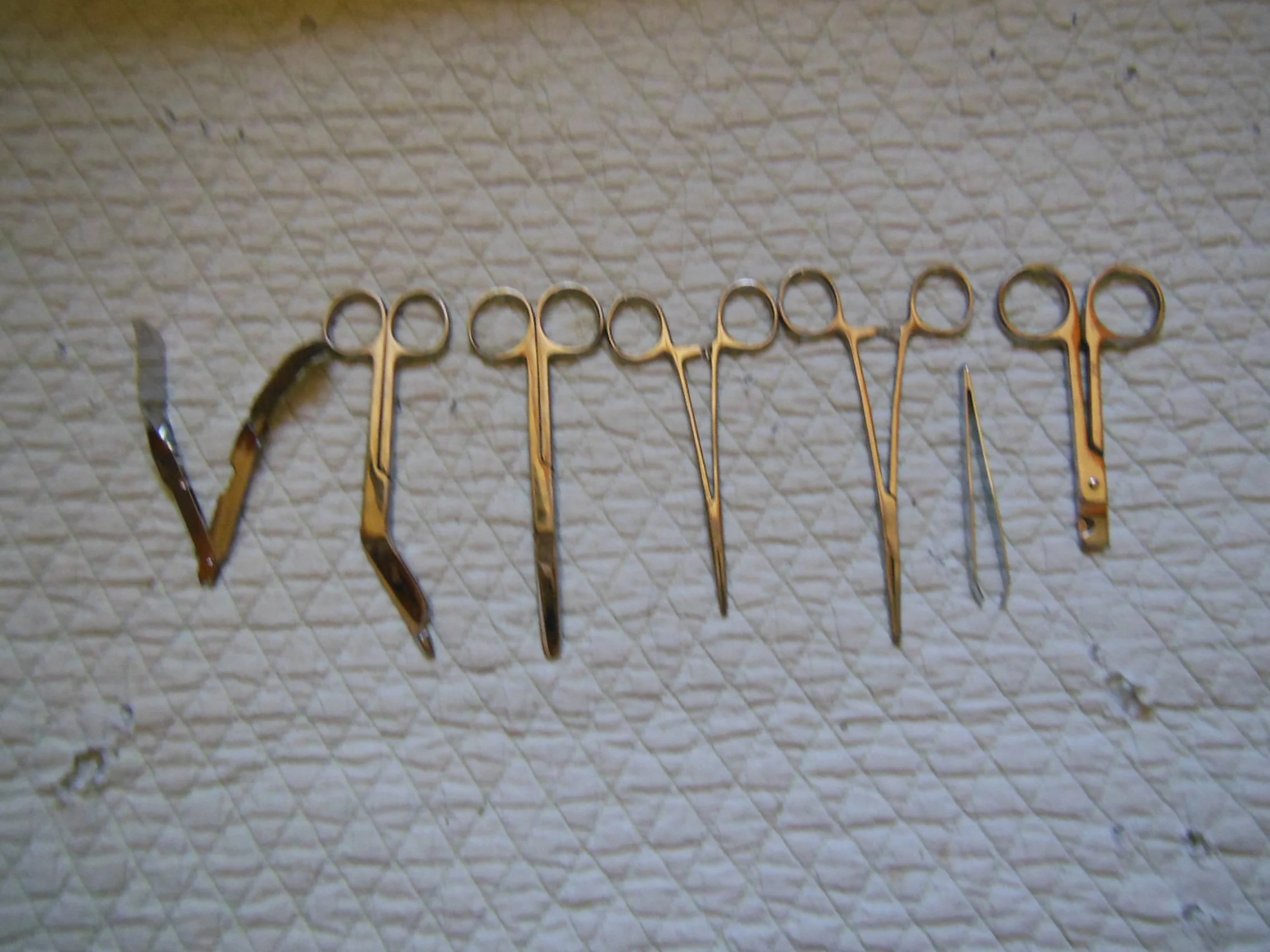
Over the years, we have built up a collection of medical tools to help care for the rabbits in our 501(c)(3) rescue. One of these tools is a staple remover.
Our Exotic Rabbit DVM may use surgical staples to close the incision after a female rabbit is spayed. We were specifically trained by our Exotic Rabbit DVM on how to safely remove these staples when instructed to do so.
When a rabbit was unable to return to the veterinarian for staple removal, we would send the Exotic Rabbit DVM detailed photographs of the surgical area, along with the rabbit's temperature and other relevant health observations. The veterinarian would review the information and provide approval before we removed the staples.
We have followed this process on several occasions when the foster was unable to transport the rabbit to the Exotic Rabbit DVM. The staple removal was only performed after receiving specific veterinary approval and instructions.
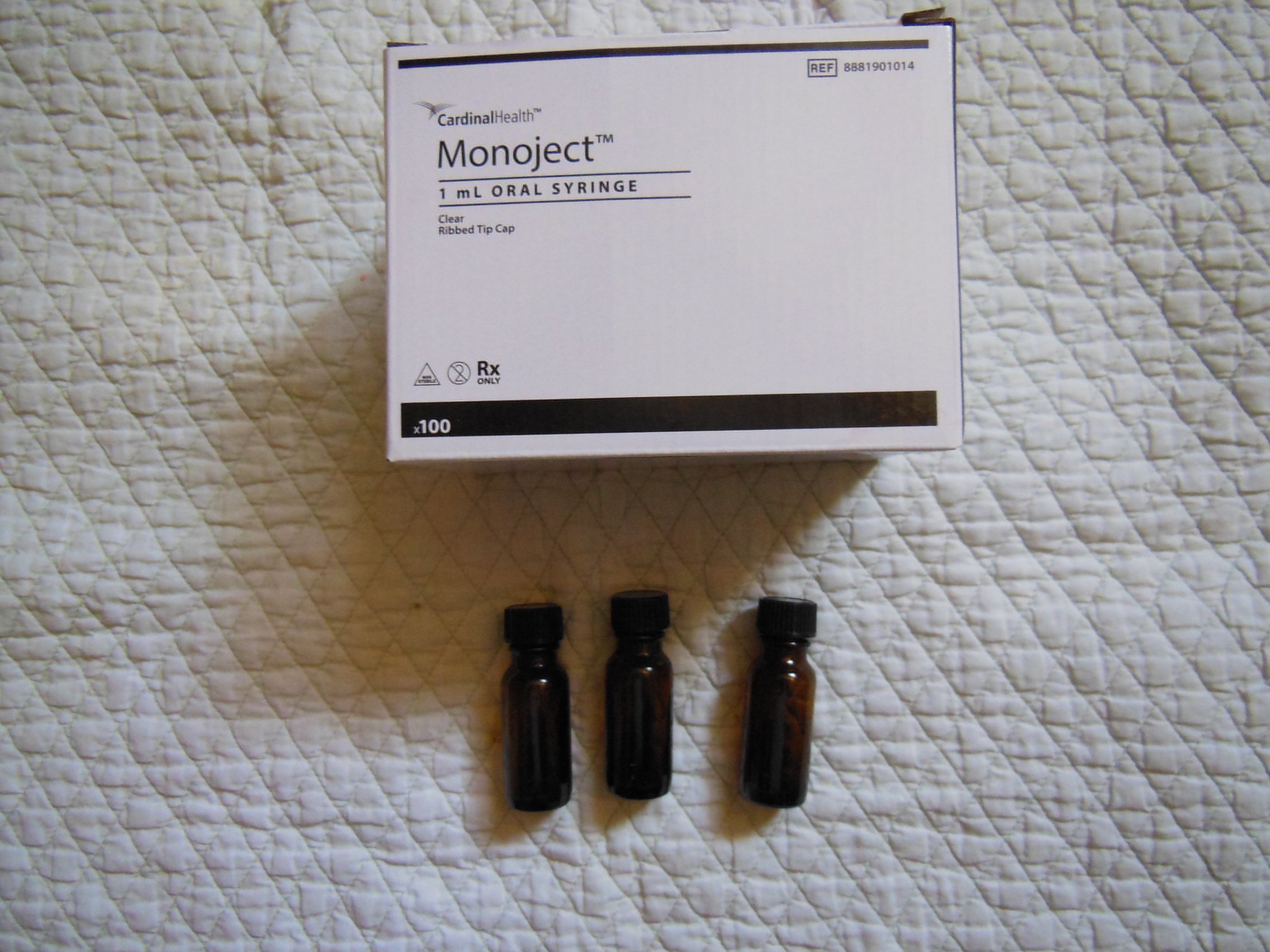
It is economical for you and your 501(c)(3) rabbit rescue group to purchase syringes and medication bottles in bulk. These supplies can then be made available to your medical fosters as needed.
Having a supply of syringes and properly labeled medication bottles on hand makes it easier for fosters to administer medications according to the instructions provided by the Exotic Rabbit DVM. Buying these commonly used supplies in bulk can also help reduce the overall cost of medical care for the rescue.
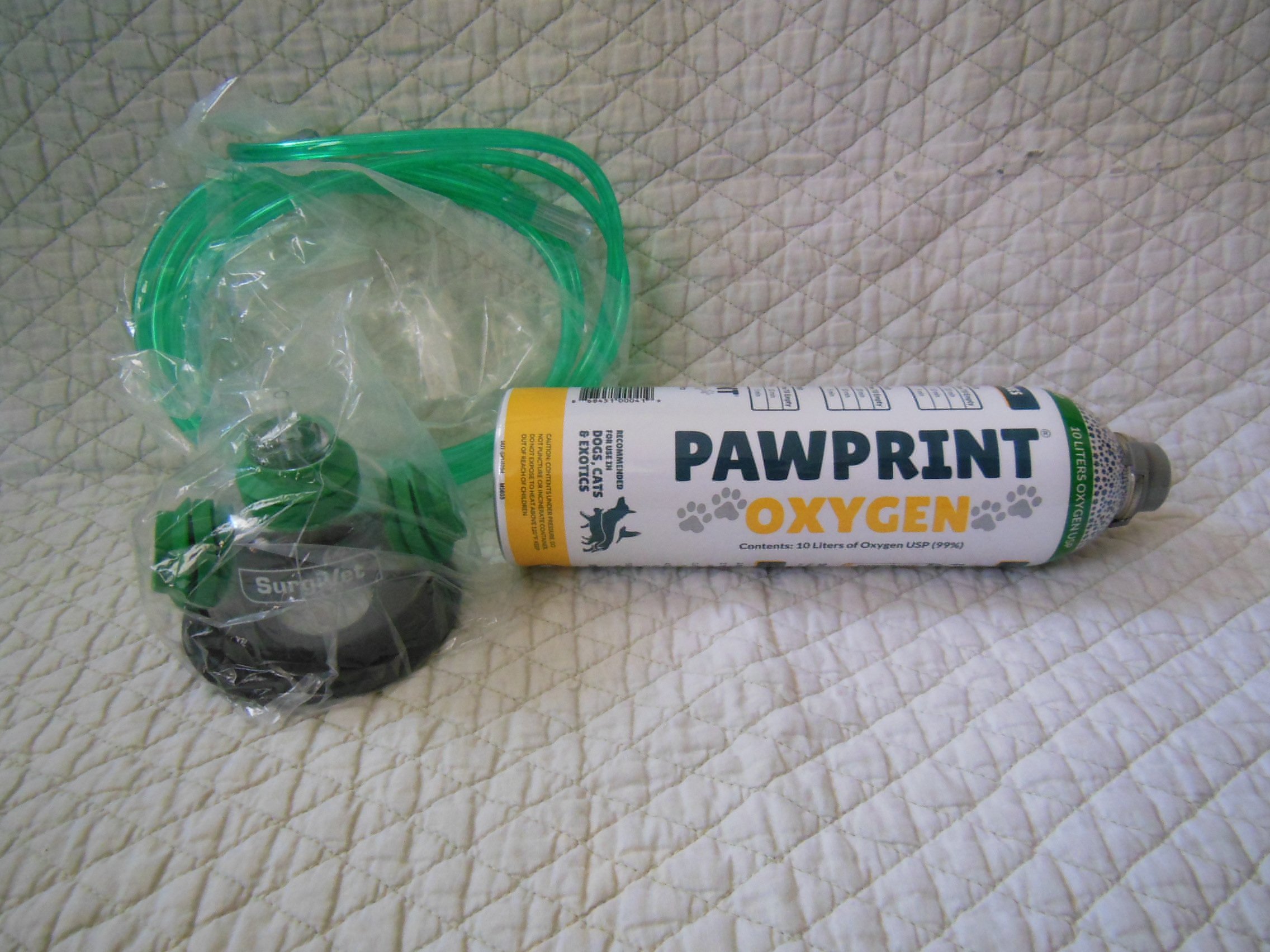
We have portable Oxygen on hand. We had if because our Binky needed oxygen at times as we took him for a 911 Exotic Rabbit Vet visit. The oxygen has a supply for about an hour. It is only meant to be used as you are going to the 911 Vet.