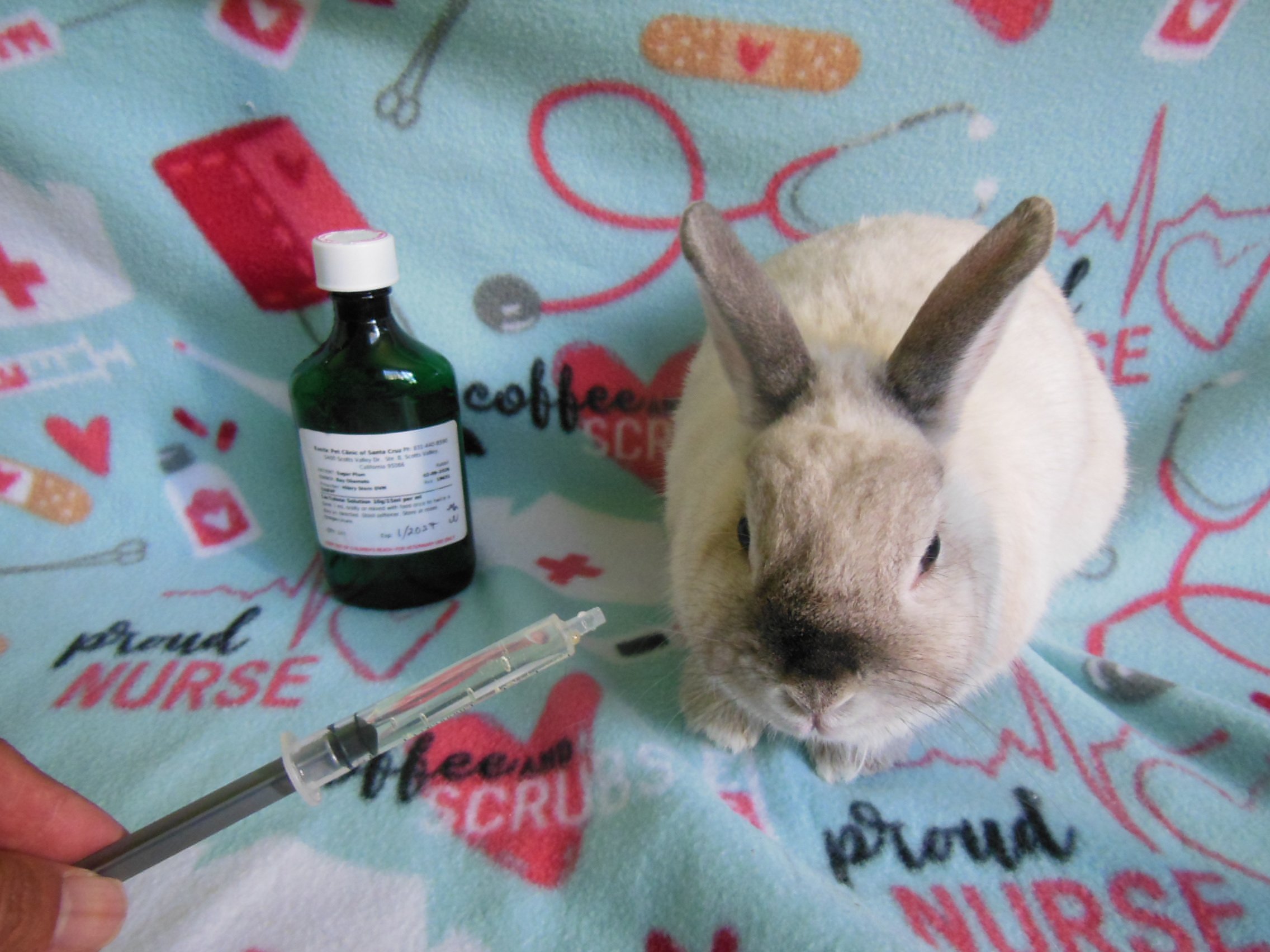
How to Give Oral Medication to a Rabbit (Syringes, Dosage & Safety Guide)
Disclaimer:
I am not a licensed exotic rabbit veterinarian. The information provided here is not intended to replace professional veterinary advice or care. It is based on standard practices for administering oral prescription (Rx) medication to healthy rabbits. It does not apply to rabbits with conditions such as head tilt or other special medical concerns.
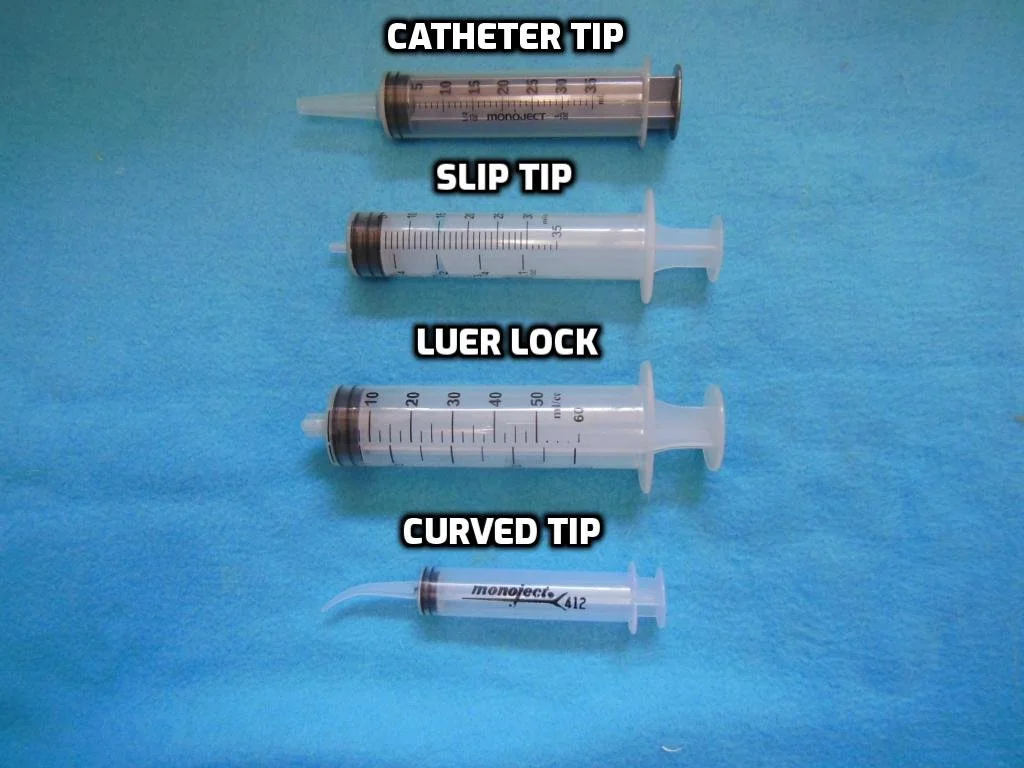
Types of Syringes
There are several types of syringes you may use when caring for your rabbit. Syringes are measured in milliliters (mL), part of the metric system, and are marked with lines and numbers to indicate volume (e.g., 1 mL, 3 mL, 35 mL).
Catheter Tip:
Commonly used for assist feeding, such as delivering Critical Care. These come in various sizes; a 35 mL syringe is often preferred for feeding.Slip Tip:
The most common type of syringe tip. A 35 mL version may be used for administering subcutaneous (SubQ) fluids with a butterfly needle.Luer Lock:
Features a threaded tip that securely “locks” a needle in place. Often used for SubQ fluids or thicker medications (e.g., Pen-G). A slip-on needle can also be used if needed.Curved Tip:
Designed to help deliver medication directly to specific areas, such as wounds, due to its angled shape.
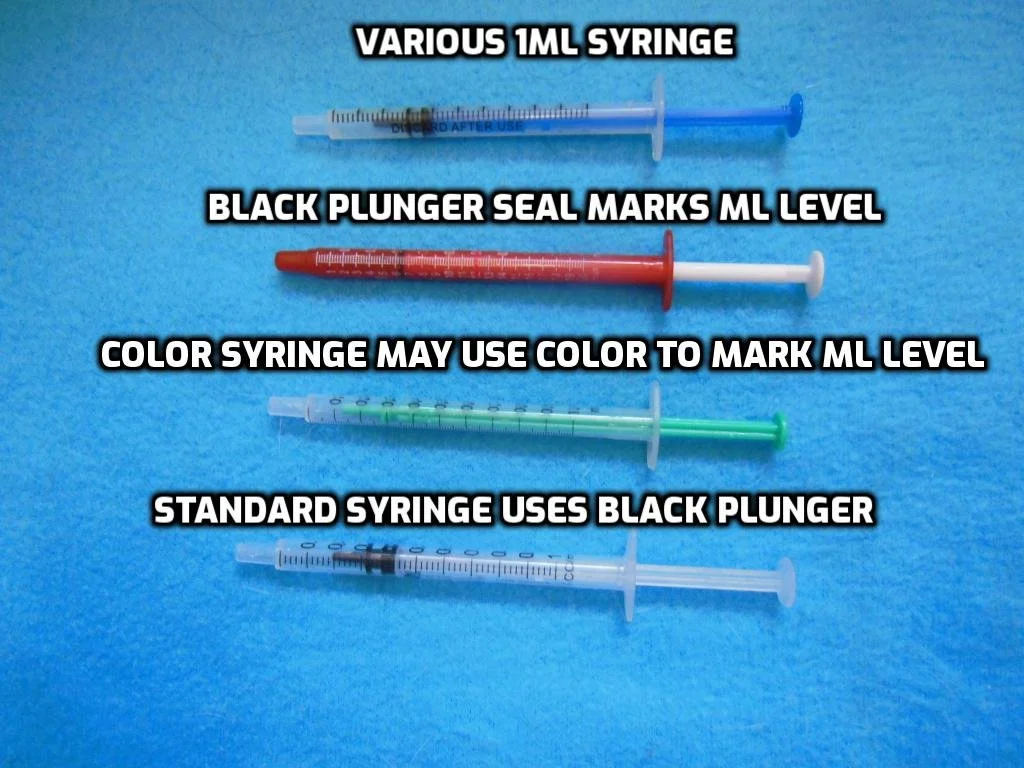
Common Syringe for Oral Medication
The most commonly used syringe for oral RX medication is the 1 mL syringe. These come in different styles and colors.
Many have a black plunger seal to indicate the amount drawn.
Others use colored markings on the syringe barrel.
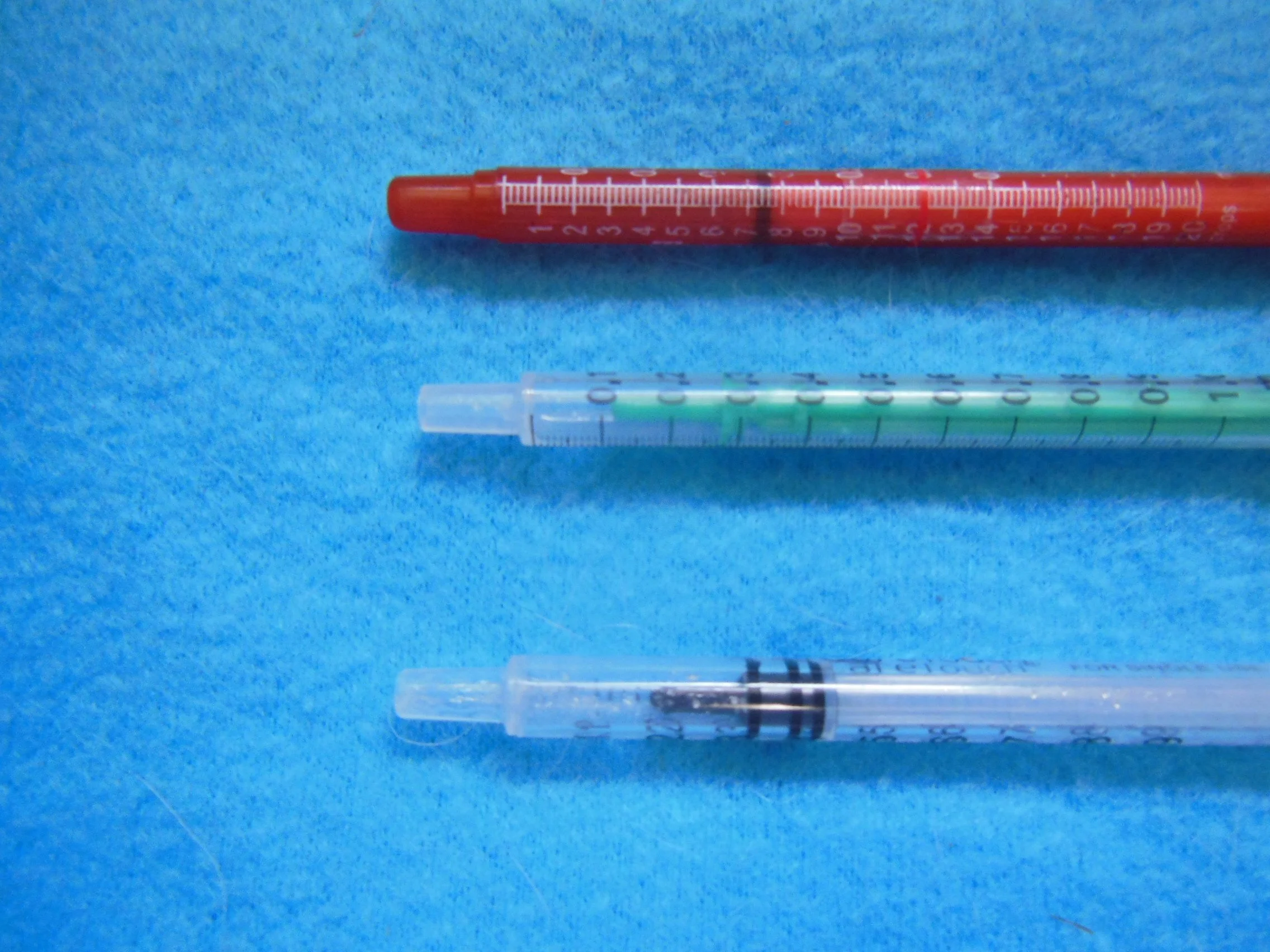
Closeup view of the black plunger seal and one without.
Dosage Guidance
Your exotic DVM may mark the correct dose directly on the syringe (often with a red line).
Always follow their instructions carefully..
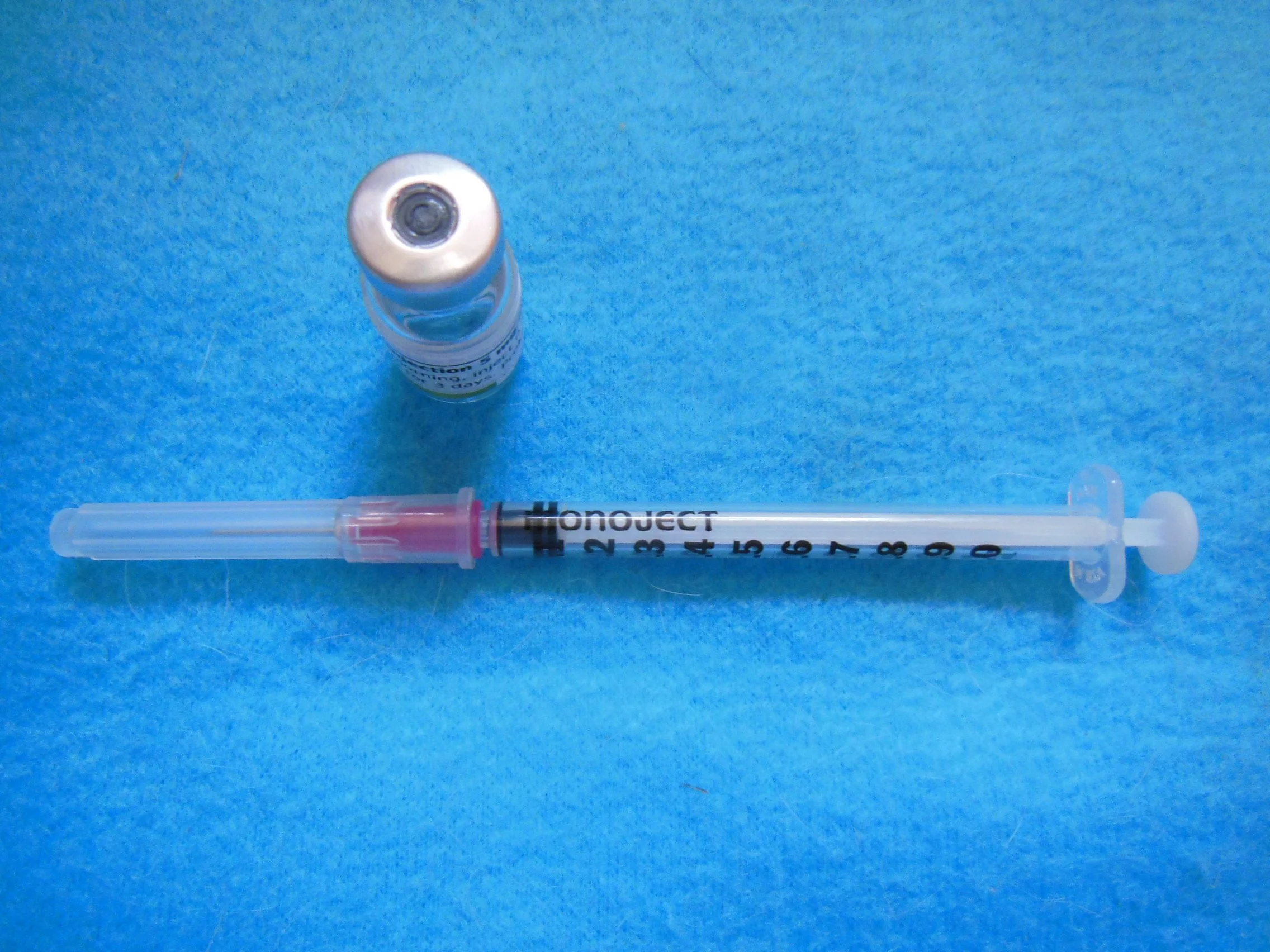
Drawing Medication from a Vial
Some medications require drawing with a needle through a self-sealing vial top.
The seal closes automatically once the needle is removed.
Use caution when handling and removing needles.
Always ask your exotic DVM for a demonstration if you are unsure.
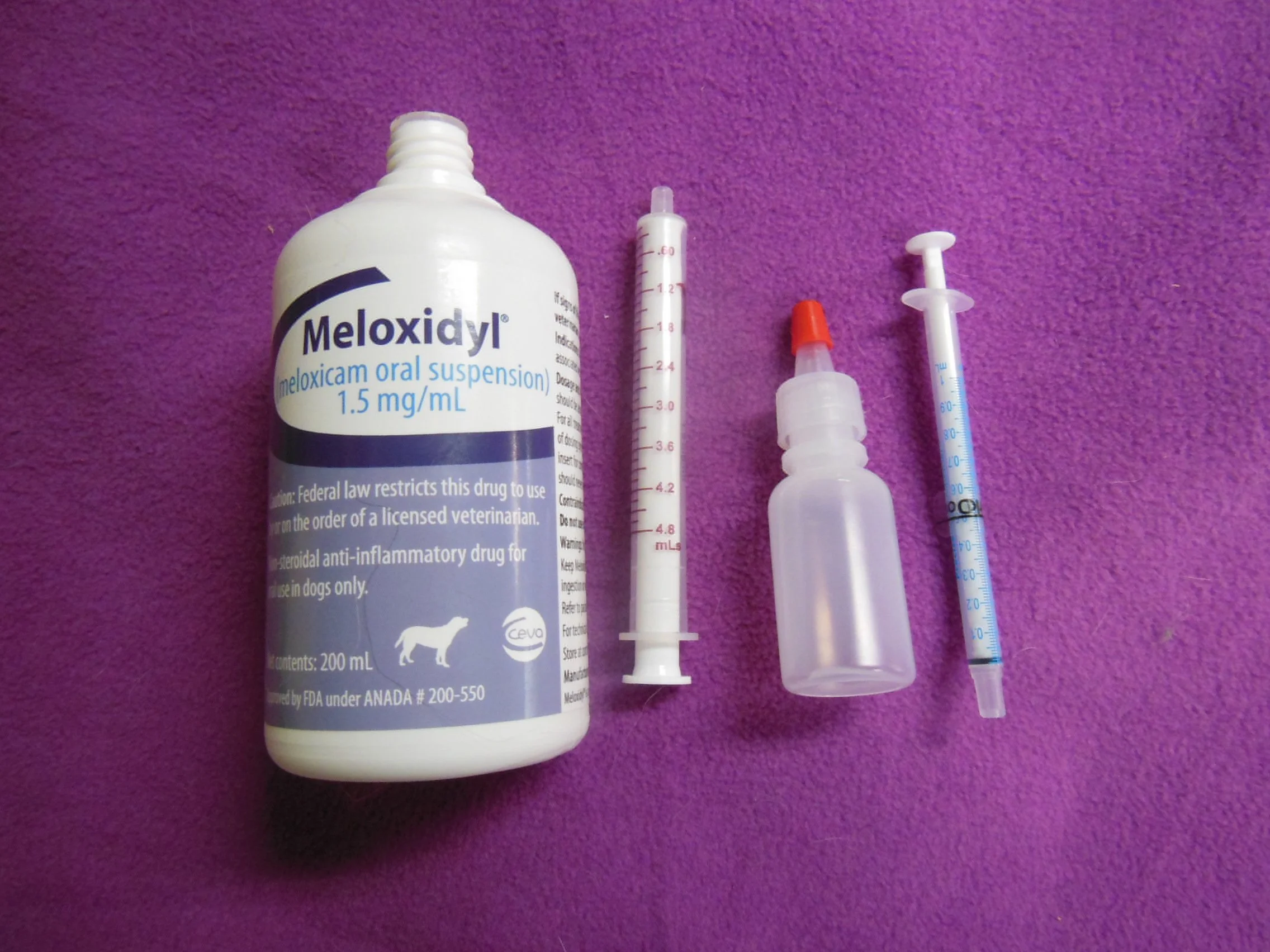
About Meloxicam and Similar Medications
Meloxicam is a commonly prescribed oral suspension for rabbits.
It is often dispensed in a box containing a bottle and a dosing syringe (typically labeled by dog weight).
Your exotic veterinarian (DVM) will provide the correct dosage in mL for your rabbit.
You may use the provided syringe to draw the medication and transfer it if needed.
How to calculate the dosage of medication if you have a different concentration of the medication?
It is understood that you should contact your DVM for the correct dosage if you have a different concentration.
The rabbit weighs 1.50 kg and was originally prescribed:
Dose: 1.0 mL
Medication concentration: 1.5 mg/mL
First, determine how many milligrams (mg) the rabbit is supposed to receive:
1.0 mL x 1.5 mg/mL = 1.5 mg
So, the required dose is 1.5 mg of medication.
Now suppose the medication you have is a different concentration:
0.5 mg / mL
To find the new volume needed, use dimensional analysis:
X mL x 0.5 mg / mL = 1.5 mg
Solve for :
X mL = 1.5 mg / 0.5 mg / mL
X = 3.0 mL
Therefore, to give the same 1.5 mg dose using a concentration of 0.5 mg/mL, the rabbit would need:
3.0 mL
It is always recommended to confirm dosage adjustments with your veterinarian (DVM) before administering medication with a different concentration.
Prescription (Rx) Label Information
A medication label may include:
Patient name
Veterinarian (exotic DVM) name
Date prescribed and expiration date
Medication name and description
Dosage instructions and frequency
Medication Strength & Dosing
Medications list their concentration. For example:
Meloxicam 1.5 mg/mL
Your DVM will prescribe the correct dose in mL based on your rabbit’s weight in kilograms (kg).
Always use the prescribed mL amount rather than estimating.
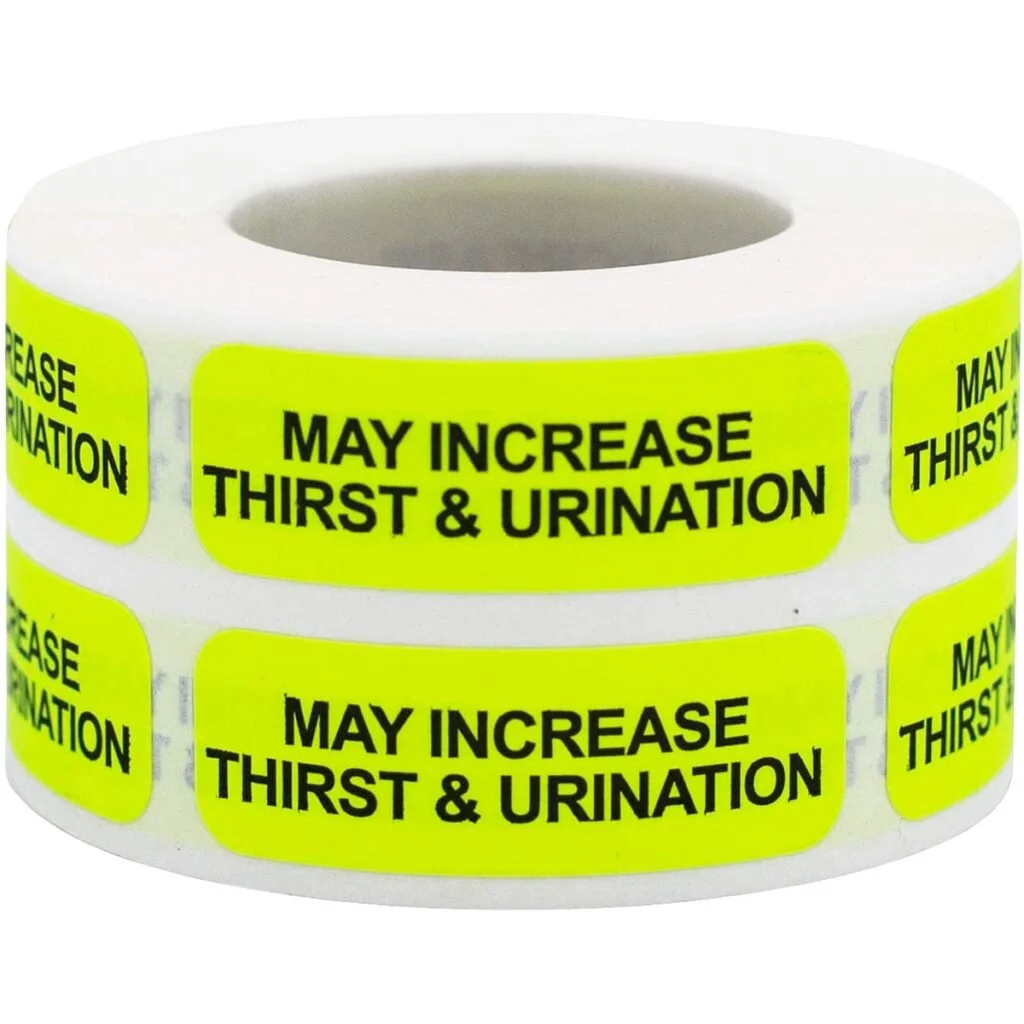
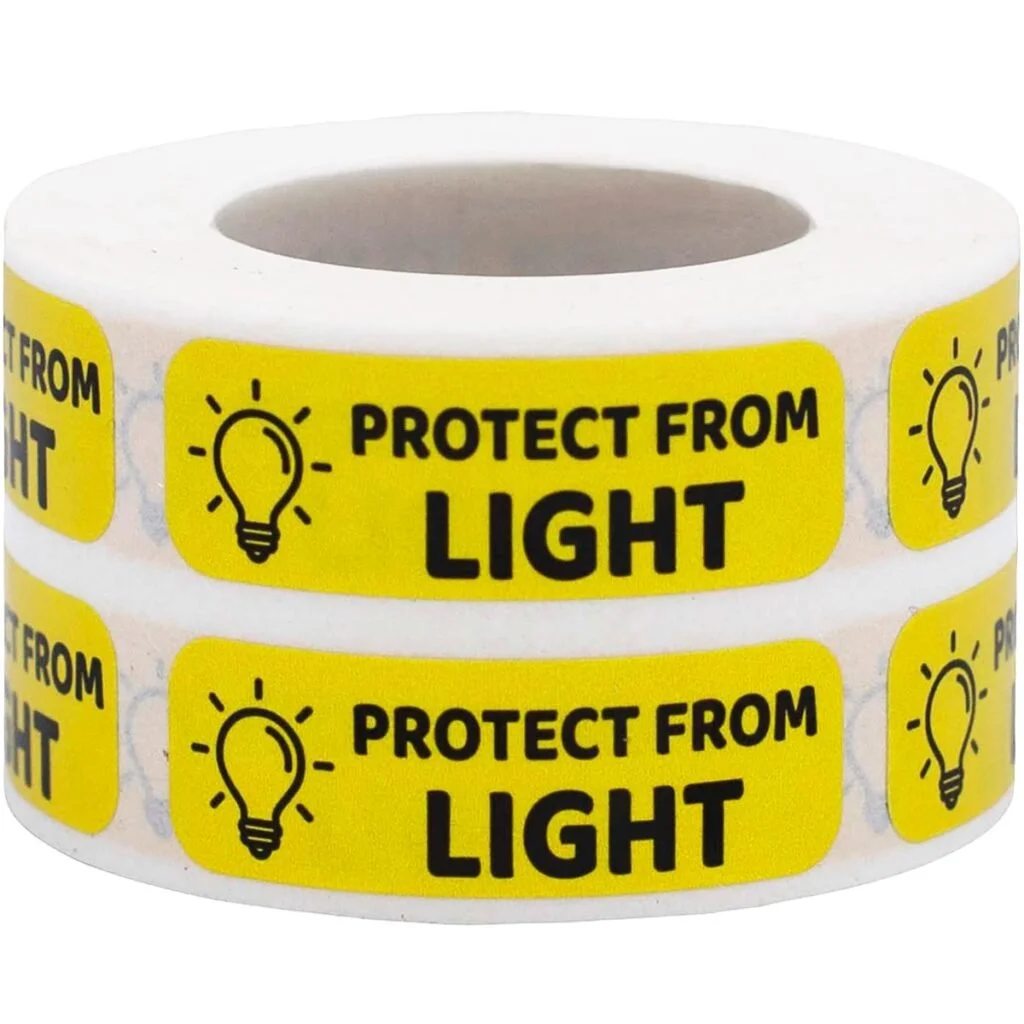
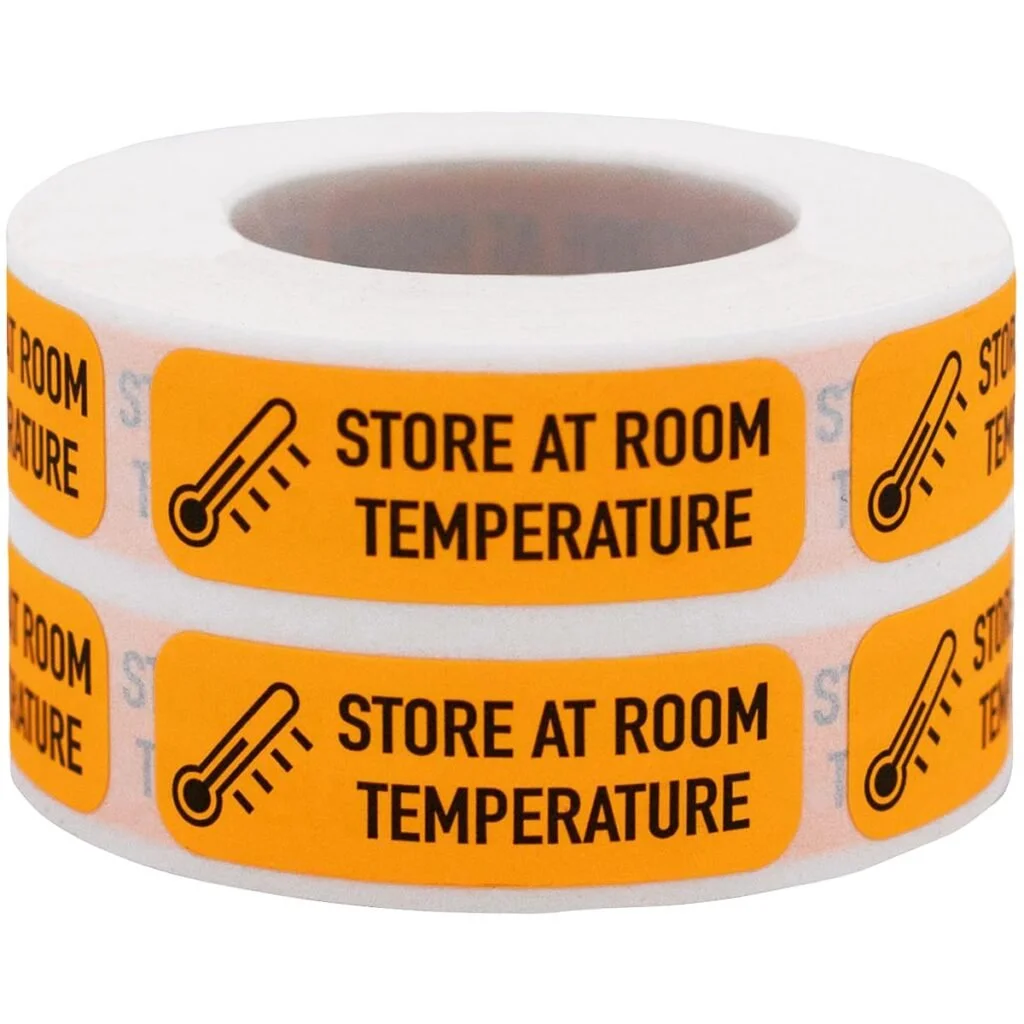
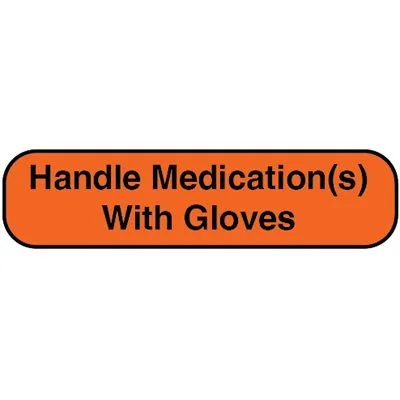
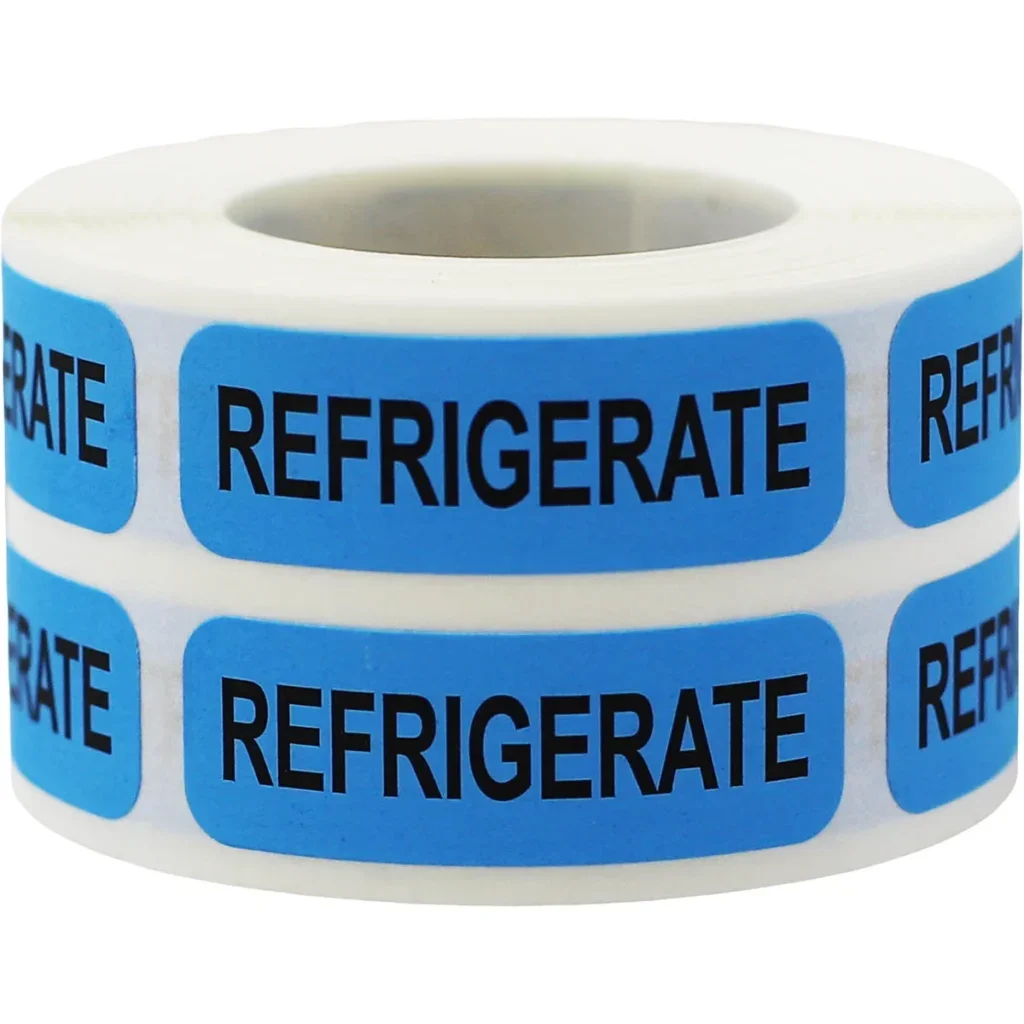
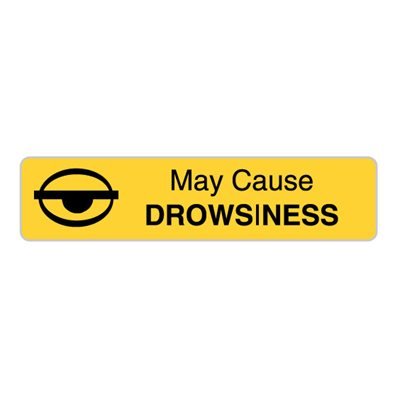
Your Exotic DVM will review the medication for your rabbit.
Ask when do I start the medication?
Review the medication and dosage level with the syringe.
Understand and review the labels attached to the Rx. The above are the common types.
Review with your Exotic DVM any potential size effects that you might see.
Delivery of Oral Rx Medication
1. Drawing the Medication
A. Review the label to ensure the correct medication is selected.
B. Verify the dosage by confirming the amount drawn into the syringe matches the prescribed dose.
C. Record the administration (date and time) in a log if more than one person is responsible for giving the medication.
2. When Using More Than One Rx Medication
A. Use a separate syringe for each medication.
B. Do not mix medications in the same syringe.
C. Label or organize syringes (e.g., attach to the bottle or use color-coded syringes) to avoid confusion.
D. Clean syringes after each use using warm water, then allow them to dry thoroughly.
E. Replace syringes if they become difficult to use, as worn syringes can affect accurate dosing.
Bunny who has no problem with the medication.
Our foster being given 3 Rx Oral Medications.
We will show 3 ways to give oral medication. Our Sugarplum needs 3 ml Once a Day.